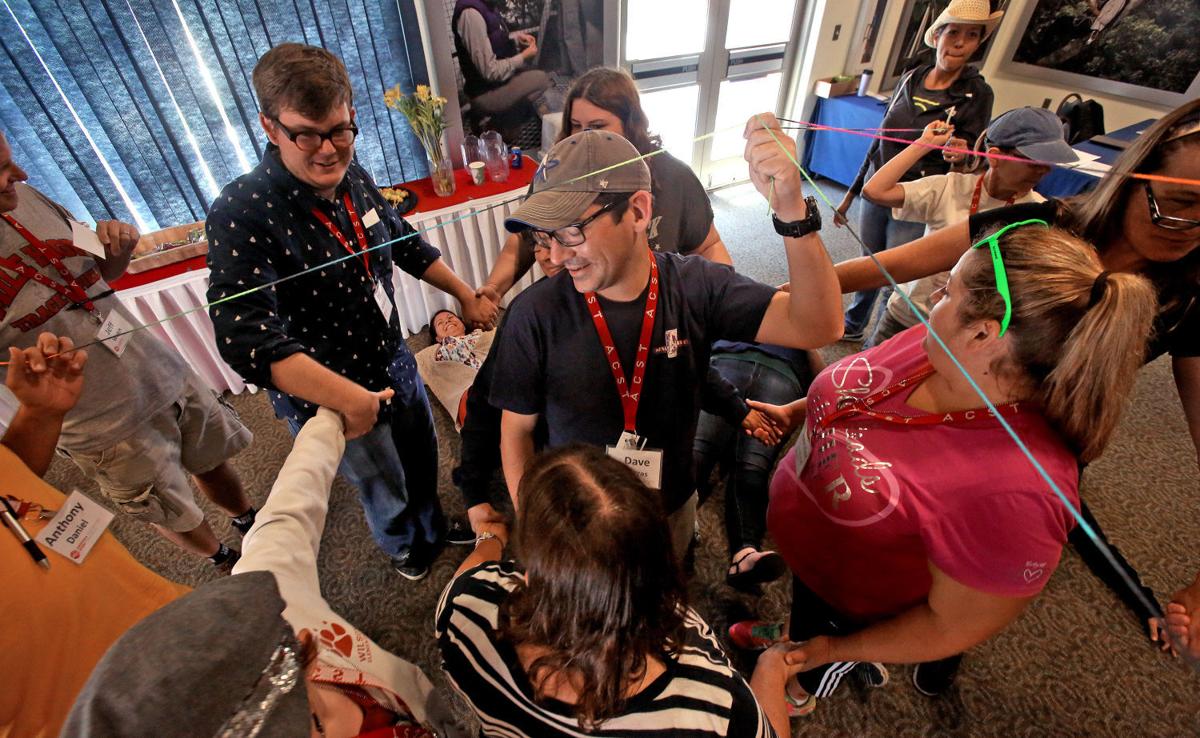
Some of the teachers stood up and pretended to be the bark of a tree.
Others lay down, spread their limbs and replicated its roots.
The unorthodox exercise was one of several used last week in a program with a goal to get more science taught in Arizona classrooms.
This nearly two-week session of Arizona Center for STEM Teachers included 36 mostly-Arizona elementary teachers seeking ways to incorporate more science into their lessons.
“We’ve done a lot of activities where I think, ‘Oh my God. I can totally take that back into the classroom,’” said Kay Armenta, an elementary teacher at Frances Owen Holaway Elementary School, 3500 N. Cherry Ave. in the Amphitheater Public Schools district.
Since 2008, the program has offered professional development training to K-12 teachers at Biosphere 2.
People are also reading…
Elementary teachers have to try to find time on the day to squeeze science into an already busy school day. And because they don’t have specialized classes like high schools, it means many of them aren’t as confident or well-versed as they’d like to be in science.
“We’re here to set them up for success, to beef up their science background and get them more confident with STEM concepts,” said Greg Stafford, a lead instructor.
STEM refers to the study of science, technology, engineering and mathematics. The goal of the teacher sessions, started in 2008, is to teach difficult scientific concepts in an interactive manner.
Another point of emphasis is the integration of technology into the classroom. Each participant received a free iPad, as well as training on how to use educational apps that can be applied in the classroom.
Participants also received training on how to stay connected to colleagues online, so they can collaborate long after the session is over.
“There’s so many resources that they’ve provided to us. It would be impossible not to use any of it,” said Denise Green, a teacher at Blue Ridge Elementary School in Lakeside.
In previous years, funding for the program was secured through grants from science- and environment-related foundations like Science Foundation Arizona, the Philecology Program and the APS Foundation.
This year, funding for the summer session was in question until the Agnese Nelms Haury Program in Environment and Social Justice came forward with a nearly $200,000 grant.
“It’s an investment,” said Anna Spitz, the foundation’s director. “Our hope is that the students will benefit from this program and find socially just solutions to environmental issues.”
Funding is still not secured for next summer. “I like to think of it as living paycheck to paycheck,” said Briana E. Gryzynger, co-chair of the program.
Principals and superintendents from the participants’ districts were invited to Saturday’s conclusion to view the group’s research during their often 16-hour days.
While the two weeks were exhausting, several teachers said they felt reinvigorated and eager to start sharing what they’ve learned with their students.
“We’re facilitators now,” said Brianna Stultz, a teacher at Morris K. Udall Escuela De Bellas Artes in the Isaac Elementary School District #5 in Phoenix. “We’re a bit stronger, and a bit braver now.”

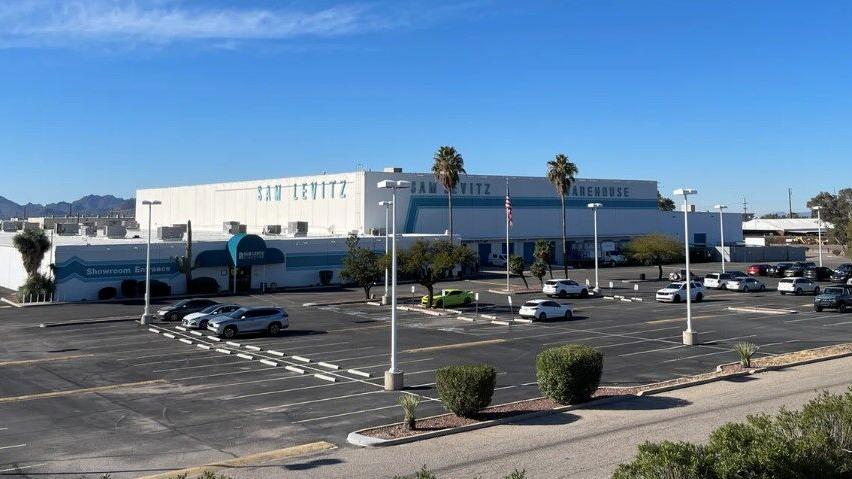
 Former Sam Levitz building sells for $8.6 million