
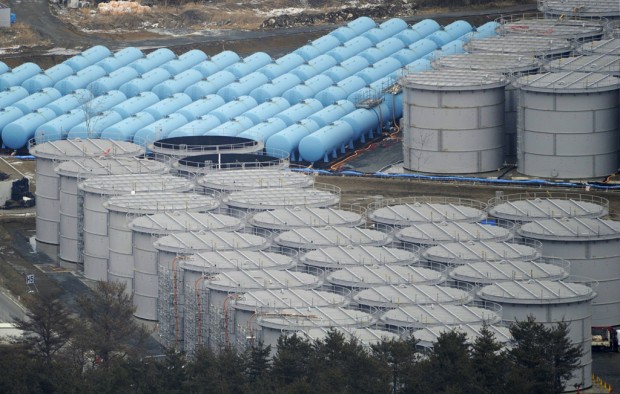
TOKYO - Radioactive cesium levels in most kinds of fish caught off Fukushima haven't declined in the year following Japan's nuclear disaster, a signal that the seafloor or leakage from the damaged reactors must be continuing to contaminate the waters - possibly threatening fisheries for decades, a researcher says.
The vast majority of fish tested off Japan's northeast coast remain below recently tightened limits of cesium-134 and cesium-137 in food consumption. But Japanese government data shows that 40 percent of bottom-dwelling fish such as cod, flounder and halibut are above the limit, Ken Buesseler, a marine chemist at the Woods Hole Oceanographic Institution in Massachusetts, wrote in an article published Thursday in the journal Science.
In analyzing extensive data collected by Japan's Ministry of Agriculture, Fisheries and Forestry, he found that the levels of contamination in almost all kinds of fish are not declining a year after the March 11, 2011, disaster.
People are also reading…
An earthquake and tsunami knocked out the Fukushima Dai-ichi plant's vital cooling system, causing three reactor cores to melt and spew radiation onto the surrounding countryside and ocean.
"The (radioactivity) numbers aren't going down, Buesseler told the Associated Press in an interview. "Oceans usually cause the concentrations to decrease if the spigot is turned off.There has to be somewhere they're picking up the cesium."
"Option one is, the seafloor is the source of the continued contamination. The other source could be the reactors themselves," he said.
Most fish and seafood from along the Fukushima coast are barred from the domestic market and export. In June, authorities lifted bans on octopus and sea snails caught off Fukushima after testing showed very low levels of radiation.
But the most contaminated fish found yet were caught in August, some 17 months after the disaster. The two greenlings, which are bottom-feeders, had cesium levels of more than 25,000 becquerels per kilogram, 250 times the level the government considers safe.