

California condor
Gymnogyps californianus
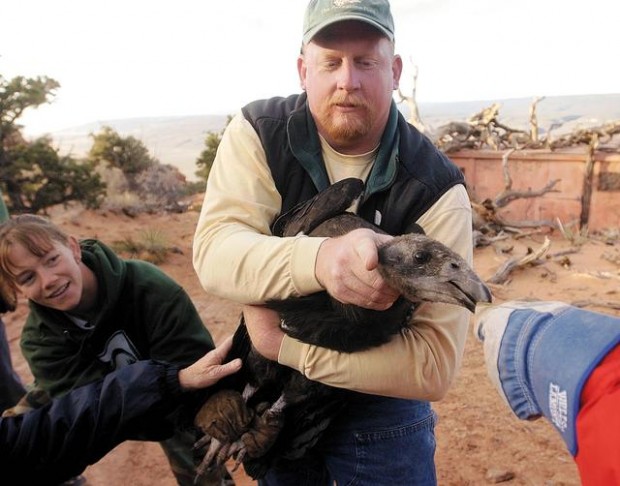
STATUS: Listed as endangered in 1967. They are one of seven vultures found in the Western Hemisphere.
HABITAT: Before the end of the last Ice Age, 10,000 years ago, condors were found across the Southwest and as far east as Florida, but by the mid-20th century they were restricted to Southern California. They often form mating pairs for life and lay a single egg in cliffs, rock formations or the cavity of a giant sequoia.
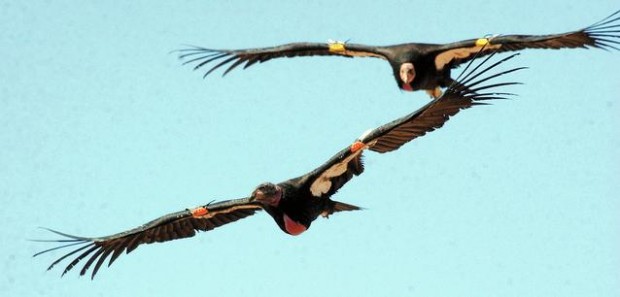
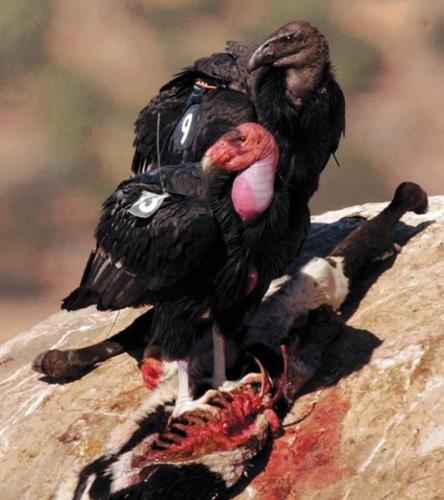
BEHAVIOR: Their wingspan of nearly 10 feet makes them North America's largest bird. They may travel more than 100 miles a day searching for carcasses of dead animals (their sole food source) but rely more on air currents than flapping of their wings. Condors urinate on their legs as a form of evaporative cooling.
People are also reading…
SOURCES: U.S. Fish and Wildlife Service, California Department of Fish and Game, Peregrine Fund, San Diego Zoo, The California Condor: A Saga of Natural History and Conservation.


