


CHICAGO - Safety experts have a new pet peeve related to distracted driving.
In addition to texting or talking on a cell phone while driving, lap dogs and other pets left unrestrained inside moving vehicles pose a major distraction that could be deadly, a new study released Wednesday warns motorists.
About two-thirds of dog owners surveyed by the AAA travel club said they routinely drive while petting or playing with their dogs, sometimes even giving them food or water while maneuvering through traffic.
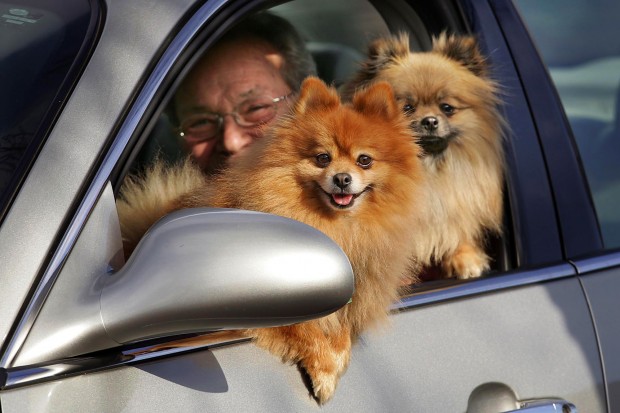
It's common to see dogs hanging their heads out of open car windows with their ears flapping in the breeze. But in the cocoon that the auto has become, more drivers are cradling their dogs in their laps or perching the animals on their chests with the pet's front paws clutching the driver's neck or shoulders.
People are also reading…
It's risky behavior for the driver, and dangerous for the pets, too.
An 80-pound dog unrestrained during a crash at 30 mph exerts 2,400 pounds of force in a vehicle, creating a danger for the dog and anyone in its path, according to Motivation Design LLC, a company that manufactures pet travel products, including restraint systems for pets, under the brand name Kurgo.
"As about 40 percent of Americans own dogs, we see this as an increasingly big problem," said Beth Mosher, spokeswoman for AAA of Illinois, Indiana and Wisconsin.
Dogs in wrecked vehicles often become protective of their owners when emergency responders try to rescue injured occupants, sometimes forcing authorities to shoot the animals, Illinois State Police troopers say.
"The last thing you want to do is to put the dog down, but you have a possible hurt animal that is acting in self-preservation and protecting its owner," said Sgt. Brian Copple, manager of the safety education unit of the State Police.
Unlike the seat-belt law for humans, there are no state laws requiring drivers to buckle up their pets or prohibiting them from holding animals on their laps, officials said. But police can ticket drivers for having an obstructed view of the road or being obstructed from using the steering wheel and other mechanisms.
Most drivers don't realize that a dog moving around a vehicle or sitting on someone's lap can injure or kill occupants during a crash, particularly if air bags deploy, Copple said.
"If the animal is sitting between the steering wheel and the driver, the air bag will throw the animal back at you with great force," Copple said.
"An air bag is designed to catch a 160-pound person. It's not meant to protect Fluffy," he added.
About 6,000 people died in crashes involving a distracted or inattentive driver in 2008, and more than 500,000 were injured, according to the National Highway Traffic Safety Administration.
AAA and Kurgo were partners in the survey of 1,000 dog owners who have driven with pets in the last year.
Fifty-five percent of the drivers polled said they have petted their dogs while driving, and 21 percent said they held the dogs in their laps. Seven percent said they have given food and water to their dogs while driving, and 5 percent said they have played with their dogs while behind the wheel.
Such behavior is relevant because looking away from the road for only two seconds doubles the risk of being in a crash, according to the AAA Foundation for Traffic Safety.
While 80 percent of poll respondents said they take their dogs on a variety of car trips, only 17 percent said they use a pet-restraint system.


