

Wickenburg is fighting to revive its economy, simultaneously pelted by the recession and a new highway that bypasses the town.
Tourists who once stopped in Wickenburg to soak up Western culture, eat in frontier restaurants and browse cowboy shops now drive past it on U.S. 93, on their way to the lights of Las Vegas.
The population has ticked up slightly, but business is down, particularly on the town's main streets.
The town, about 60 miles northwest of downtown Phoenix, is similar to rural areas across the country struggling to survive. Urban areas also are hit hard in this economy, but places like Wickenburg are particularly at risk because they rely on one major revenue source, like tourism, and have a small base of local businesses.
"There's a lot of difficulties coming," Mayor Kelly Blunt said. "The economy's in the tank, everybody's out of work and we have to bring this town together."
People are also reading…
The town of 6,000 still is nationally known as a frontier destination, touting a rich mining history and a dwindling number of dude ranches.
At one time, the town was marketed as the dude capital of the West. Today, it's promoted as a vestige of the Wild West, calling tourists to come "Out Wickenburg Way" to see real cowboys with spurs.
Wickenburg had welcomed thousands of tourists every year since it was founded in 1863. The traffic turned out to be a boon and a curse for the town, as nearly 8 million vehicles moved through Wickenburg each year.
Residents debated for decades whether a bypass was the right solution: It could relieve traffic but harm tourism.
Blunt, a 38-year-old Wickenburg native, said he has childhood memories of his father's co-worker discussing the plans.
Finally, after several years of construction, the U.S. 93 bypass opened more than a year ago.
Traffic through town is now a sliver of what it once was.
"We wanted to get the traffic out of downtown and slow things down like they should be in an Old West downtown," Blunt said. "But then the economy hit and (the bypass) went in, and now the downtown businesses are suffering."
Losing tax revenue from large businesses and industries - like a Chevrolet dealership and highway construction - also had a big impact. Sales-tax revenue is down 9 percent this year, on top of a decrease around 10 percent the previous year, town manager Gary Edwards said.
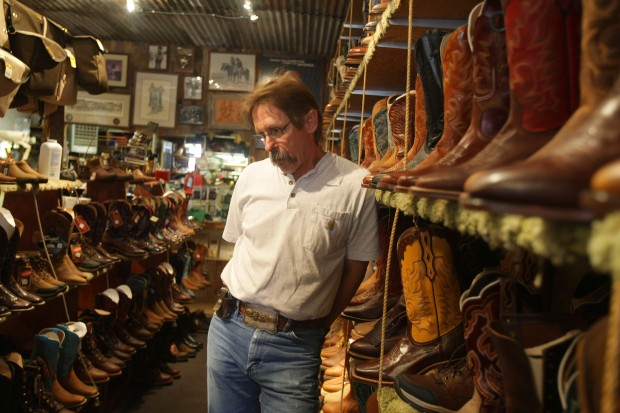
Bruce Meier, 60, who has owned Ben's Saddlery, a downtown business, for 22 years, is managing to hold on, though he relies more these days on repairs than new sales. And, he said, his neighbors are suffering.
The 31-year Wickenburg resident said he values the simplicity of the town, but residents will leave if the economy doesn't recover.
"This town has a quaint charm and that's how we like it, but holding people here is tough," Meier said.
New mom-and-pop shops have filled some of the empty storefronts, Edwards said. The businesses are mostly owned by residents trying to find new income after losing their jobs.
Using funds from a temporary "bed, booze and board" tax on lodging, alcohol and restaurants, the town recently spent $1.7 million updating its downtown area to make it more pedestrian-friendly, but it hasn't seen tourism improve yet. The council also is working to promote the town's attractions and plans to commission a branding study.
"I'm hoping that we can make our town known for more than a hamburger at McDonald's on the way to Vegas so people will start coming here again," Blunt said.
Wickenburg has recovered from similar downturns. In the 1960s and '70s, the town barely survived being bypassed by two interstate highways, first Interstate 17 and then Interstate 10.
Marshall Trimble, Arizona's official state historian, grew up in a town that withered after transportation changes: Ash Fork, in northern Yavapai County.
"When Route 66 closed, one day you've got hundreds or thousands of cars going through town and the next there's a trickle," he said.
Then, when the railroad started to die, Ash Fork stores closed and business dropped off as residents left town. After a series of disastrous fires hit in the 1970s, much of the town was destroyed and never rebuilt.
But Trimble, who's the voice of Wickenburg's talking statues that recite facts about its history, says the town has more to offer than other rural communities in Arizona.
Town leaders acknowledged that it's difficult to lead a community through a budget crisis but said they won't compromise Wickenburg's Western heritage.
The town's budget for the current fiscal year is $25.5 million, down nearly 11 percent from the previous year.


