

I'm looking out into the eyes of the audience members. My bare stomach is the symbol of a cultural dance that has helped me connect with my body and bring me closer to my heritage. My passion, my feelings, my story are becoming the audience's. The rhythm of the violin travels through the violinist's fingers up through my wrist into my arm, through my elbow into my shoulder, and out through my other arm. Although the music is flowing smoothly, my heart is pounding. Shimmy, shimmy, shake, and smile. As the music fades I pose and connect eyes with an audience member. My performance is finished.
"Belly dance" is a Western term that is actually a mistranslation believed to have come from many places. One idea is that the term "belly dance" came from the term used to describe the dance style, Beledi. The actual source of the word is unknown. Belly dancing was first popularized in the United States at the 1893 Chicago World Fair. These dancers were the first Raqs Sharqi — meaning dance of the East — dancers to perform in the United States.
People are also reading…
Belly dance is an art form, and like any other art form, its rich cultural origins give it merit. Belly dance done well is dancing that conveys the dancer's emotions. A skilled belly dancer will recognize the different instruments used in her music and emphasize them with appropriate dance moves. For example, if there is a strong drumming in a song, a dancer might incorporate a shimmy, a dance movement that is a very fast contracting and releasing of hip muscles.
The dancers I've met in Tucson are passionate about the art form and how it has influenced them in ways that have made them more proud of themselves as women and humans. Belly dancers are not trying to make someone feel uncomfortable; they are trying to share a part of their life with others.
I've been belly dancing for three years. It all started when my mom and I saw a flier for an under-17 belly dancing class offered by Art in Reality, or AIR. We walked over to the Muse, where the class was taught, and spoke to the teacher, Amita Graham. I joined the next week.
The first time I performed in 2003, I was part of an AIR showcase. My dad hand-sewed my harem pants for the show, and I remember being excited for my mom to see me belly dance for the first time. After that first performance, I went on to perform with AIR three more times. I've stopped taking classes, but I continue to perform independently.
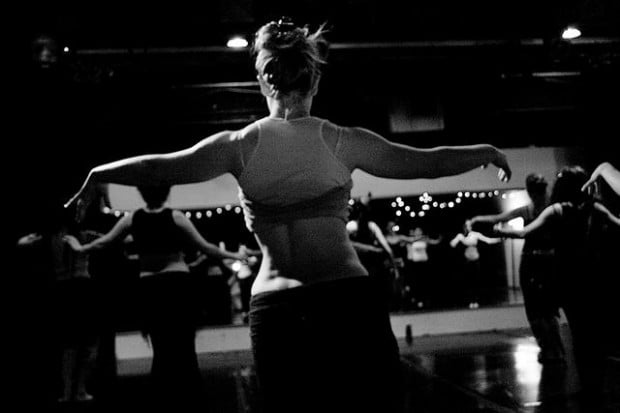
These photos show Gina Gonzalez, the current AIR belly dance instructor, teaching her beginning and level two students at the Zuzi Dance Theater. When I was photographing these women, I realized how many different types of women are interested in belly dancing. I'm Iranian and Greek and Middle Eastern, and learning about those cultures has always been attractive to me. Belly dancing has been a way for me to connect with my heritage.
On StarNet: Find more articles from the Voices writers at http://go.azstarnet.com/110degrees
● For more information about belly dancing in Tucson, go to raksgina.com or azardance.com online.


