PHOENIX — Republicans who were previously under indictment in the "fake electors'' scheme are trying to get an appellate court to block Democratic Attorney General Kris Mayes from ever bringing new charges against them in the case.
They are using a state law designed to deter political prosecutions.
The original indictment charged 11 Arizona Republicans with forgery and conspiracy when they signed documents after the 2020 presidential election falsely claiming that Donald Trump had won the popular vote in Arizona. Eight others were also charged, all allies or lawyers for Trump.
In August, Maricopa County Superior Court Judge Sam Myers threw out the indictment after finding the grand jury was not provided all the relevant information it needed.
People are also reading…
But in doing so, Myers cleared the way for the state to seek a second indictment down the line.
Now one of the defendants, former U.S. Senate candidate Jim Lamon, is arguing to the state Court of Appeals that Myers should have dismissed the charges outright under the state's anti-Strategic Lawsuits Against Public Participation, or anti-SLAPP, law.
It requires dismissal of any prosecution found to retaliate against, deter or prevent political speech.
Seven more of the defendants are preparing to make or join the same argument on appeal.
"If a state actor, driven by improper motive, is permitted to file criminal charges against a political opponent and then evade the consequences of the anti-SLAPP Statute by dismissing the case once that improper motive has been proven, then the purposes of the anti-SLAPP Statute will be thwarted,'' Lacy Cooper, an attorney for Lamon, wrote in a special action filed with the Arizona Court of Appeals.
Richie Taylor, a spokesperson for Mayes, declined to comment on Lamon's special action, the pending appeals or any plans to refile charges. The state's response to Lamon is due Oct. 16.
In August, Myers agreed to dismiss the conspiracy, fraud and forgery charges against the GOP electors without prejudice, clearing the state to seek a second set of charges against the defendants.
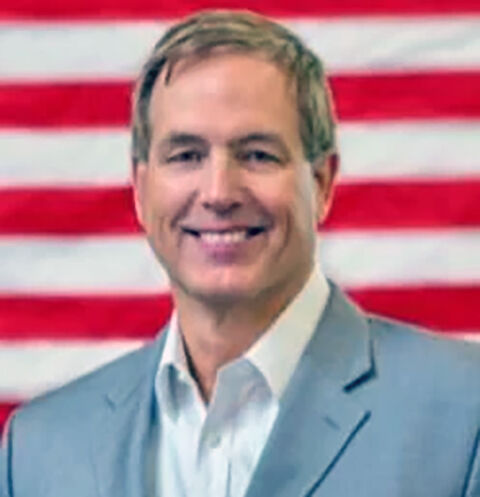
Jim Lamon
But because all charges were dismissed, Myers found he no longer had a legal basis to rule on the defendants' bid for dismissal under the anti-SLAPP law.
The defendants, however, say the trial court still owes them an answer, which is why they are asking the Court of Appeals to intercede.
Besides Lamon, four other defendants have filed notices of appeal and plan to litigate the anti-SLAPP issue: John Eastman and Christina Bobb, former Trump attorneys; Mark Meadows, Trump's former chief of staff; and Tyler Bowyer, chief operating officer of Turning Point Action.
State Sen. Jake Hoffman, Trump adviser Boris Epshteyn and local Republican Nancy Cottle also joined in notices of appeal.
"The defense position is that you can't just dismiss your way out of an anti-SLAPP violation,'' said Ashley Adams, an attorney for Eastman. "This has to be addressed because that's the purpose of the statute — to make sure people aren't prosecuted for exercising their First Amendment rights.''

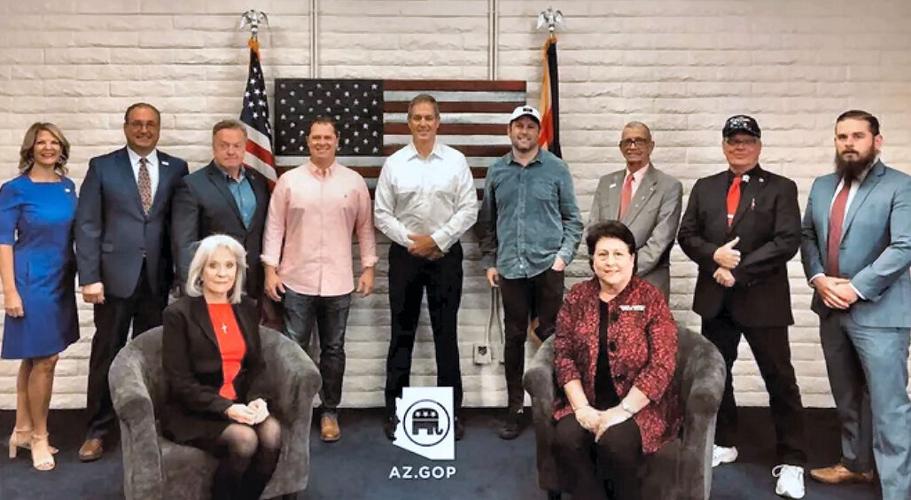
This 2020 photo from the Arizona Republican Party shows the 11 GOP electors posing for a group photo after they signed documents falsely claiming the state’s electoral votes were won that year by Donald Trump, not Joe Biden.
Could set precedents
What the appellate court decides could set new precedents about when those facing criminal charges or possible charges can use the anti-SLAPP law to short-circuit future prosecutions.
Lamon led the pack in filing with the Court of Appeals.
But unlike the other defendants, whose charges were dismissed en masse in August, Lamon's charges were dismissed without prejudice in January 2025 after he agreed to provide emails to the state.
Still, he presents the same argument — and says he's entitled to a ruling that would preclude any effort by Mayes to refile charges against him.
Lamon's attorneys argue Myers not only must rule on the anti-SLAPP issue but must dismiss all pending charges and award attorneys' fees.
"The trial court had jurisdiction to act, and it also had a duty to act," Cooper wrote.
Defendants have sought to end the case using the anti-SLAPP law from the start.
Of note is that the original statute covered only civil lawsuits. But in 2022, ahead of Mayes' election as attorney general, the Republican-controlled Legislature expanded it to require dismissal of criminal charges, a first in the nation among anti-SLAPP laws.
To win dismissal, defendants must first prove the prosecution was "substantially motivated by a desire to deter, retaliate against or prevent the lawful exercise of a constitutional right."
In February 2025, Myers found the electors had done that.
He ruled that statements Mayes made on the campaign trail previewing the coming investigation and indictment of those in the "fake elector'' case at least initially established some motivation to target the defendants' exercise of a constitutional right.

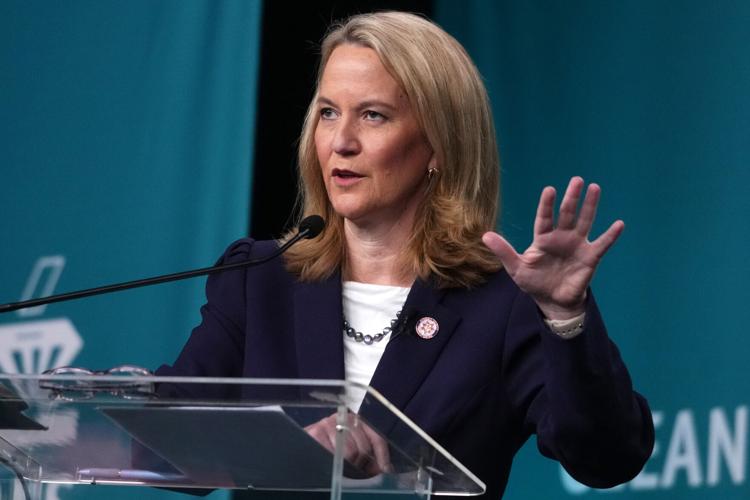
Attorney General Kris Mayes
With Myers ruling for the defendants, the burden shifted to the state to prove to him it did not, in fact, seek to deter the defendants' constitutional rights.
The state never took that step. Instead, Mayes appealed the anti-SLAPP ruling, and the appellate court paused lower court proceedings.
The Court of Appeals declined to consider the state's case. But, by the time the anti-SLAPP appeal had wrapped up, the original underlying indictment had been tossed based on the judge's ruling that prosecutors had failed to provide all relevant information to the grand jury.
Defense arguments
Still, defendants argue that the state's lack of response means it failed to meet its burden to show the indictments were not political. They say that because Myers said the defendants succeeded on the first step of the anti-SLAPP argument, the case must be dismissed.
Lamon's attorneys say the trial court still has discretion to decide whether charges are dismissed with prejudice, meaning they cannot be refiled, or without prejudice, allowing new charges. But Cooper noted that the defendants, as the currently prevailing party in the anti-SLAPP case, would be entitled to dismissal and attorneys' fees.
Missing from Lamon's filing is an argument that he has legal standing to bring the special action in the first place. A lack of currently active charges previously proved fatal to Lamon's request for a ruling on the anti-SLAPP claim in the trial court.
But Lamon, like his co-defendants, could face criminal charges again, with Mayes having vowed to pursue the case. And the Court of Appeals can exercise broad discretion in deciding whether to consider a special action petition.
Eastman, Meadows, Bowyer and Bobb have not yet filed an opening brief with the Court of Appeals but have notified the Superior Court of their plans to do so.
Bobb is also appealing Myers' ruling granting the state's motion to dismiss without prejudice after the judge threw out the original indictment, as well as his ruling denying a separate motion to disqualify Mayes based on association with the national elections group States United Democracy Center.
The court has yet to set a briefing schedule for Meadows, Bowyer, Bobb and Eastman.
Whether the appeals court takes up Lamon's special action and the defendants' appeals could be especially instructive for future use of the anti-SLAPP law.
Arizona is the only state to include criminal charges in its anti-SLAPP law. And, so far, appellate courts have declined to issue binding rulings on how it should be used.