After crossing the U.S.-Mexico border near Douglas, Arizona the night of July 2, Lesli Vaca Díaz froze when a Border Patrol vehicle's headlights suddenly illuminated her, then sped towards her. When the truck stopped, the Colombian national, who was almost seven months pregnant, instinctively started to run, she said.
Before she made it far, one of the border agents struck her so forcefully from behind, near her kidneys and spine, that the wind was knocked out of her and she fell to her knees, Vaca Díaz said.
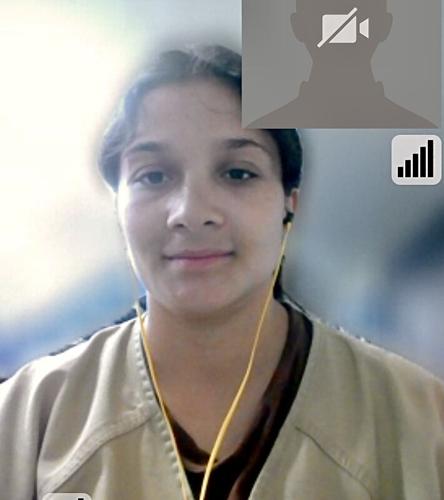
"He pulled me up by my jacket, like he was lifting a dog, and slammed me against the truck," she said, speaking to the Arizona Daily Star on a video call from Eloy Detention Center.
As the agent searched her, pressing her stomach against the truck's door, Vaca Díaz said she repeated in Spanish and English, "I'm pregnant, I'm pregnant."
People are also reading…
Vaca Díaz, who is just over 5 feet tall, was 27 weeks pregnant at the time, almost in her third trimester. She believes the agent kicked her or kneed her in the back, as a hand alone couldn’t have exerted so much force, she said.

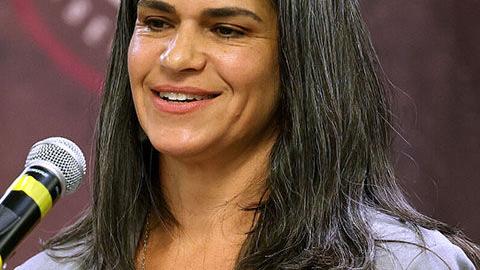
Despite being seven months pregnant, Colombian national Lesli Vaca Díaz, 29, is being detained at Eloy Detention Center in Arizona as her civil deportation case proceeds. Advocates say U.S. Immigration and Customs Enforcement is violating its own 2021 directive which advises against detaining pregnant, nursing or postpartum women except in "exceptional" circumstances.
As her back pain intensified in the Border Patrol vehicle, Vaca Díaz was taken to an emergency room near the border, where medical staff told her she was at risk of early labor and losing her baby, she said.
Vaca Díaz, 29, was then flown by helicopter to Banner University Medical Center in Tucson, where she was admitted until July 5. During that time, border agents and hospital staff prohibited her from calling her worried family, or an attorney, until someone at the hospital finally helped her call a lawyer July 4.
"She was being held incommunicado," said Tucson immigration attorney Luis Campos, who is now formally representing Vaca Díaz.
U.S. Customs and Border Protection, Border Patrol's parent agency, did not respond to the Star's specific questions about the incident, submitted July 14, but a CBP spokesman provided an emailed statement late Friday night.
"While in CBP custody, the individual was transported to a hospital for pregnancy-related care and evaluation. CBP’s Office of Professional Responsibility is investigating the allegations, and no additional information is available at this time. CBP remains committed to upholding the highest standards of professionalism," said the statement in full.
Vaca Díaz is one of two pregnant women in Arizona to have been hospitalized this month while in federal immigration custody, the Star has confirmed. Both are now in ICE custody at Eloy Detention Center, which is operated by for-profit prison company CoreCivic. ICE handles detainees' medical care at Eloy.
The second pregnant woman, Honduran national Wendy Baca Sánchez, who is five months pregnant, told the Star she's been hospitalized several times since she was detained by border agents in late June, near San Miguel, Arizona.
That includes a hospitalization on July 10, when Baca Sánchez said she started vomiting and experiencing contractions at San Luis Regional Detention Center, due to what a doctor later said was dehydration. At San Luis, Baca Sánchez said she received no prenatal care over several days and little food. The water smelled and tasted bad, so she drank very little, she said.
The detention center in west Arizona is run by Louisiana-based LaSalle Corrections. In an email LaSalle spokesman Scott Sutterfield said for privacy reasons he could not respond to the Star’s specific questions about Baca Sánchez’s care at San Luis. He said, without elaborating, "Some of the information you have received is not accurate."
"We can assure you that the San Luis Regional Detention Center adheres to established medical standards to ensure the health and well-being of those in our care. This includes providing access to professional medical care, mental health services, and necessary medications," the statement said.
A third Eloy detainee told the Star she had a miscarriage at Eloy last fall, which she blamed on inadequate medical care.
ICE defended its care of pregnant detainees in an emailed statement.
"ICE provides comprehensive medical care from the moment an individual enters custody, including medical, dental, and mental health services, as well as access to medical appointments and 24-hour emergency care," ICE spokesman Fernando Burgos said. "For many individuals, this represents the most comprehensive healthcare they have received."
When Baca Sánchez came into ICE custody, medical staff saw "no signs of dehydration or distress" during intake, Burgos said. Of her hospitalization, he said, "She returned to the facility the same day, and medical staff evaluated her, noting a pregnancy without complications."
ICE officials can use their discretion to release people in civil immigration detention on humanitarian parole.

Colombian national Lesli Vaca Díaz, who is now seven months pregnant, is one of two pregnant women in Arizona to have been hospitalized this month while in federal immigration custody, the Arizona Daily Star has confirmed. Both are now in ICE custody at Eloy Detention Center.
But Burgos said, "Baca Sánchez will remain in ICE custody pending her removal."
ICE has not responded to the Star's query on whether Vaca Díaz could be released on parole, due to her advanced pregnancy and recent hospitalization.
'Alarming' increase
Advocates worry a rising number of pregnant, nursing and postpartum women are being detained and held in civil ICE detention in the second Trump administration, despite a 2021 ICE policy directive advising against detaining those women, except in "exceptional" circumstances or when required by law.
ICE did not respond to the Star's query about whether the agency is still bound by the directive.
Advocates with the Florence Immigrant and Refugee Rights Project are aware of at least seven pregnant women held in Arizona ICE detention centers over the past year, said Liz Casey, social worker for the Arizona nonprofit, which provides free legal services and social support to ICE detainees.
While in some U.S. states, ICE appears to be adhering to the 2021 directive, that's not the case at Arizona's detention centers, Casey said.
"In Arizona, they are not abiding by their own memo," she said. "We have definitely seen pregnant women being detained for months, and late into their pregnancies."
ICE is no longer making its semi-annual reports to Congress on the number of pregnant, nursing or postpartum women in its custody. But in response to U.S. legislators' request for information last fall, the U.S. Department of Homeland Security, ICE's parent agency, said there were 86 pregnant women in ICE custody on Feb. 16, 2026.
The September 2025 letter from legislators pointed to an "alarming" number of pregnant, nursing and postpartum women in ICE custody, highlighting concerns of insufficient nutrition and a lack of medical care for pregnant detainees.
"We urgently request that ICE cease detaining pregnant, postpartum, and nursing women absent exceptional circumstances and that the agency provide information about the number and treatment of pregnant, postpartum, and nursing women in its custody," the letter said.
During a Senate Judiciary Committee visit to a Louisiana ICE detention center, officials reported 14 pregnant women detained there, some of whom said they had not seen a doctor at all, the letter said. One woman, who had a miscarriage while detained, was "allegedly still bleeding" when she was deported, according to the letter.
Between January 2025 and February 2026, DHS deported 363 pregnant, nursing or postpartum women, DHS told legislators.
Claim: Miscarriage 'dismissed'
Another Eloy detainee said she had a miscarriage after she arrived at Eloy in November 2025.

Mexican national Beatriz Pastrana Candela, pictured here in a 2016 photo from her Facebook page, said she had a miscarriage at Eloy Detention Center soon after she was detained there in November 2025. Eight months later, the 38-year-old is still at Eloy and "desperate" to see her three children again, her sister said.
Mexican national Beatriz Pastrana Candela, a mother of three, was arrested by ICE in Phoenix last year when she was nearly three months pregnant. She told the Star earlier this year that she'd complained of abdominal pain for days while in ICE custody, before and after her Nov. 24 arrival at Eloy.
Pastrana Candela, 38, said some officials at Eloy didn't believe she was pregnant, despite a positive pregnancy test recorded in her medical records, which Pastrana Candela mailed to a Star reporter. At Eloy she did not get prenatal medication or the accommodations that are supposed to be provided to pregnant detainees, such as the use of the bottom bunk and extra food, she said.
Eloy operator CoreCivic did not respond to the Star's July 14 request for comment.
When she began bleeding heavily Nov. 28, her medical records indicate she was told she was having a miscarriage. Pastrana Candela said she was taken to a hospital several times, but she never saw a gynecological specialist.
Pastrana Candela said she believes the fetus was expelled in the toilet of her cell in early December, a traumatic experience for her and her roommate.
"They never did anything to save my baby's life. I never received adequate care, much less food for a pregnant woman," she said. "I asked for folic acid and other vitamins, and it was as if no one wanted to listen to me."
Pastrana Candela continued bleeding for four weeks afterwards, her medical records show. She said her complaints were "dismissed" by Eloy staff.
By the time Pastrana Candela was sent to Banner Casa Grande Medical Center on Jan. 1 for a manual aspiration of her uterus, due to the "incomplete miscarriage," she was experiencing fevers and nausea, and was at risk of "septic abortion," a serious uterine infection, her medical records show.
In the weeks that followed, she saw a mental health specialist at Eloy numerous times, due to postpartum depression.
"They allowed my child to die," Pastrana Candela told the specialist in January, according to the narrative recorded in her medical record. Pastrana Candela described feelings of despair due to the miscarriage and her continued separation from her family, the specialist wrote.
Six months later, Pastrana Candela is still detained at Eloy. ICE and DHS have not responded to the Star's questions, sent July 15, on Pastrana Candela's claims.
Border agents at hospital
Vaca Díaz said she's asked repeatedly to file a complaint against the border agent who she says assaulted her July 2, but she's not been allowed to, neither while in Border Patrol custody nor since she was transferred to ICE custody.
After she was helicoptered to Banner University Medical Center in Tucson after her July 2 arrest, Vaca Díaz struggled to sleep because an armed border agent remained in her room, a reminder of the assault she experienced, she told the Star. The agent also remained in the room when she showered and during vaginal exams, she said.
"The nurses told them that I was a woman and that I had my privacy, that they had to leave, but they wouldn't leave," Vaca Díaz said.
A border agent tried to prevent Vaca Díaz from walking around her hospital room, even though standing alleviated her pain, until a doctor intervened and allowed her to get up, she said.
"From the blow I took, I couldn't lie down for long because my spine went numb, and started giving me shocks in my abdomen. That's the pain I feel," she said.
At Eloy, Vaca Díaz said she's still suffering the effects of the border agent's blow to her back. In a July 16 written message, she said she'd told Eloy medical staff that "I've never had this kind of pain before," radiating through her pelvis, which she described as "unbearable."
At Banner, hospital staff prevented Vaca Díaz from contacting her family or an attorney, which Vaca Díaz said was at the instruction of the border agents.
Her older brother José Antonio, 31, who lives in Colorado, said he was desperate to hear from his sister during those days. He called the border agent's behavior while arresting his sister an "abuse of authority."

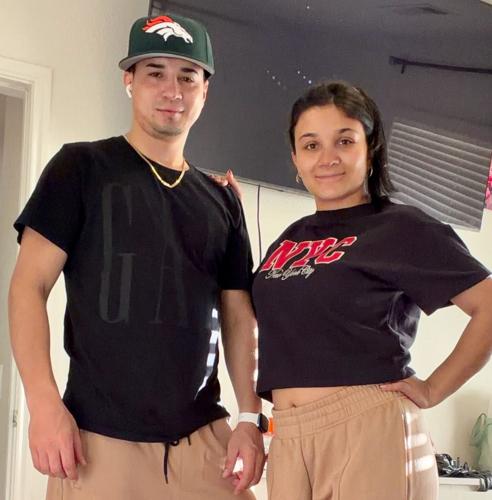
Eloy detainee Lesli Vaca Díaz's older brother José Antonio, pictured at left, said he's outraged by his pregnant sister's alleged treatment by the Border Patrol agent who Vaca Díaz said assaulted her when arresting her July 2. "How can a police officer kick a woman?" said José Antonio, 31, who asked the Star not to publish his full name because he does not have legal status. "It's obvious that it's a crime to cross the border, but that's not how a police officer, especially a Border Patrol officer, should act."
"I do want justice to be done in this case, because despite everything, she's a woman, and how can a police officer kick a woman?" said José Antonio, who asked the Star not to publish his full name because he does not have legal status. "It's obvious that it's a crime to cross the border, but that's not how a police officer, especially a Border Patrol officer, should act."
Immigration attorney Campos said he was finally able to talk to Vaca Díaz July 4, after she repeatedly asked hospital staff to let her speak to a lawyer.
Vaca Díaz said when she was discharged July 5, hospital staff handed her medical records to Border Patrol agents without her permission; Campos said he's been trying to get a copy of the medical records since Vaca Díaz formally retained him.
Banner declined to answer the Star's specific questions on Vaca Díaz's claims, citing privacy laws.
"Banner Health is committed to providing safe, high-quality care to all patients while maintaining a secure environment for patients, staff, and visitors," a spokesperson said in a Thursday email. "We maintain policies governing the care of patients who are in the custody of law enforcement or correctional agencies, including federal immigration authorities. Under those policies, the custodial agency remains responsible for custody, security and related restrictions applicable to individuals in its custody, while Banner clinicians remain responsible for medical care and treatment decisions."
The Star obtained a copy of Banner's policy on patients in law enforcement custody, which doesn't distinguish between patients held in DHS custody, which is civil in nature, and those who have been charged with crimes.
"In-Custody Patients are not allowed telephone privileges, unless authorized by Law Enforcement Officer or Correctional Officer," and visitors are almost always prohibited, the policy states.
At Banner, Vaca Díaz was in the custody of the Border Patrol, an agency of DHS, and had not yet been charged with a crime.
On July 6, the U.S. Attorney's Office charged Vaca Díaz with illegal entry, a misdemeanor. Two days later the criminal charges were dropped and Vaca Díaz was transferred back to DHS custody, as her civil deportation case proceeds, court records show.
'I'm very hungry'
Both Baca Sánchez and Vaca Díaz crossed into the U.S. through the desert, outside ports of entry in Arizona. As the Trump administration has restricted migrants' access to official ports of entry — preventing asylum seekers from even approaching the ports — advocates say more desperate migrants will risk their lives in the desert to reach U.S. soil, where under current law they can request asylum.
Speaking from Eloy, in separate interviews, Baca Sánchez and Vaca Díaz both told the Star they are hungry and not receiving enough nutritious food. Both are exhausted from being transferred between several Arizona detention facilities over the past two weeks. Both spent time at the Florence Service Processing Center, which is currently experiencing a measles outbreak.
"I've been enduring the cold and hunger" while detained, said Baca Sánchez, referring to the "freezing" air conditioning in some detention centers. "They just keep sending me around. I've already been to about six places. They don't tell me anything."
"There still isn't enough food," said Vaca Díaz, after her July 9 transfer to Eloy, about 50 miles northwest of Tucson. "I'm very hungry, and I keep telling them that I'm pregnant, that I want food."
And as of Friday, Vaca Díaz and Baca Sánchez said they're now enduring a new physical stress at Eloy: The air conditioning had been broken for several days.
"My feet, hands and face are swelling at night, and I feel like I'm suffocating," Vaca Díaz wrote Friday, through a prison-messaging app.
CoreCivic did not respond to the Star's Friday morning query on the broken air conditioning.
'Only option I had'
Vaca Díaz has a credible-fear interview coming up with an asylum officer, who will decide if she's eligible to then file an asylum petition, Campos said.

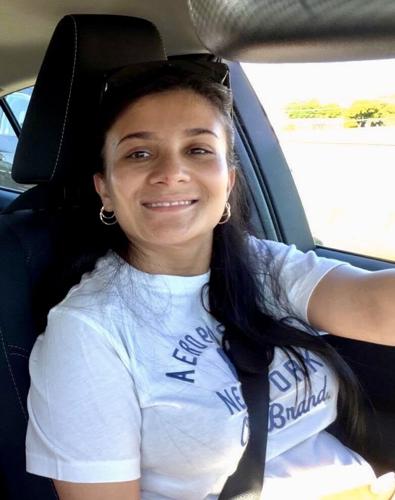
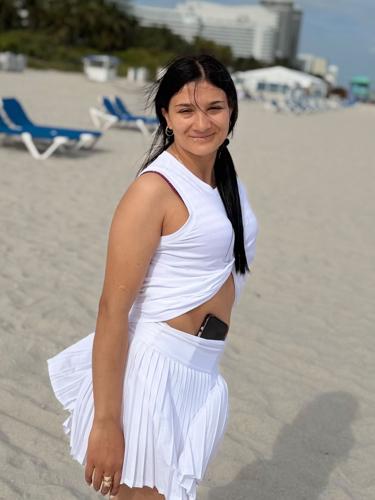
Lesli Vaca Díaz, pictured in 2025 in Miami, said she asked repeatedly to file a complaint against the border agent she says assaulted her July 2, but she hasn't been allowed to while in federal custody. Vaca Díaz, 29, is now seven months pregnant and has been detained at Eloy Detention Center since July 11, despite a 2021 ICE directive advising against detaining pregnant women.
Under previous presidential administrations, Vaca Díaz almost certainly would have been able to fight her deportation from outside of a detention facility, attorney Campos said. But ICE has not responded to his request that she be released on humanitarian parole, due to her advanced pregnancy and "delicate" medical state, he said.
"Things have radically changed," he said. "This particular government is not interested in releasing individuals, even on humanitarian grounds."
Lesli's brother José Antonio said his sister previously lived with him and his family in Colorado, and they're hoping she can return there as she fights her deportation case.
"She's the only sister I have," he said. "She told me that being confined is driving her crazy. I know her very well. She feels alone."
Vaca Díaz was deported once before, but returned to the U.S. this month because she no longer has any family in Colombia — all are now in the U.S. — and she says she is not safe there.
Eloy detainee Baca Sánchez said she has a family member in Houston whom she could stay with as her removal case proceeds, making her detention "completely unnecessary," she told the Star. The family member, who asked not to be named by the Star, confirmed that his family would welcome her if she were released on parole.
But Baca Sánchez is likely facing expedited removal; ICE sent her a letter July 14 saying she will be deported within seven to 10 days, she said.
Baca Sánchez described tearfully how, in Honduras, the father of her child physically attacked her when he found out she was pregnant, throwing her to the ground and choking her. She was later extorted by local gangs who demanded money from her at the store where she worked, and threatened her safety if she didn’t pay, she said.
She never would have left her home by choice, she said.
"That's why I decided to come here pregnant, risking my baby, risking my life," she said. "It was the only option I had. I can't go back to my country."
Contact reporter Emily Bregel at ebregel@tucson.com. On X, formerly Twitter: @EmilyBregel

Emily Bregel
Border reporter