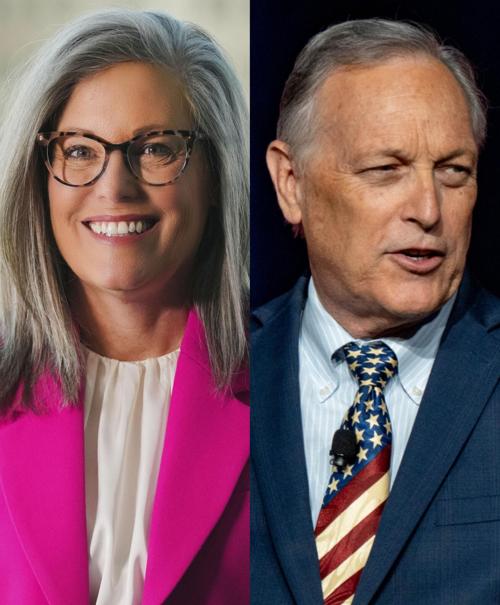
Gov. Katie Hobbs and her Democratic allies have been using their massive fundraising advantage to portray GOP foe Rep. Andy Biggs as out of touch with Arizonans feeling the brunt of higher costs.
One method of attack has been to draw attention to a 2025 bill Biggs cosponsored in Washington, D.C., that proposed a 23% sales tax as part of a massive overhaul of federal tax policy. Hobbs' first negative advertisement of her 2026 reelection bid debuted one day after the July 21 primary, claiming Biggs' plan would raise prices "on everything" from gas and groceries to rent.
It would be "a Biggs tax hit on family budgets," the narrator of the 30-second spot says. At least a half-dozen times since the ad went live, Democratic political groups have tried to hit Biggs on the issue, including in news conferences and media blasts.
But did Biggs, a small-government and fiscal conservative who brags he's never voted for a tax hike, actually support creating a national sales tax? The answer boils down to yes, but it's complex.
People are also reading…
Biggs was one of 14 Republican co-sponsors on a bill introduced by Georgia Republican Rep. Earl "Buddy" Carter in January 2025. The bill, named the Fair Tax Act of 2025, did not advance.
What would the Fair Tax Act do
The measure proposed a sweeping overhaul of the federal tax code by replacing several federal taxes — including the income tax. In place of those taxes would be a new 23% federal sales tax. The bill allowed Americans with the lowest incomes to avoid paying taxes altogether, according to Biggs and the text of the bill, which created a rebate for those taxpayers.
Supporters said the proposed changes, which were introduced in Congress for more than two decades, would allow them to abolish the Internal Revenue Service. Biggs said the measure was a vehicle to start a discussion about overhauling federal tax policy with fairness in mind and balance the federal budget.
Hobbs and her allies were oversimplifying the bill in search of a "slogan, versus a complex discussion about how you make America's tax burden more equitable," Biggs told The Arizona Republic.
Her advertisements included a "gross inaccuracy" about his positions, he said.
"It's very different than running a straight tax increase, which is what Katie Hobbs did," Biggs said. "She wasn't eliminating any taxes, she was just flat-out increasing taxes."
That's a reference to a bill Hobbs sponsored with other Democrats in 2018 while she was in the state Senate. The bill proposed doubling the state tax on gasoline to 36 cents a gallon, and Hobbs said this year the purpose was to raise funds to maintain and improve Arizona roadways.
Her bill stalled in the tax-averse, GOP-controlled Arizona Legislature.
Biggs and Hobbs are both hoping to convince Arizona voters who are stressed by high costs that their plans are best for addressing affordability concerns. Hobbs, who was first elected in 2022, is seeking a second term this November while Biggs is hoping to flip the seat back to red. Biggs has represented Arizona's conservative 5th Congressional District since 2016.
Biggs, whose support of President Donald Trump's war in Iran and tariff policies has given Hobbs another line of attack, wants to eliminate the state's income tax. Republican Gov. Doug Ducey cut that to a single 2.5% rate in 2021. Biggs said he wants to eliminate that levy without raising any other taxes.
The state expects to collect $5.9 billion in individual income tax dollars for the current fiscal year, making up nearly a third of the state's general fund revenues of $18.9 billion, according to the Joint Legislative Budget Committee, the nonpartisan budget staff at the state Capitol.
To offset that, Biggs said the state could combat fraud in programs and "activate" state land and other "dormant assets," likening it to the federal government's recent attempts to ramp up leases or sales of federal land. Biggs said he believed the state income tax could be phased out without cutting existing state programs.
Hobbs meanwhile is campaigning on cutting taxes on tips and overtime, policies proposed by Trump and that she vetoed three times before signing into law. Republicans in the state say she's taking credit for someone else's idea, noting she proposed new fees as part of this year's state budget.
Hobbs has been critical of Ducey's flat tax for its hit to the state's bank account. She said in June she was willing to consider revenue raisers if needed to balance the state budget as long as they did not increase costs for Arizonans.