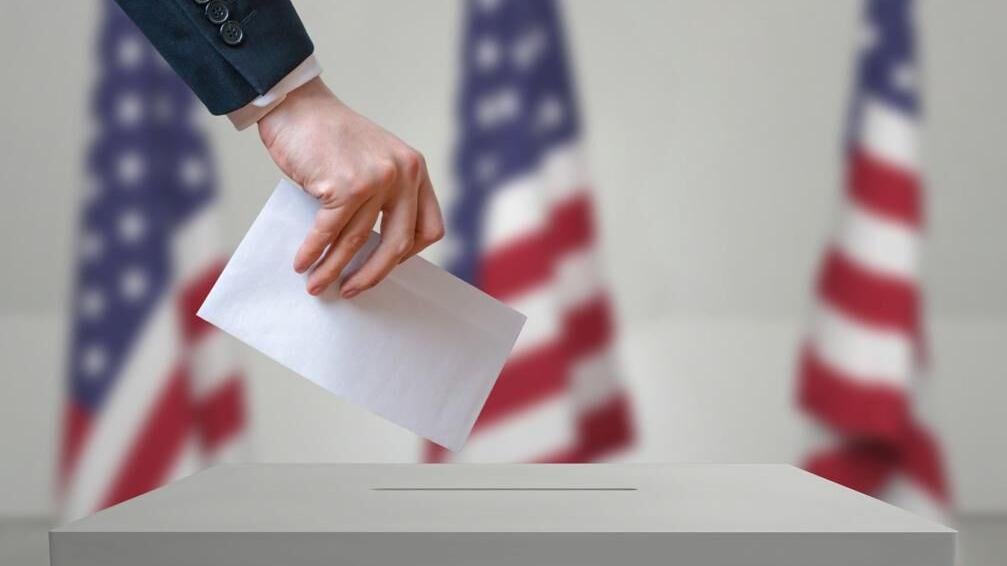
PHOENIX — The Arizona Supreme Court won't order Secretary of State Adrian Fontes to rewrite his description of a ballot measure that would make major changes in state election practices.
In a divided opinion Wednesday, Chief Justice Ann Scott Timmer said the language prepared by Fontes, which will go on every ballot, "is not false or clearly misleading.''
Timmer said the Arizona law that requires such explanations gives the secretary of state, along with the attorney general, broad discretion in determining what to put in the description and what to leave out.
But even if it did not, Timmer, joined by three other justices, said it doesn't matter. She said the supporters of the measure, Proposition 144, who filed suit, are not personally and immediately harmed by Fontes' decision. That means they lack standing in the first place to seek a court order to compel Fontes to change the wording, she said.
People are also reading…
Not everyone on the high court agreed.
"Petitioners, who are Arizona citizens and voters, have shown a sufficient beneficial interest to establish standing,'' wrote Justices William Montgomery and Kathryn King.
They said that while Fontes has discretion, that does not allow him to prepare a title for ballot measures that does not mention two provisions of Prop. 144: adding language into the state constitution that says only citizens may vote in Arizona elections, and that elections "shall be decided solely by the votes of eligible citizen voters.'' Montgomery and King said they would have directed Fontes to rewrite that.
Fontes, for his part, said that's not necessary in the 50 words he's given to write a title, considering the fact that it's already Arizona law that only citizens can vote in state elections. He said that, in a measure with multiple provisions, these were not "principal provisions'' that had to be pointed out to voters in the title.
The ruling comes a day after the Arizona Supreme Court rejected a separate legal argument that Prop. 144 should not be allowed on the ballot at all. The majority rejected arguments by Tempe City Councilman Randy Keating that there are too many unrelated proposed changes in election laws to be given to voters on a take-it-or-leave-it basis.
As approved by the Republican-controlled Legislature, Prop. 144 seeks to put several new provisions in the Arizona Constitution.
Aside from the ones about only citizens voting, it would require that voters who get their ballots in the mail have the option of not just dropping them off at polling places on Election Day — something already in law — but to have the ballots tallied at that time by presenting proof of identification.
That is designed to prevent delays in getting final results.
In 2024, about 265,000 early ballots were dropped off on Election Day, including more than 210,00 in Maricopa County. But election workers can't begin to verify them until after they've finished processing the ballots cast that day.
In 2022, it took days to confirm that Democrat Katie Hobbs had won the gubernatorial election over Republican Kari Lake. And all that led to more than a year of litigation.
Counties already have the option to offer on-site tabulation to voters; Prop. 144 would make it mandatory.
Another provision would require people to show "valid government-issued proof of identity'“ before casting a ballot.
That would include voters who drop their early ballots in the mail. But the measure does not specify exactly how that would occur.
The last provision would enshrine language in the Arizona Constitution giving lawmakers the right to enact election laws, including on early and mail voting, as long as legislators determine these changes are "rationally connected to a legitimate state interest,'' ranging from timely and accurate election result to the broader "preserving public confidence in the integrity of elections.''
Part of what provoked the lawsuit was that Fontes, in his description of that section, said its approval "may make it harder to challenge election laws.''
Attorneys for challengers, represented by America First Legal, argued that Fontes, an elected Democrat, was making a prediction of what might or might not happen, which they said he is not allowed to do.
Maricopa County Superior Court Judge Adele Ponce rejected that argument, saying the secretary is entitled to describe the potential impact of ballot measures.
"The description can reasonably be regarded as an attempt to provide necessary and appropriate information to the voting public,'' she wrote.
That decision was upheld by the unanimous Supreme Court.
Where King and Montgomery parted ways with the other justices was over the fact that Fontes, in writing a title for the measure that will appear on the ballot, did not mention the two sections of Prop. 144 that would put the citizenship requirement into the state constitution.
Howard Fischer is a veteran journalist who has been reporting since 1970 and covering state politics and the Legislature since 1982. Follow him on X, Bluesky and Threads at @azcapmedia or email azcapmedia@gmail.com.