The following is the opinion and analysis of the writer:

Hollie Colahan
For six decades, visitors to the Arizona-Sonora Desert Museum and Phoenix Zoo have been inspired by encounters with the Mexican grey wolf, by locking eyes with them, even for a moment, by hearing them howl, and by learning their story. Our institutions have been involved with recovery efforts from the very beginning. The Desert Museum was home to some of the ancestors of all living Mexican grey wolves, and both the Museum and the Zoo have contributed pups born in human care for release to the wild.
Driven to near extinction by the 1970s, Mexican grey wolf numbers are starting to recover due to a science-driven reintroduction program supported by the majority of Arizonans, and carried out by federal, state, and tribal agencies. Unfortunately, some Arizona legislators want to end the program prematurely, nearly guaranteeing the disappearance of the Mexican wolf from the wild once again.
People are also reading…
The Mexican grey wolf is the smallest, southernmost, rarest and most genetically distinct grey wolf. As a top predator, it plays a key role in the ecosystem, helping to keep the food web balanced. Thousands of these wolves once ranged throughout the southern U.S. and northern Mexico, but by the 1970s, they had been hunted, trapped and poisoned to near oblivion. They were listed as endangered in 1976, and a species recovery plan was approved in 1982. The plan calls for two stable, genetically diverse populations, one in the U.S. and one in Mexico. The U.S. goal is to have a stable population over eight years, averaging 320 wolves. The wolf count in the U.S. reached 317 in 2025, demonstrating success from many years of hard work. Unfortunately, the current count in Mexico falls far short of its goal.
The genetic diversity of the wild Mexican grey wolf population has also not yet recovered. All wild wolves are descended from only seven founders, and a couple of those founders are overrepresented due to their success in breeding. To increase diversity, wildlife managers introduce pups from captive-bred wolves into wild wolf dens, in a process called cross-fostering. Recent genetic analyses showed that a Phoenix Zoo cross-fostered wolf pup sired offspring born in the wild, providing hope that this strategy will continue to boost the wild population.
Wolves mostly eat elk, deer and other wild animals, helping to keep these populations in balance with the resources of the habitat. Some wolves prey upon livestock, impacting ranchers in the reintroduction area. Although cattle and sheep are much more likely to die from disease, complications during birthing, weather events, injury and other predators, wolves have a disproportionate impact on some ranchers.

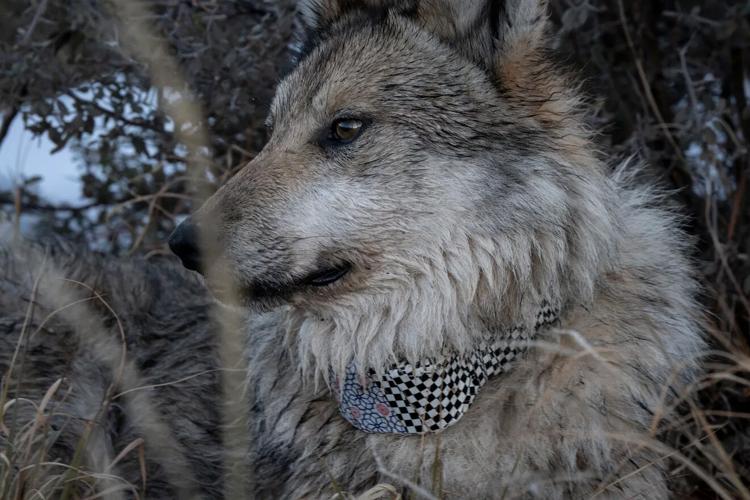
This file photo shows a Mexican gray wolf released south of Hannagan Meadow in 2024. A wandering wolf known as Taylor or M3065 has become something of a problem child for the U.S. Fish and Wildlife Service.
To compensate ranchers, a joint federal-state program reimburses them for their losses. The program also provides funds to keep wolves away from cattle by hiring range riders and installing deterrent fencing and noise devices. These programs are making a positive impact: The number of depredations has not increased for several years despite the growing number of wolves.
The Mexican grey wolf recovery program is under attack at the state and federal levels. Bills pending in the Legislature and Congress would remove endangered species protections and prohibit critical program activities, such as the introduction of wolf pups to foster genetic diversity.
Some of the rhetoric around these legislative efforts is not supported by data; for example, wolves have not attacked people, and the wolf population is not recovered. If legal protections are removed, wolf releases and cross-fostering would come to a halt. Monitoring would end, as would funding to compensate ranchers for losses. And once again, wolves would be hunted, trapped and poisoned.
The Desert Museum and Phoenix Zoo do not want to be the only places where wolves can live in our state! Seek out science-based information on this topic from the Arizona Game and Fish Department, U.S. Fish and Wildlife Service, and the websites of accredited zoos, like our institutions. Help us raise awareness of the plight of these magnificent and ecologically essential animals. We urge you to share your thoughts about protecting wild wolves with your communities and elected officials.
Follow these steps to easily submit a letter to the editor or guest opinion to the Arizona Daily Star.
Hollie Colahan is Executive Director of the Arizona-Sonora Desert Museum. Norberto J. (Bert) Castro is President and CEO of the Arizona Center for Nature Conservation/Phoenix Zoo.