The rule of law in America is facing an unprecedented stress test.
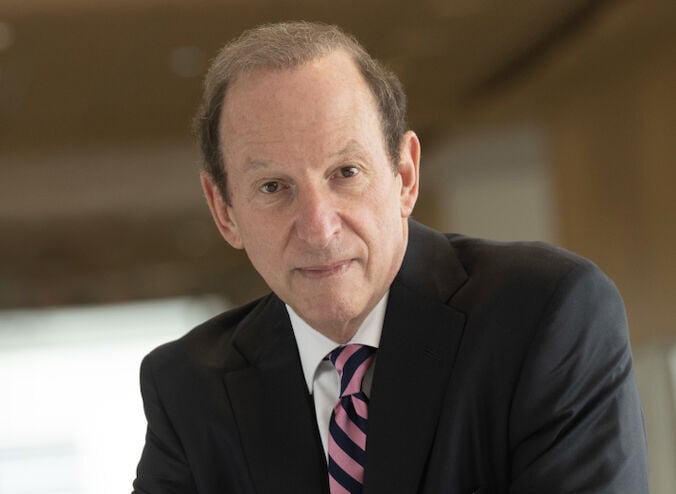
Abbe Lowell
Steven Salky
The targeting of political rivals for criminal prosecution — facts and evidence notwithstanding — has drawn a lot of attention. But something else is going on: Federal grand juries and trial juries are exercising a renewed sense of independence, serving as a critical check on perceived abuses in the criminal justice system.
For decades, grand juries deciding not to bring charges was unusual. Because evidence is presented to grand juries solely by a prosecutor without a defense presence, the prevailing wisdom held that a prosecutor could “indict a ham sandwich.”
That era appears to be closing.
In some of the most publicized instances of the last year, federal grand juries in Virginia have refused to indict the attorney general of New York for alleged mortgage fraud — not once, but twice — despite prosecutors seeking friendlier juries across different districts in the state.
People are also reading…
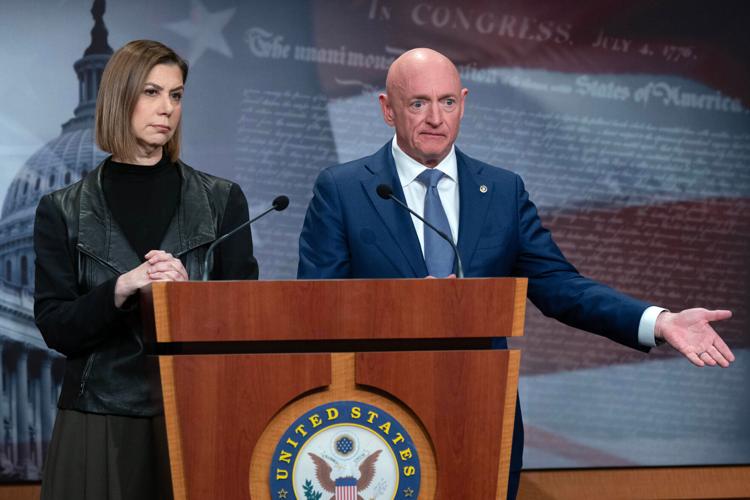
More recently, a federal grand jury in Washington rejected an indictment sought against six Democratic members of Congress who had posted a video advising active-duty troops of their right to refuse illegal orders.
Data from the National Association of Criminal Defense Lawyers’ Criminal Case Tracker reveals that these are not isolated incidents. Many grand juries nationwide are refusing to advance felony charges presented by federal prosecutors. This is likely happening more than we know, because prosecutors in several high-volume districts have reportedly delayed notifying courts of these decisions. Or they are attempting to bypass reporting requirements.
The “juror rebellion” extends to the trial phase as well. Faced with what many perceive as the overcharging of minor incidents, trial juries are returning “not guilty” verdicts at a high rate. For instance, after a grand jury refused to indict Shawn Charles Dunn for a felony after he threw a Subway sandwich at a federal agent, prosecutors in Washington, D.C., used their authority to charge him with misdemeanor assault. A jury promptly acquitted him.
This trend is particularly acute on the West Coast. Juries in Los Angeles have acquitted several defendants on charges they interfered with or assaulted federal officers when those cases proceeded to trial in 2025 and early this year.

U.S. Rep. Elissa Slotkin of Michigan and U.S. Sen. Mark Kelly of Arizona speak on Capitol Hill in February after a federal grand jury in Washington rejected an indictment against them and four other Democratic members of Congress who had posted a video advising active-duty troops of their right to refuse illegal orders.
Furthermore, the speed of these deliberations signals a profound skepticism of the government’s theories. In a recent case where a homeless man was charged with a felony for shining a toy key-ring laser near Marine One, the jury returned a “not guilty” verdict in 35 minutes.
Our nation's Founders embedded the grand jury and the trial jury into the Bill of Rights precisely for this reason. They viewed the concurrence of impartial citizens — drawn from all races, ages and political backgrounds — as the ultimate safeguard against a government misusing criminal law.
While the use of the justice system to punish political enemies remains a dark chapter, the silver lining is the reawakening of the American people. This trend is not a legal quirk. It is a restoration of the jury’s role as the final bulwark of liberty.
This awakening should be celebrated by those on both sides of the aisle who value the rule of law over the rule of any single administration.
Lowell represents several individuals who have been targeted in recent federal probes. Salky is an attorney and the creator of the National Association of Criminal Defense Lawyers’ Criminal Case Tracker. They wrote this for InsideSources.com.