The following is the opinion and analysis of the writers:

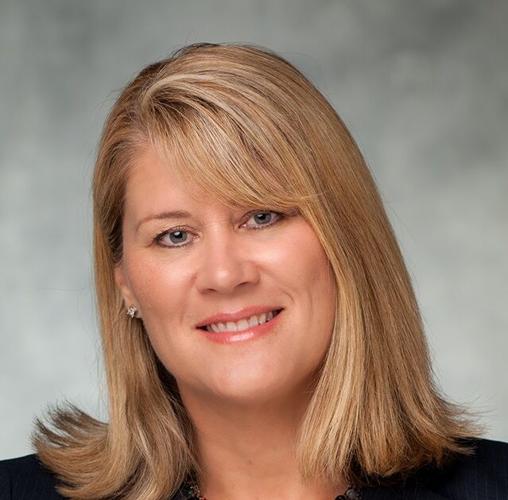
Amber Smith

Shelley Watson
The business leaders of Tucson Metro Chamber and Southern Arizona Leadership Council applaud the recent efforts led by Pima County Board of Supervisors, together with Tucson’s mayor and City Council, leaders in Marana and Oro Valley, and several nonprofit and private sector organizations who have collectively pledged more than $11 million for a targeted investment in high quality pre-K.
The investment will be used for scholarships for more than 1,200 preschool-age children in Pima County whose annual family income is up to 200% of the federal poverty level (currently $53,000 and below for a family of four).
The lifetime benefits that accrue to children in poverty who attend high quality preschool have been widely documented. These children achieve higher educational attainment, have greater lifetime earnings, rely less on public assistance and have fewer interactions with the criminal justice system compared with those who do not attend quality pre-K. Then there are the social and emotional skills preschool instills, which are critical for success in life and are the “soft skills” employers desire.
People are also reading…
From an economic standpoint, there is a growing recognition of the importance of access to quality pre-K in enabling parents and caregivers to work. The current tight labor market needs additional employees, but the challenges around affordability and accessibility to child care are limiting workers’ ability to participate in the labor force, resulting in reduced productivity and tax revenues.
To better understand the degree to which complications around child care are impacting employers and employees in the greater Tucson region, our organizations teamed up with Cradle to Career Partnership at United Way of Tucson and Southern Arizona to conduct a survey.
Among all races and incomes, over 59% of employees responding indicated they had missed a full day or shift at work because of problems related to child care.
When asked whether cost is a major barrier to child care, 72% of those with an annual income below $60,000 indicated that it is. Among all respondents, 57% of employees told us that cost is problematic, which included those self-reporting higher income levels.
Significantly, 66% of respondents indicated that if they had access to affordable, high-quality child care, they would be less distracted at work. And as reflected by the fact that 84% of the respondents to the survey were women, they are disproportionately impacted by child care issues.
Of employers responding, 76% reported being negatively impacted by employees’ child care problems, with 70% citing lost productivity. And 62% of employers are concerned that some employees will leave the organization because of child care issues.
According to MAP Dashboard, Tucson ranks ninth out of 12 peer metropolitan statistical areas with respect to the percentage of 3- and 4-year-olds enrolled in preschool.
Several of our peer communities, along with dozens throughout the country, have begun implementing publicly funded, targeted pre-K programs. Last November, 73% of voters in San Antonio reauthorized eight more years of a preschool program for children in poverty, funded by a reasonable 1/8th cent sales tax.
Clearly, voters there believe the program has had a positive impact, and a 2019 study showed that for every dollar invested, the community receives an average benefit of $1.56 — a 56% return on their investment.
For Southern Arizona’s economy and quality of place to prosper, we need to both attract talent and “grow our own” through a targeted investment in pre-K for children in lower income families.
Astute business leaders recognize that investing in access to quality preschool benefits our region in significant ways: It helps employers now by allowing more parents and caregivers to participate in the workforce, and it benefits vulnerable children into the future by giving them a launching pad to greater academic attainment, a good job and improved quality of life.
This socioeconomic win-win is especially timely as businesses in our region strive to rebound from the pandemic.
Amber Smith is President & CEO of Tucson Metro Chamber. Shelley Watson is Vice President of Southern Arizona Leadership Council