CHICAGO — Scott Spiezio pulls up in his Subaru Forester, finds a parking spot at an IHOP on the corner, walks two blocks, enters a condo that once was used for Chicago Cubs charity events, and hurriedly looks for the bathroom.
He has been driving nearly two hours, he’s 53 years old and his bladder ain’t what it used to be.
Then again, neither is his life.
This is a man who once had it all, a World Series hero who drove loaded cars. He had homes everywhere, handing out money to virtually everyone who asked, once even paying $1 million in cash for a down payment on a condo.
Life couldn’t have been any better.
Until it couldn’t have been any worse.
He lost his marriage, his kids, relationship with his parents, his homes, his cars, his bank accounts, his credit cards, his self-respect, and damn near his life.
People are also reading…
There were years he was drunk or stoned virtually every day, entering a dozen drug and alcohol rehab centers across the country. He went to Alcoholics Anonymous every single day for four consecutive months, only to be back on the streets within days looking for his next high.

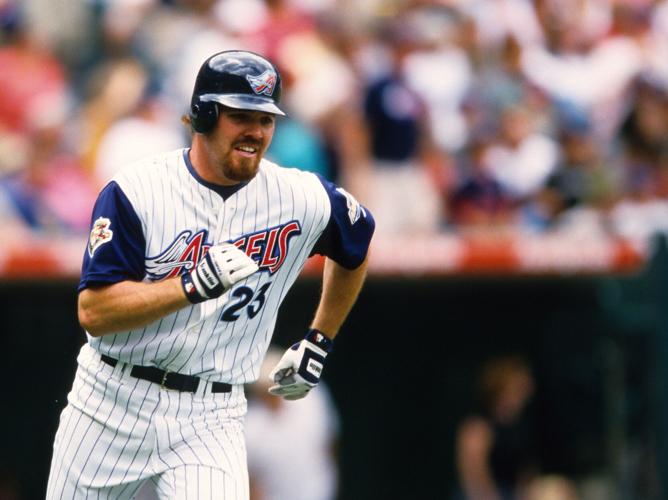
Anaheim Angels first baseman Scott Spiezio runs the bases during a June 3, 2001 game against the Kansas City Royals at Edison Field in Anaheim, Calif.
He once spent a month in a drug rehab center in Tucson, and then started drinking again on his flight home.
He was ruining lives, destroying relationships, and wondered at times if he were better off dead, knowing that he could at least leave behind his MLB pension to his kids, and more important, stop hurting the people he loved the most.
“Never in a million years did I think I’d be in the situation that I ended up in," Spiezio tells USA TODAY Sports. “Honestly, I went the longest time without ever seeing a drug in my life. I might drink, but only recreationally because I didn't like to taste alcohol. I didn't even like taste the beer., I didn’t even like to go out."
The next thing he knew, vodka was his best friend, cocaine was his mistress, and nothing else in life really mattered.
“I went from a guy that thought I'd never see a drug and wouldn't drink," Spiezio quietly says, “to depending on both of them. I gave up everything for drugs and alcohol. I had to have them to function. I would literally shake if I didn't have them.
“Really, it’s a miracle I’m alive."
So here is Spiezio, believing that God had a plan for him to share his story, and now releasing his autobiography on July 28, “The Hardest Comeback."
He describes making his father, former MLB catcher and 1964 St. Louis Cardinals World Series champion, Ed Spiezio, so proud by following his footsteps, winning a World Series title with the Angels in 2002 and the Cardinals in 2006. And then ripping his heart out with his addiction that led to his parents going three years without even speaking to him, and nearly six years barely seeing him.
He dedicated his book to his father, “To my Dad, who paved the way for my success, and loved me well on the other side of it."
“I can’t tell you how hard that was for me and my wife," Ed Spiezio says. “Every night, you go to bed and wonder what was next. You always prepared to that phone call in the middle of the night. ...
“Now, to see what he’s been through in life, and come out the other side to help someone who may also believe there’s no way out, I’m much more proud of him for this than anything he did on the ball field."
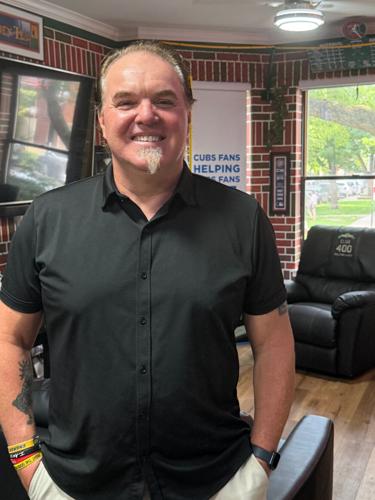
Spiezio, whose famous red soul patch is now scraggly and gray, his chiseled body and face now that of a middle-aged man, cracks open a Diet Coke, sits down and empties his soul, talking for nearly two hours about his journey, often times barely stopping long enough to catch his breath.
“I think everything happens for a reason," Spiezio said. “God didn't put this on me. I was the one who made the decisions. But he allowed it so he could use my story."
Spiezio, who does a few baseball clinics and speaking engagement, could certainly use the money from book sales.
But if he could provide an inspiration to others in a dark place, that would mean more to him than that three-run homer he hit in Game 6 of the 2002 World Series, triggering the Angels’ ferocious comeback against the San Francisco Giants after trailing, 5-0 in the eighth inning, leading the Angels to their first and only World Series championship the next evening.
Those were the days when life couldn’t possibly be better, married to his high-school sweetheart, Amy – the first girl he ever kissed and took out on a date – with three beautiful young children. He was a World Series hero, hitting .327 with four doubles, three homers and 19 RBIs that 2002 postseason. He was the lead vocalist for his rock band, “Sandfrog." He turned it into a three-year, $9.15 million free-agent contract a year later with the Seattle Mariners.
It was that first spring with the Mariners in 2004, when Spiezio ruptured two discs in his back, tripping over the pitcher’s mound. He couldn’t play for two months, and badly struggled when he did return. Depression set in, and he began going out at night with his new teammates. He had a couple of Jack-and-cokes the first night out, and loved the feeling.

Scott Spiezio is releasing his autobiography, "The Hardest Comeback", on July 28.
“I remember two drinks turning into four, and four turning into eight, and then 16 drinks," Spiezio says. “Then, it was off to the races.’’
Whiskey turned to vodka. It was colorless, and easy to hide. He drank in the morning. In the afternoon. At night. Even during games, he’d fill Gatorade bottles with vodka.
A year later, cocaine entered his life.
“I remember one of the first times I did it," Spiezio said, “I ended up doing four lines that night. Then I had two home runs next day. I did it again, and hit a homer. Then, I didn’t do it, and I struck out three times. So I kept doing it.
“It became like a superstition, and then it turned into a habit. I was planning to stop after the [2006] season. But then we won it all, and I was using it to celebrate."
He snorted coke during the World Series celebration. He snorted on his vacations that winter to Cabo and Vegas. He couldn’t stop.
“All I worried about was where I was going to get my next fix, and where I was going to get my next drink,’’ he said. “I needed them both to function.’’
Spiezio says he never temped to experiment with steroids, HGH or any other PED, and privately ridiculed those that did, but while those players improved their skills, Spiezio was letting drugs ravage his body.
Spiezio once was charged with a DUI while waiting in a parking lot to see his counselor, passing out in his car before his appointment. Police were called, along with paramedics. He was taken to jail and was prohibited from driving for five years.
He was arrested five times, including once for domestic battery in 2015 when he got into an argument with his girlfriend, broke down a door, smashed a TV and punched his fist through a window.
Lying on the ground, Spiezio asked the police officer if he’d be shot if he stood up. The officer told him he would.
Spiezio stood up, hoping for a bullet to end everything.
Instead, he was tased.
He lifts up his black golf shirt, and shows the scar near his right shoulder from the tasing.
“There was never a time I thought about going through the process of killing myself," he said, “but there were times where I knew the amount of drugs I was ingesting or the alcohol that I was drinking could do it. Sometimes, I would write notes and leave them in case I died, saying, 'I didn't do it on purpose. Tell my kids I love them. And tell my parents I love them.’
“I honestly felt like if something happened to me, everybody would be better off."
Spiezio, who had a 12-year big-league career, says his downward spiral accelerated after being released by the Mariners in 2005. He was hitting .064. That winter, he replaced vodka with cocaine. It started off as an occasional recreational drug to a daily habit. He signed in 2006 with the Cardinals, won a World Series championship, but by mid-season in 2027, he could no longer hide his addiction. He was placed on the restricted list.
It was December that year he was arrested again, crashing his car in Irvine, Calif., while drunk, running from the accident, and allegedly assaulting one of his neighbors. When the Cardinals learned of the arrest, they released him.
His career was over.
#mlb #mlbtraderumors #mlbtradedeadline
And nearly his life.
Spiezio’s life became unglued. His parents took over his finances and paid all of his utility bills. Neighbors moved his yard. He had no credit cards, bank cards or even a driver’s license. He had no car. His parents brought him groceries each day to make sure he didn’t starve to death.
He came close to drinking himself to death, and was told in 2018 that he needed a liver transplant. To even be eligible for a new liver, he was told that he’d have to stop drinking for six months.
He drank the next day.
The most painful aspect of his demise was but losing his family. He got married and divorced twice. His three oldest kids changed their last name from Spiezio and adopted their step-father’s last name. He has an 11-year-old with his former girlfriend, one in which the court ordered they had a mutual separation, enabling him visitation rights every other weekend.
“It was all my fault," Spiezio softly says. “I just got to the point where I was like, 'Well, they're better off without me.’ I think that's what happens to a lot of people in depression or in addiction. It's like you start telling yourself lies, and it's just a horrible place to be in, you know.
“I hurt a lot of people, especially my kids and my family. I disappointed them. I disappointed my friends. I disappointed my community. I disappointed just about everyone I’ve ever known.’’
He missed important family events. He missed his son’s, high-school graduation. He showed up drunk at several of Tyler’s football games. He showed up drunk or stoned plenty of other times, driving a wedge between him and his family.
“You know, I never had real empathy for people that were addicted to drugs or alcohol," Spiezio says, “because I thought they’re just weak. Or that they’re just not trying hard enough. So, when it started happening to me, I didn’t know how to deal with it. And when I got in that state, boy, you make some really stupid and ridiculous decisions.’’
Spiezio looks away, the memories flooding his mind, and is asked whether he wishes he could go back in time and change his life.
He pauses, and says, “Not really. I mean, I wish I could take the pain away from my kids, my parents and my family. But I can’t. I feel that God's giving me an opportunity to help affect people's lives in a positive way by talking to kids at schools or churches or banquets, talking about the dangers of drugs and alcohol for the people that are afflicted by it.
“I want to give them hope that there’s a way out."
Spiezio catches his breath, and closes his eyes.
“You know, I had millions and millions of dollars at one time in my life," Spiezio says. “I had everything. Now, I don’t even have a credit card. But you know what, after everything I’ve been though, I could live in a cardboard box and be happy. I mean that.
“I know I’m not a perfect man, but I sure am a changed man."