

A team meeting held on the eve of Jack Eichel’s return was supposed to fix what has derailed the Buffalo Sabres.
We can only guess what their captain, Kyle Okposo, said to a roomful of players who, together, make up the youngest team in the NHL. The Sabres had just lost to the Arizona Coyotes, a club stuck in neutral during a long, painful rebuild, and Okposo, now 16 years into his career, told reporters afterward that his teammates must “take a breath.”
He didn’t sense any panic in the group. It’s fair to wonder if that’s still the case.
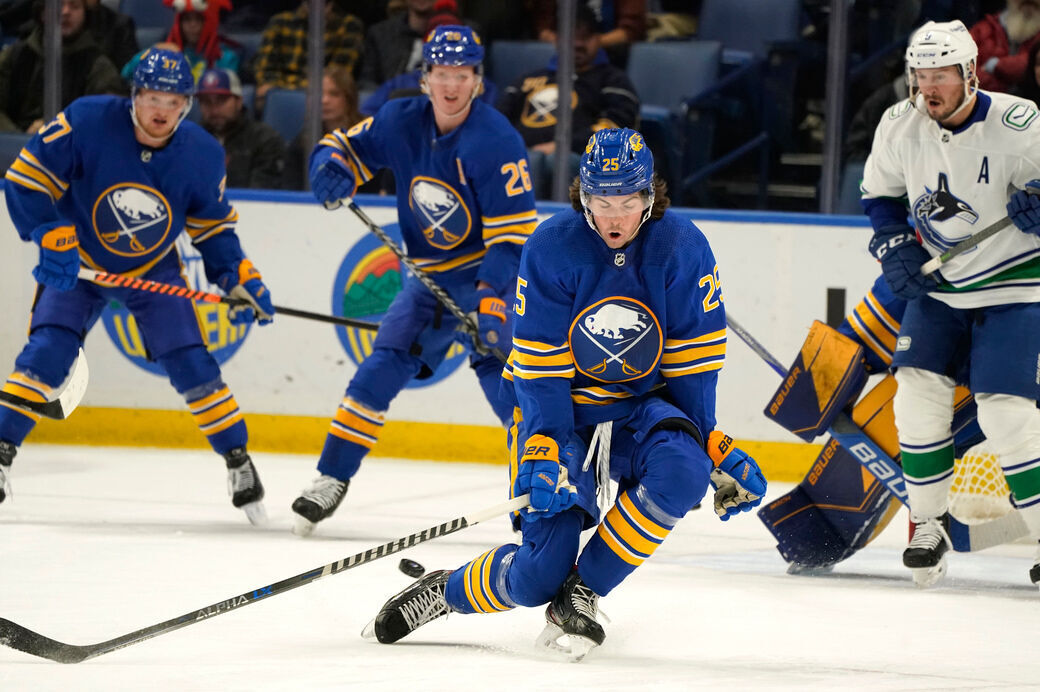
The Sabres’ losing streak reached seven Wednesday night with another inconsistent effort in Ottawa, losing 4-1 to the only team below them in the Atlantic Division standings. All the good vibes from a 7-3 start to the season are gone.
Now 11 years into a league-record playoff drought, the Sabres are 7-10. Their top players are performing; their inexperienced ones, particularly at forward, aren’t. Those issues, combined with injuries on defense, have led to a negative-16 goal differential during the skid.
People are also reading…
Coach Don Granato is pushing patience through the media. Fans are tired of waiting. Expectations are higher this season after the Sabres played at a 102-point pace in March and April. The roster is better, bolstered by the additions of goalie Eric Comrie and Ilya Lyubushkin, and there is substantive evidence that a few young players are ready to take on bigger roles.
But the team has regressed significantly since its return from a successful trip to western Canada almost a month ago.
Inexperienced forwards are committing too many turnovers. Depth defensemen aren’t playing well enough to make the job easier on Rasmus Dahlin and Owen Power. Tage Thompson has emerged as a superstar, but his line with Jeff Skinner and Alex Tuch is the only one producing.
This November swoon isn’t the same as those in the recent past. They aren’t falling apart because of a flawed defensive-zone structure. The roster wasn’t built poorly like the one in 2019-20. And last fall, the Sabres were leaning on Mark Pysyk and Robert Hagg, sound leaders with diminishing skill sets, while waiting for young defensemen to earn more responsibility. There were also major issues in goal.
This is much different.
Inexperience
The Sabres don’t have enough experienced, playoff-hardened veterans to insulate and provide help to their young forwards. It was clear following the Sabres’ loss in Tampa Bay, their second during the streak, that Granato sensed a drastic change was needed.
He split up Skinner-Thompson-Tuch in favor of Thompson centering Casey Mittelstadt and JJ Peterka. Dylan Cozens was between the Sabres’ top wingers. The result was ugly. Buffalo didn’t have one line clicking in its 4-1 loss to the Coyotes.
To be clear, the Sabres aren’t losing strictly because of their most inexperienced players. Peterka and Jack Quinn rank among the top 10 on the team in goals above replacement, a metric created by Evolving-Hockey that weighs a player’s overall contributions to his team.
The Buffalo Sabres' losing streak hit seven games Wednesday night with a 4-1 defeat at the hands of the Ottawa Senators in a game marked by the second-period departure of Buffalo starting goalie Eric Comrie.
To compare, the Sabres' bottom six in the statistic: Lyubushkin, Jacob Bryson, Mittelstadt, Zemgus Girgensons and Victor Olofsson.
But Peterka and Quinn, and others at the same age, have committed turnovers while trying to force plays with the puck. Bad habits can be difficult to break when young players are skating with each other. And while they have the skills and smarts to excel at this level, they’re not as strong as their competition. Lost puck battles and mistakes add up during the game.
Ideally, the Sabres would be able to separate Thompson, Skinner and Tuch to create balanced scoring. However, the two wingers have proven to be far more effective alongside Thompson than anyone else.
Cozens, at 21 years old, is being asked to guide 20-year-old Peterka and, prior to an injury, 21-year-old Quinn. While Cozens’ individual game is showing progress, he’s still learning how to defend as a young center at this level. The job becomes more difficult when his linemates commit turnovers or aren’t where they need to be on a backcheck.
This is the cost of icing such a young roster and this was always going to be an evaluation year for General Manager Kevyn Adams. Providing more ice time and opportunity to those players enhances development and will give the organization a better idea of who should be part of the plan long-term. More top prospects will be pushing to reach the NHL next fall.
The cost, however, is an inconsistent product.
5-on-5 struggles
The Sabres’ power play went cold against Vancouver and Ottawa, but you can’t pin the club’s struggles on the man advantage. Their two units scored at least one goal eight games in a row and the losing continued.
The issue is at 5-on-5. For example, Mittelstadt has become reliable in the faceoff dot and an effective contributor on the power play. Yet he’s only totaled two even-strength points in 17 games, registering only 16 shots on goal in those situations during that span.
Peyton Krebs is helping the Sabres possess the puck when he is on the ice, but he is also struggling at 5-on-5 with nine shots on goal in 15 games. They have skated on the same line during each of the Sabres’ last three losses. The fourth line hasn't produced much offensively, either.
Offense always takes longer to develop in the NHL and the challenge increases in difficulty as opponents around the league inch closer to midseason form. To their credit, the Sabres have hit posts and crossbars throughout this skid. But they are also not creating enough traffic in front of the opposing goalie or getting to the middle of the ice to score.
Sound familiar? They are playing too much of an individual game, forcing unscreened shots and not executing within the framework of the system. It has led to issues with the puck and defensively, as the Sabres continue to allow odd-man rushes.
Thompson has continued his remarkable play during the skid, totaling five goals and eight points. But only two other players have more than one goal: Mittelstadt and Skinner, both of whom have three.
Injured defense
On paper, the Sabres are inching closer to full strength on defense with Henri Jokiharju back in the lineup and Mattias Samuelsson expected to return within the next two weeks.
Still, Dahlin hasn’t been as dominant since returning from a neck injury. Lyubushkin hasn’t looked the same since taking a shot off his foot/ankle in Edmonton last month. Bryson and Lawrence Pilut haven’t been consistent. They are not moving the puck up the ice with the same efficiency without Samuelsson. Jokiharju is back but will need to get back into top form.
Power, at only 19 years old, helped the club weather through the injuries by taking on a first-pairing role. He is leading all NHL rookies with 23:53 average ice time per game. It’s unprecedented how well he has played at times given the workload and lack of experience, but he is also committing mistakes that are typical for young defensemen. Those are magnified when on the ice against top lines and in key situations.
The Sabres’ issues in the defensive zone aren’t usually the fault of their defensemen, though. It’s young forwards not having attention to detail. Remember, even their top center, Thompson, is relatively new to the position.
Slow starts, bad finishes
You’re not going to have success consistently falling behind in the NHL, no matter how prolific your offense can be. The Sabres have allowed the first goal in five of their last seven games. They were among the best in the league in the first and third periods during their promising start to the season. Not anymore.
During the skid, Buffalo is last in the NHL in goal differential during the first and third periods with negative-9 and negative-15, respectively. There is no excuse for the lack of urgency seen at the start of game recently, and they are not managing the game well in the final 20 minutes, squandering opportunities to at least get the game to overtime to earn a point.
They are pressing to score, rather than trying to create within the structure of their system. Experienced opponents like Boston and Vegas feast on young teams that don't play with patience.
The Sabres are one of only three teams with a losing record to not earn at least one point in an overtime or shootout loss. They are not managing the game well, another sign of a young team, and it's preventing them from getting any close game to overtime.
During the skid, they are 28th in goals scored per game and 32nd in goals allowed per game.
Failing at the little things
No statistic in hockey is tracked worse than hits, but it’s still notable that the Sabres rank last by a wide margin. There are two reasons why they are not finishing checks.
One, this roster will rarely have the physical advantage because of its youth and inexperience. You can’t do anything to expedite this process. Look how long Thompson needed to grow into his frame. This team isn't built flawed. Stanley Cup contenders like the Lightning and Avalanche added grit through free agency or trade when they were ready to contend. You draft skill, then add physical players through trade or free agency.
The Sabres drafted physical, net-front forwards, Cozens included, but they are either not ready to play that role in the NHL or they are still in the prospect ranks.
And, Granato’s defensive system, though much easier to follow than previous coaches’, prioritizes positioning on the ice.
If a forward chases a bad hit, he is typically not in position to get the puck back. Instead, the puck is likely already leaving the zone and he is forced to back check with a significant distance to cover. This system is all about killing plays. And if a player is out of position, the other team has numbers.
But there are advantages to playing physical. Defensemen can’t get too comfortable on the breakout. You must make them think a hit is possible, so they eventually get pressured into a mistake. A balance is needed.
The Sabres are also allowing too many shots to get to their goalies. They rank 30th in the NHL in blocked shots, a stat that has nothing to do with size and strength. Too many goals against are going off Buffalo forwards and defensemen. Right now, it doesn't help that most players on this roster don't seem to have a role within the team. Everyone can't have the same mentality as a top-line player. You need forwards willing and able to do the dirty work to score goals.
This team needs to find a way to be more difficult to play against. The Sabres took a massive step back in that regard with Lyubushkin playing through an injury and Samuelsson out. It was surprising from my point of view that Brett Murray, a 6-foot-5 forward and net-front presence, wasn’t added from Rochester when Quinn and Okposo went down with injuries.
If the roster isn’t getting bigger or stronger, then the Sabres need to conjure a collective pushback by delivering more checks and blocking more shots. Dahlin can’t be the only one playing a physical game until Samuelsson returns.
What’s next?
You won’t see a trade or emotional reaction from Adams. He’s always shown patience. There’s no major roster move to make with Rochester. Most prospects there aren’t ready to make the jump.
The Sabres’ practices are still intense. The mood behind the scenes is still positive. It's not an effort problem.
Their top players have been outstanding. Thompson leads the NHL in goals (11) and points (19) since Oct. 29. Entering Thursday, Dahlin was top two among defensemen in goals (7), points (19) and average time on ice (26:13) this season. But we all know that young players have a difficult time handling the emotional roller coaster of a season.
There’s no question they are pressing to score, as Granato pointed out following the loss Wednesday night. You saw the frustration setting in for Peterka and others. Cozens has zero goals during the losing streak, though he has created chances. Goaltending isn’t the problem, though depth at the position is about to be tested with Eric Comrie injured and Ukko-Pekka Luukkonen headed to Buffalo.
This is the first major test for the Sabres since their successful finish to 2021-22. Unlike previous ugly Novembers, there are logical reasons behind what’s gone wrong. This isn’t the sign of a potential long-term problem with the roster or a coach deploying a flawed system. But it doesn’t make the challenge any easier to navigate given the higher expectations and reality that this roster, albeit young, is far better top to bottom than the one the Sabres iced last season.
Fan unrest has intensified again, and the Sabres only have one practice to prepare for another significant test Saturday night in Toronto.


