WASHINGTON — A Russia sanctions bill championed by the late Sen. Lindsey Graham faces a tough road in Congress as Democrats and some Republicans raise concerns about new trade powers the legislation would grant President Donald Trump.
Many Democrats, some Republicans, and industry trade groups are unhappy about a provision in the long-stalled bill that would let Trump impose steep tariffs on countries that purchase large amounts of Russian oil and gas, or countries that his administration deems to be facilitating sanctions evasion.
The bill would impose sanctions on Russian officials and authorize 100% tariffs on the five largest importers of Russian crude oil or gas, or the five top countries that help Moscow evade U.S. sanctions and keep funding its war against Ukraine, now in its fifth year.
Those countries are not mentioned in the bill but would likely include China, India and potentially some European countries and Japan.
People are also reading…
Graham, who died suddenly last month, pressed for the bill's passage for more than a year but only in the past weeks secured support from Trump as the Republican president grew more confident in Ukraine and more frustrated with Moscow.
The tariff provisions became more important to the White House after the U.S. Supreme Court in February struck down Trump's "reciprocal" tariffs of 10% to 50% imposed last year, which sent the administration scrambling to find new authorities.
The sanctions bill would also allow the president to waive the Russia sanctions for unspecified national security reasons, a provision that pro-Ukraine Democrats oppose, given Trump's shifting views on Russia and Ukraine.
The bill would also extend for five years Iran energy and weapons sanctions first enacted in 1996 that are due to expire this year, a measure added as a condition of Trump's support. This week, Trump demanded the bill also include tariffs on Iran, though trade between the U.S. and Iran is virtually nil.
With polls showing that Democrats could win control of the House and possibly the Senate in November congressional elections, some lawmakers say they would prefer to wait to pass Russia sanctions until Democrats have more power over what many see as unprecedented legislation.

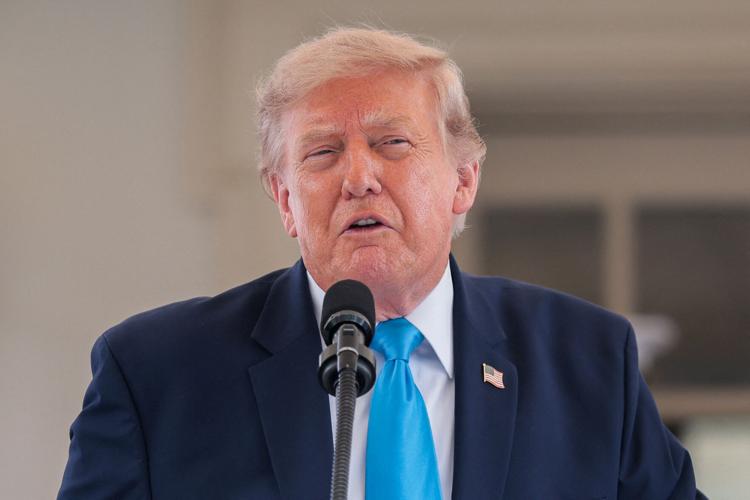
U.S. President Donald Trump speaks Thursday during an event at the White House in Washington.
Bill could fail
The legislation advanced with overwhelming bipartisan support for procedural votes in the U.S. Senate on Tuesday and Wednesday, with lawmakers calling it a tribute to Graham.
Congressional aides said it could well pass the full Senate before senators head home to their districts next week.
But the legislation, renamed in Graham's honor, faces bigger challenges in the House of Representatives, which is on recess until Aug. 31.
Already, some senior Democrats lined up to oppose the sanctions bill.
Sen. Ron Wyden and Rep. Richard Neal, the top Democrats on the respective Senate and House trade committees, blasted the bill for granting Trump new tariff powers they say could fuel U.S. inflation.
"There is no question that the U.S. government must take stronger action against purchasers of Russian energy who are fueling the unjustifiable war against Ukraine. But the latest draft of the Sanctioning Russia Act is a prescription for bedlam and higher tariffs," they said in a joint statement.
The legislation is also driving concern among some Republicans.
Mahur Patel, a former Republican congressional aide now with the Hogan Lovells Cadwalader law firm, said he doubted the legislation could pass the House this year, given the coming election season and lingering Republican skepticism about the breadth of Trump's tariffs so far.
Patel said many Republicans in Congress remained uneasy about Trump's previous sweeping tariffs, and some were actively lobbying for specific exemptions, such as the one granted this week that offers temporary relief for phosphate fertilizer from Morocco to avert a shortfall caused by the Iran war.
Sen. Rand Paul, the sole Republican to vote against the bill on Tuesday, has said that he will offer an amendment to put limits on the tariffs that Trump could impose, and others could follow suit.
Ukraine's ambassador to the U.S., Olha Stefanishyna, said Thursday that Ukraine needs quick action before the coming winter.
"You know very well that tariffs (are) a partisan issue at this point, so we hope it will not distract everyone from the real intention with the law," she told an event hosted by the Christian Science Monitor.

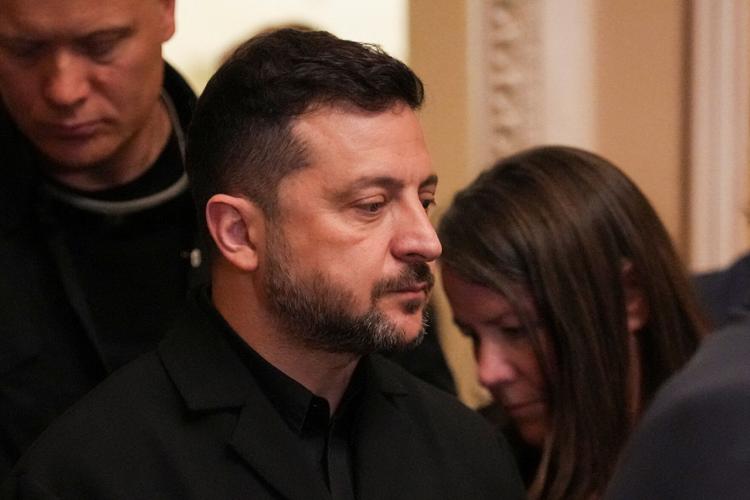
Ukraine's President Volodymyr Zelenskyy leaves after a July 28 meeting with U.S. senators on the Lindsey O. Graham Sanctioning Russia and Iran Act at the Capitol in Washington.

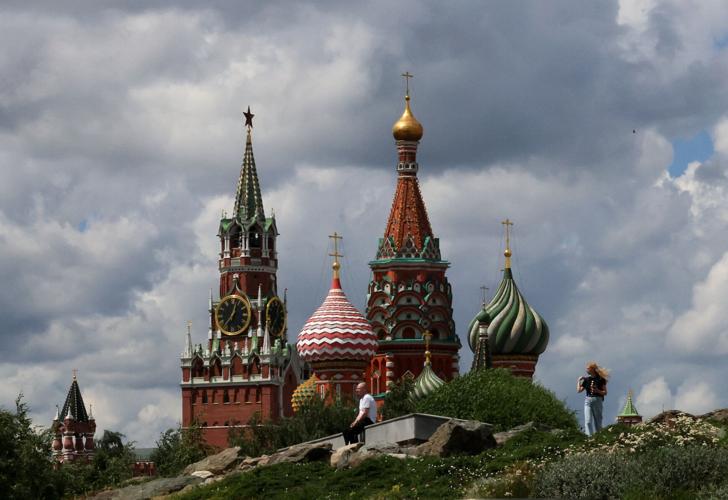
People walk July 6 in Zaryadye Park near St. Basil's Cathedral and the Kremlin's Spasskaya Tower in central Moscow.