

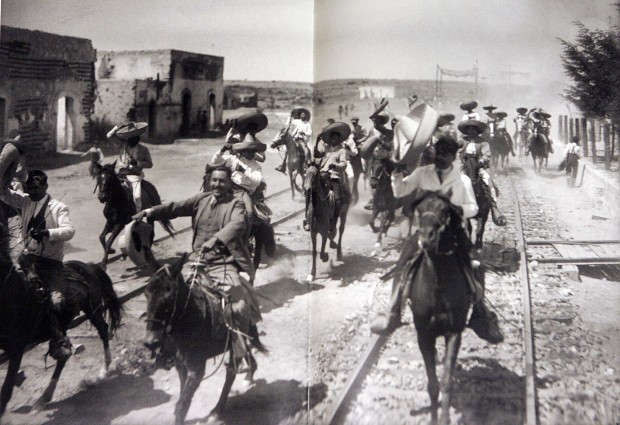
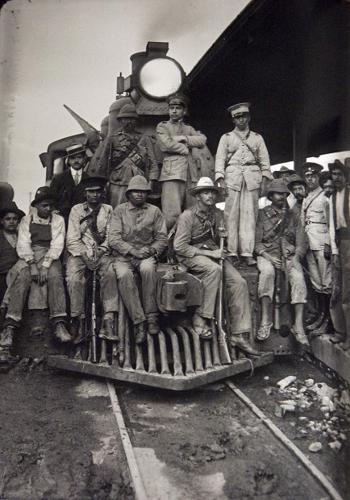
A photographic exhibit of 92 prints from the Casasola Archives - featuring the Mexican Revolution of 1910 - opens with a celebration Thursday at Arizona State Museum.
This exhibit, which has been featured in museums worldwide, is brought to Tucson by the Mexican Consulate and is hosted by the Arizona State Museum.
It is in commemoration of the 2010 bicentennial of Mexico's independence and the centennial celebration of the Mexican Revolution of 1910.
"The Casasola Archives are the greatest photography collection of one of the most significant episodes in our Mexican history," said Mexican Consul Juan Manuel Calderón Jaimes in a news release. "It's a remarkable compilation that tells a story in every picture and reflects the difficult moments in an era of transition.
"Not only does it capture the social struggles and political events of the first half of the 20th century, but it frames key images that have made it possible to create and document the revolutionary reality for all those who did not witness the past," Calderón Jaimes said.
People are also reading…
The entire Casasola Collection has more than half a million images, which the Mexican government purchased in 1976 from the heirs of Agustín Victor Casasola, according to an article about the collection published by Cinco Puntos Press, an independent book publisher.
The Casasola Archives of the National Institute of Anthropology and History are housed in the Convent of San Francisco in Pachuca, Mexico.
Casasola, who was born in Mexico City in 1874, grew up to be a typographer, reporter and photojournalist. He and his brother Miguel founded a photo agency to document the 1910 revolution.
Leaders on both sides of the revolution welcomed photographers and filmmakers to record the unfolding events at battles, executions and at the campsites of Mexican soldiers and those of the revolutionaries, historians say.
It is said that Agustín Victor Casasola "had a habit of buying the work of other photographers, scraping their name off and selling the photographs under his name. True to form, Agustín promptly sent his brother off to the war front. Agustín himself spent most of the war in Mexico City, safely away from the fighting, scratching his brother's name off of photos and selling them as his own," states the article by Cinco Puntos Press.
In addition to war images, the collection records everyday life in the country and includes government workers, entertainers, prisoners and a wedding celebration.
The collection has photographs that capture "a period of Mexican history that witnessed profound changes in the political, economic and social life of a country," said Arizona State Museum ethnohistorian Michael Brescia in the news release.
"The domination of foreign capital, urban and rural unrest, and the politics of dictatorship scattered the seeds of social revolution throughout most of the Mexican Republic.
"These photographs are more than mere snapshots in time; taken together, they reveal a seamless visual narrative of human drama that unfolded in Mexico, a drama shaped by the external forces of modernity and the internal forces of political action and social revolution," Brescia said.


