

This is the third in a monthly series that explores cultural cuisine leading up to Tucson Meet Yourself, Oct. 8-10, celebrating 37 years of community folk art, traditions and cultural identity.
Tucson's relatively small, highly organized Polish community grills hundreds of pounds of kielbasa and serves up thousands of pierogi every fall at Tucson Meet Yourself.
"It's a huge event," said Elisabeth Cichocki, past president of Solidarity Tucson, a nonprofit formed to help the Polish community.
The three-day festival is the group's main source of funding, she said. It's also a chance to show off Polish culture. "It's not well known, especially in Tucson."
Dancing is a big part of it.
"The Lajkonik Polish Dancers have 'grown up' at Tucson Meet Yourself, establishing themselves as our most-loved folk dance group," said Mia Hansen, the festival's executive director.
People are also reading…
The dance group is helping with more of the cooking this year as it tries to raise money to attend a Polish folk dance festival next summer in Rzeszów, Poland. It's the first time an Arizona group has been invited.
"The Polish food booth is very popular and who doesn't love Polish sausage? Polish foods, dance and music are as 'Tucsonan' as can be," Hansen said.
Solidarity Tucson, which formed in 1982, initially used its festival earnings to help buy everything from laundry detergent to medical books to send to the Poles living under communist rule.
Today, proceeds help support youth activities, Polish language classes at the University of Arizona, and a monthly Polish Mass at St. Cyril of Alexandria Catholic Church in addition to meeting needs in Poland.
Much of the cooking for Tucson Meet Yourself takes place at St. Cyril a couple of weeks in advance of the festival.
The group typically sells about 1,000 portions a day, Cichocki estimated.
On the menu:
• Bigos, a Polish hunter's stew with semi-sour cabbage and meat. It is generally eaten with rye bread and gets better the longer it sits.
• Golabki, ground meat and rice wrapped in a cabbage leaf and topped with tomato sauce. The group served some 400 at last year's festival.
• Kielbasa, a staple in Poland, where there are many varieties and garlic is key. The club shipped in 400 pounds of the sausage from Chicago last year.
• Pierogi, a Polish dumpling with meat pate, sour cabbage and mushrooms, or potato and cheese. They sold 6,000 last year.
• Potato pancakes, a big hit made fresh in the booth.
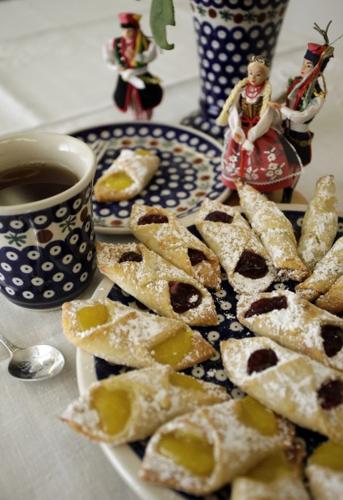
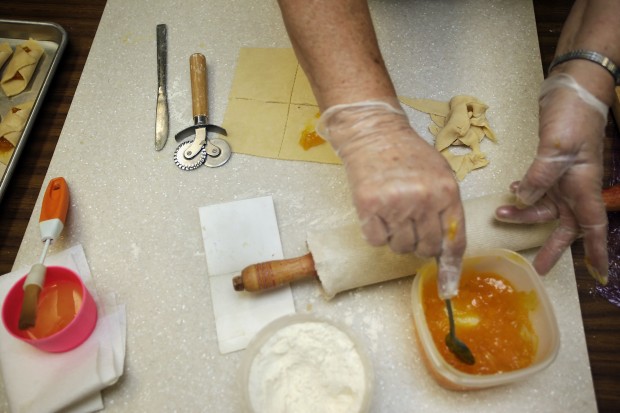
• Kolache, a fruit tart new to the menu this year. Alice Zemcik, a member of the Arizona Polish Club, a social organization, recently taught the Lajkonik Polish Dancers how to make it.
Go online
Arizona Polish Club:
Lajkonik: PolishDanceAZ.com
Folk song and dance groups meet yearly in Poland
Polish folk song and dance groups from all over the world have convened in Rzeszow, Poland, every three years since 1969.
In 2008, the festival drew 1,500 participants from 41 groups, representing 15 countries and five continents.
Each group performs regional Polish dances in addition to one from their country of origin - Tucson's group will perform swing dance at the 2011 festival.
"The festival is sort of like a huge family reunion and exhibition of Polish culture by Polish youth scattered all over the world," said Joanna Schmit, who directs Lajkonik and Lajkonik's Youth.
Lajkonik formed in 1998 and performs about 20 times a year at various festivals and charity events, nursing homes, and schools, she said
Tucson's dancers will team with the Lowiczanie Polish Folk Dance Ensemble from San Francisco.
Groups also spend a few weeks performing in different cities in southeastern Poland.
This will be 18-year-old Sophia Villarreal's first trip to Poland. While most of the members are from Poland or of Polish descent, she is Mexican-American and joined the dance group after meeting Schmit's son, Matt, at University High School.
While she joined for the dancing, she found herself learning the language and culture.
"It seemed really familiar," said Villarreal. "They're all so friendly."
Both cultures have strong identities and traditions, she said.
Villarreal plans to attend Stanford University in the fall, possibly majoring in international business. Her schedule will definitely include a Polish language class.
Eat out, help troupe
Amber Restaurant and Gallery, which specializes in European food with a Polish influence, is helping to raise money for Lajkonik.
Mention you want to support the Polish dance group, and owner Peter Witusik will donate 10 percent of your total bill to the cause.
Witusik, whose 10-year-old son, Michael, is in the group, went to the festival in the early '90s. "It was quite an experience," he said.
More info about Amber, 7000 E. Tanque Verde Road, is online at www.amberrestaurantgallery.com
Bigos, Golabki and Kolache recipes
Bigos, Polish Hunter's Stew
• 1/2 medium-sized green cabbage
• A 32-ounce jar of sauerkraut
• 8 ounces of tomato paste
• 1/2 pound bacon
• 1 pound pork
• 1 pound Polish sausage
• 1/2 cup prunes, chopped
• 1/2 ounce dried Polish or porcini mushrooms
• 1 large onion, chopped
• 2 cloves garlic, chopped
• 1 bay leaf
• 1 cup dry red wine
• Pepper and salt to taste
Wash cabbage and chop finely. Boil in a pot with four quarts of water until cooked, then drain. Boil sauerkraut in a separate pot with water, then drain but save the sour water. Wash pork and chop in about 1-inch squares. Heat vegetable oil and fry the meat until cooked.
Cut bacon and sausage into 1-inch squares.
Fry bacon, sausage, onion and garlic together until golden brown.
Combine all precooked ingredients in a tall pot. Add tomato paste, prunes, mushrooms, and enough sour water saved earlier to taste.
Mix well and boil on low heat for 90 minutes to two hours, stirring occasionally.
Serve with hard-crusted bread. It's also a great side dish for Polish sausage.
Bigos tastes better with time and repeated heatings as the flavors mix and mellow. Marjoram can be added as a spice.
Courtesy of Joanna Schmit
Golabki, Polish Stuffed Cabbage
• 1 whole head cabbage
• 1 large onion, chopped
• 1 pound ground pork
• 1/2 pound ground turkey
• 1 1/2 cups cooked rice
• 1 teaspoon finely chopped garlic
• 1 teaspoon salt
• 1/4 teaspoon black pepper
• 2 tablespoons butter
• 2 cups of tomato sauce
• 1 cup stock or water
Remove core from cabbage. Place whole head in large pot filled with boiling, salted water. Cook three minutes, or until soft enough to pull off individual leaves. You will need about 18 leaves.
When leaves are cool enough to handle, use a paring knife to cut away the thick center stem from each leaf, without cutting all the way through.
Sauté the chopped onion in butter until tender and let cool. Mix onion with pork, turkey, rice, garlic, salt and black pepper until well combined.
Place about a half cup of the mixture on each cabbage leaf. Roll away from you to encase the meat. Flip the right side of the leaf to the middle, and then flip the left side over similarly.
Line the casserole dish with the remaining leaves of cabbage and place the cabbage rolls next to another.
Mix the tomato sauce, stock or water, salt and pepper to taste. Pour over cabbage rolls.
Preheat oven to 350 degrees.
Cover and bake for an hour.
Serve with hard-crusted bread, or with boiled or mashed potatoes.
Courtesy of Joanna Schmit
Kolache
• 1 cup butter or margarine, softened
• 8 ounces cream cheese, softened
• 1/2 cup, or less, granulated sugar
• 1 tablespoon vanilla
• 2 eggs
• 3 cups all-purpose flour
• 1 teaspoon baking powder
• 1/2 teaspoon salt
• Preserves (SoloFilling is best); use apricot, prune, cherry or poppy seed.
In large bowl, use electric mixer to beat butter, cream cheese and sugar until creamy. Add vanilla. Add eggs, one at a time, beating well after each addition.
In a separate bowl, stir together flour, baking powder and salt, then gradually beat into butter mixture until dough is blended. Remove from bowl and knead about one minute. Divide dough in half, wrapping each portion in plastic wrap and refrigerate until firm (at least three hours or overnight).
Preheat oven to 325 degrees.
On lightly floured board, roll dough to 1/8-inch thick. Cut into 3-inch squares. In the center of each square place a teaspoon of your favorite preserves. You can shape pastries two ways - pinching together two opposite corners or all four.
Place on ungreased baking sheet or use parchment paper. Bake until edges are lightly browned, 20 to 25 minutes. Ovens are different, so check halfway through.
When cool, sprinkle with powdered sugar.
Courtesy of Alice Zemcik


