

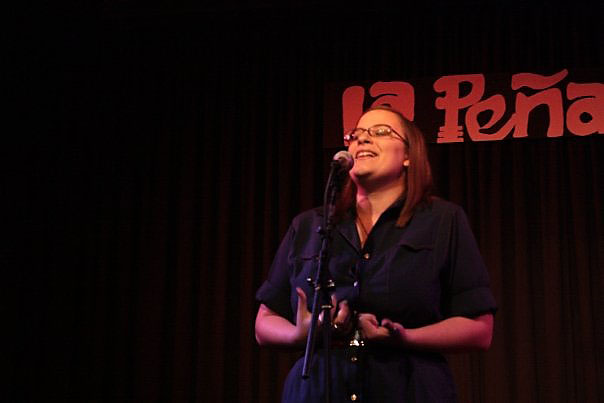
Brittany Shostak lets the audience dictate her poetry.
Shostak is a slam poet who will compete in this weekend's Tucson Poetry Festival.
It's only after going through the first "nerve-racking" round of a poetry slam that she'll get a feel for the audience, Shostak said.
"If the audience isn't really digging the serious poems, I'm not going to throw a piece about Uganda," the 20-year-old Phoenician said.
"I'm going to throw something like the experience of buying your first bra."
This is the 28th edition of the Poetry Festival, which organizers say is the longest-running literary festival in the Southwest. The two-day event starts today, and the slam segment will be the biggest one yet, with about 20 contestants from around the state.
People are also reading…
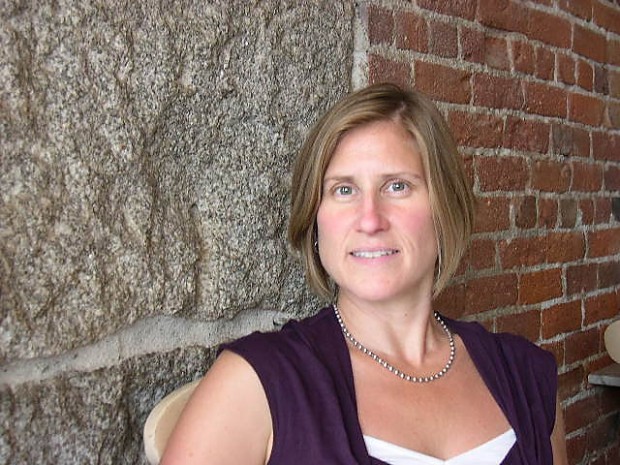
"The slam is becoming more central to our programming," said Lindsay Miller, executive director of the festival.
Miller is a slam poet herself, and she's involved in local slams held on a regular basis that are drawing increasingly larger crowds.
"The festival wants to tap into that energy," she said.
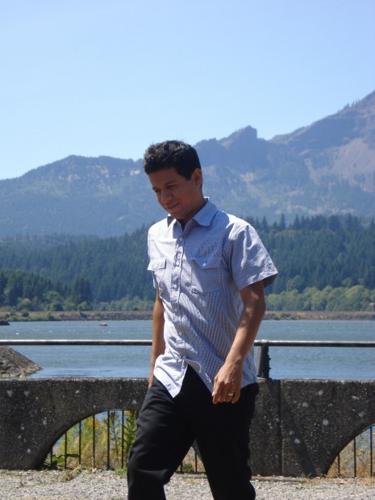
The event also will include workshops, readings and a panel discussion with poets Manuel Paul Lopez, Gypsee Yo, Linda Russo and Sonya Renee.
A slam is louder than a conventional poetry reading, with poets rendering more of a theatrical recital of their works. The topics of the poems generally relate to political or social issues.
The slam audiences tend to be vocal with their cheers or laughs, Miller said. The point is to connect with the crowd and the five randomly picked judges.
Slam poetry is reminiscent of the beat poetry of the 1950s. Some beat poets would perform along with a beat in the background, pointed out Amy Rusk, president of the festival's board. It also speaks to a younger generation that is oriented toward hip-hop and rap.
The first poetry slam occurred in Chicago in the 1980s when a man who ran a poetry reading came up with a "gimmick" to attract more people, Miller said.
It caught on, and now poets can take part in national and regional competitions.
Shostak said she has done a lot of the Arizona circuit herself and is planning on branching out to other states.
The words and topics she competes with are all her own, and that makes for an intense experience in front of any microphone.
"You are in front of 50-plus people, and you are just baring your soul," Shostak said. "This is me in a poem; this is me in three minutes."
If you go
Tucson Poetry Festival
• What: Poetry workshops, readings, discussion and slam.
• When: Today and Saturday.
• Information: www. tucsonpoetryfestival.org
• Cost: $5 for workshops; $10 for readings; $25 for a weekend pass.
Schedule:
Today
Club Congress, 311 E. Congress St.
• 7 p.m. - Readings by high school poetry contest winners Manuel Paul Lopez and Gypsee Yo.
• 8:30 p.m. - Slam Round 1
Saturday
• 11 a.m. - Tucson High Magnet School library, 400 N. Second Ave. Reading, high school poetry contest (this event is free).
• 2:30 p.m. - Casa Libre, 228 N. Fourth Ave., workshops with Manuel Paul Lopez and Gypsee Yo.
• 3:30 p.m.- Casa Libre, workshops with Linda Russo and Sonya Renee.
• 4:30 - Casa Libre, panel discussion with poets, moderated by Paul Fisher.
• 7 p.m. - Club Congress, readings by statewide poetry contest winners Linda Russo and Sonya Renee.
• 8:30 p.m. - Slam finals.
Contact Natalia Lopera at 807-8029 or at nlopera@azstarnet.com


