
Let’s clear up something right now:
“Awake and Sing” is not a musical.
It is a drama. And funny. And Clifford Odet’s 1935 play is a classic piece of American theater.
It is also the first play of the season for the Rogue Theatre.
Here’s an “Awake and Sing” primer:
The playwright
Odets was a member of The Group Theatre, launched in 1931, at the dawn of the Great Depression. It is still considered one of the most influential companies in theater history. The members developed and advocated Method acting, the root of realistic theater. The company was known for plays that touched on political and social themes.
Odets did some acting with the Group, but it was as a playwright for the company that he really triumphed. The Group Theatre lasted just 10 years — World War II meant tight money for theater, and many of its members, including Odets, headed to Hollywood, where money could be made in television and movies.
People are also reading…
When Sen. Joseph McCarthy launched his hunt for communists with his House Un-American Activities Committee in the early 1950s, nearly all the theater’s former members were called to testify. Odets cooperated with the committee, confirming the names of party members already named by the director Elia Kazan. He was ostracized by some for his testimony. Odets died of cancer in California in 1963. He was 57.
That title
Although originally called “I Got the Blues,” the title by the time it was staged was taken from Isaiah: “Your dead shall live; your dead bodies shall arise. Awake and sing, you that dwell in the dust; for thy dew is as the dew of herbs, and the earth shall cast forth the dead…”
The story
The plight of Jewish immigrants to this country informed the play, though many of the Yiddish words and Jewish references were removed before it was first staged in ’35.
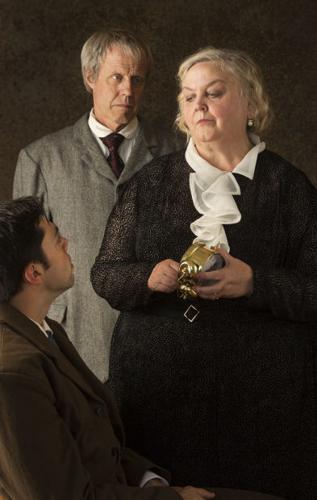
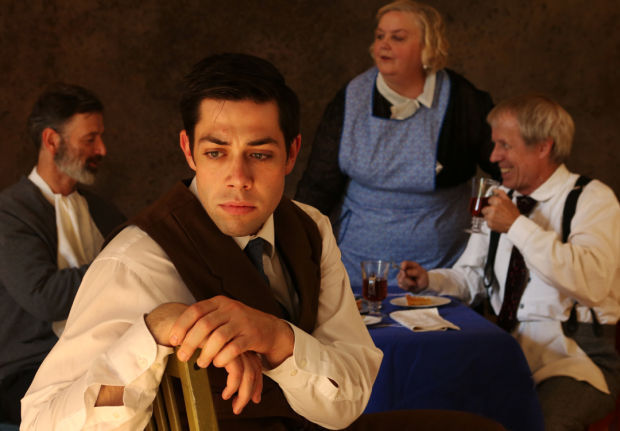
It takes place in the early 1930s at the Berger family’s Bronx apartment, which provides cramped quarters for three generations of the Bergers. The family, like many at that time, is on the brink of destitution. The world is in turmoil: the Great Depression, the rise of fascism and the workers movements in Russia all contributed to a sense of uncertainty and, for some, the hope for a revolution. We follow the Bergers as they fight each other and for survival.
“The audience will go on a very personal journey with each of the characters and how they speak to our nature and the need to achieve something greater,” says Bryan Rafael Falcón, who is directing the Rogue production.
Who’s who
The play’s characters, says Falcón, “carry things that speak to who they are.” That emotional baggage keeps them from being able to achieve what they want.”
They are:
- Bessie, the domineerin
- g matriarch, who is as terrified of poverty as she is concerned with appearances.
- Myron, Bessie’s husband, is controlled by her and willing to let her take the lead in their lives. His response to the Depression is to buy tickets for the Irish Sweepstakes and bet on horses. He has a broken spirit and doesn’t know it.
- Hennie is their 26-year-old daughter. She is independent, but just as crushed by poverty as everyone else. She longs for an escape.
- Ralph is the 22-year-old son. He believes in the American dream.
- Uncle Morty is Bessie’s brother and an arrogant and wealthy man. He lacks depth, compassion and generosity.
- Jacob, Bessie and Morty’s father, is a Marxist and an idealist. While his family often mocks him, he is close to Ralph.
- Moe Axelrod, the Berger’s border, lost a leg in the war, is prideful and argumentative, and holds his feelings close to the vest. He has his eye on Hennie.
- Sam Feinschreiber is a loner and overly sensitive man. He is courting Hennie but she has no interest in him.
- Schlosser is the building’s janitor, from Germany, and alone since his wife left him for another man and his daughter ran off to join a burlesque show.
The director’s take
Falcón finds a musicality in the script that makes it a great piece for actors and audiences. But there’s much more he likes about the play:
“What spoke to me was how nuanced the characters are in their relationships and their dreams,” he says.
He adds that with the country just coming out of the recession, the play is particularly relevant to today’s audiences.
What the Bergers long for is something that will resonate with all of us, he says.
“The audience will go on a very personal journey with each of these characters,” says Falcón. “They speak to our nature and our need to achieve something great.”