
Mia Bulgarin Gay sounds a bit stunned when she says the number out loud: 35.
Thirty-five years since she led the charge to turn what started out as an outlet for Russian nationals to play the music from home into a full-fledged, nonprofit ensemble that ranks somewhere in the middle of America’s tight knit and small balalaika community.
Thirty-five years that the orchestra has survived and thrived.
Thrity-five years that she has nurtured and performed with this group and kept alive the traditions from a home that she left long before she ever got a chance to know it.
On Saturday, the ensemble will mark that landmark anniversary with a special concert at Pima Community College’s Center for the Arts. They are bringing along two guest vocalists, a Polish dance troupe and one of Russia’s most distinguished domra players, Alexander Tsygankov. He was once dubbed the “Russian Paganini” for his virtuosic playing on an instrument that has been so closely associated with Russian folk music since the late 1800s.
People are also reading…
Tsygankov’s wife and longtime duo partner pianist Inna Schevchenko also will perform with the orchestra in addition to the pair performing a short solo set.
Arizona Balalaika Orchestra was born through the University of Arizona Russian department in the late 1970s, about the time that Gay and her husband, a UA professor, moved to Tucson from Oregon. Gay, who was born in Estonia to Russian parents during World War II, found the group when she took classes at the UA Russian department.
Gay moved to America when she was 10 after her family fled Russia’s Communist rule during World War II. She grew up in Connecticut at a time when “it wasn’t very popular to be Russian so my mother suppressed that.” She learned to speak English and spoke Estonian and German, but kept her Russian heritage on the back burner until she went to Duke University and majored in Russian.
When they arrived in Tucson, Russian heritage and culture was finding a voice in America.
“Russian was very big back in the ‘70s especially at the UA,” said the mother of three. “We had one of the largest Russian departments in the country.”
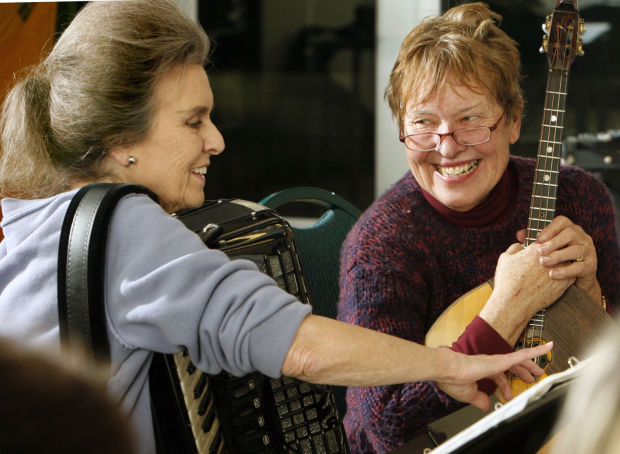
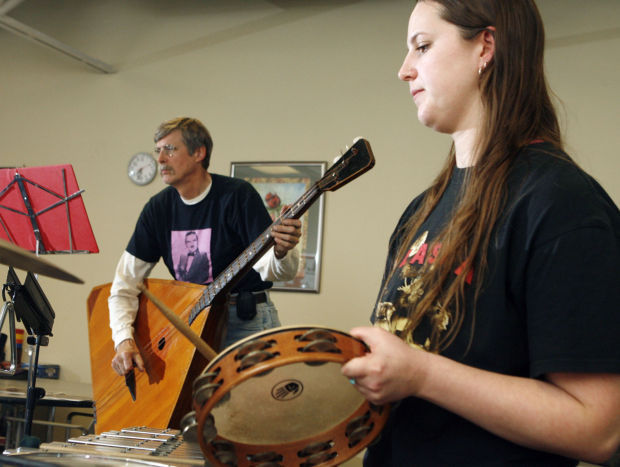
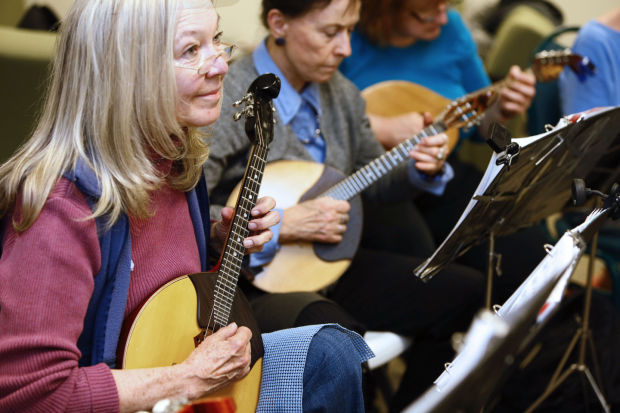
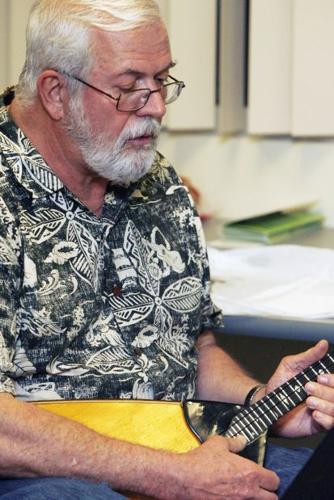
In 1980, she incorporated the orchestra as a nonprofit and started raising money through donations, grants and ticket sales for its community concerts. She used the money to build a library of authentic Russian instruments, most of them bought during her trips back to Russia. That was the only place where she could find quality balalaikas — the triangle shaped three-stringed instruments that are mostly plucked. Some of the orchestra’s members, who all dress in traditional, bright-colored Russian costumes, invested in their own instruments, including the domra, a lute instrument made from a gourd that resembles the mandolin.
“I remember going once to Moscow and I bought the largest balalaika you could get,” she recalled, adding that Tsygankov helped her find it. She remembers the looks she got when she lugged it through the Moscow and U.S. airports.
Arizona Balalaika Orchestra dips from a deep well of repertoire that crosses into Russian folk tunes, energetic rag tunes and richly harmonic two-step ragtime.
“A lot of folk music has grown out of the need to have sophisticated repertoire,” she said. “It becomes really good arrangements, with lots of harmony and counterpoint and key changes. They are challenging and we all know what we can do and what we can’t.”
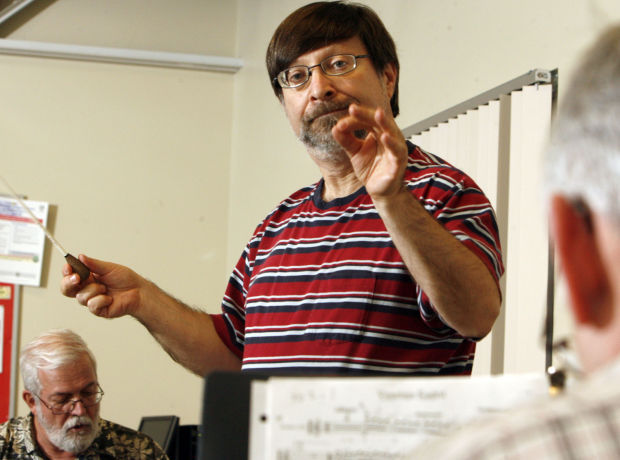
Gay, who taught Russian literature, art and language at PCC for a dozen years, conducted and ran the orchestra for 20 of its 35 years; it now brings in guest conductors, including Russian-born PCC instructor and pianist Alexander Tentser, who will conduct Saturday’s anniversary concert.
Gay still plays alto domra in the ensemble, one of only a dozen or so balalaika orchestras in the United States.
“I probably have 10 people who have been there at least 25 years,” she said. “The group is very dedicated. I’m really proud of the orchestra.”