

“Dancing with the Stars Live” is coming to Tucson Music Hall Thursday night featuring all-stars champion Melissa Rycroft and popular performers Witney Carson and Valentin Chmerkovskiy.
The hit TV show, which pairs celebrities with professional dancers to compete in everything from traditional ballroom to hip hop dance, just celebrated its 10th year. But as fun as it is to watch, dancing is more than a spectator sport.
“It gives you something to look forward to, to work towards,” said Jenna Backinger, who works at Shall We Dance, a studio on East Grant Road that opened its doors in 1997. The studio offers classes or events nearly every day of the week — from salsa socials to beginning ballroom and youth hip-hop.
Tucson’s variety of places to go and dance range from African traditional at The Movement Shala to blues at Aloft University Tucson. There also are organized events at churches, recreation centers, nightclubs and even on the University of Arizona mall — with Lindy Under the Stars on Thursday evenings for free.
People are also reading…
Here are a few highlights of places where Tucson dances:
Tucson Swing Dance Club
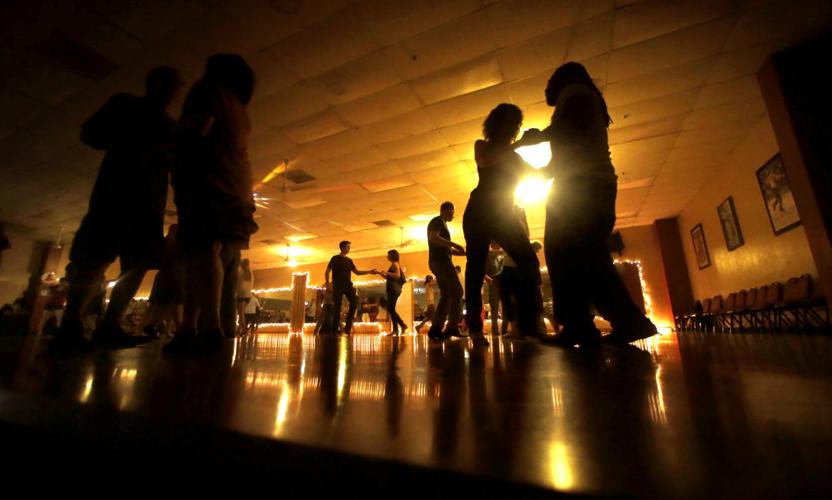
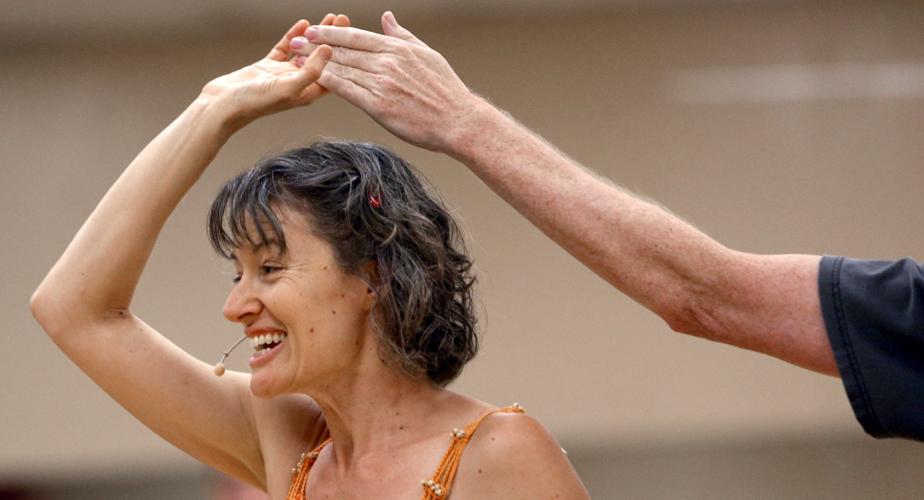
Founded in 1977, The Tucson Swing Dance Club offers West Coast swing dance Thursday evenings in one of the large back rooms at Shall We Dance.
The beginning class starts at 7 p.m., usually with a modest number of about 20 people; an intermediate session follows at 8. By the time open dance starts at 8:30 the space is filled with 70 to 100 people.
The cost is $7, with a discount for members. There’s no dress code — in fact, the website advises “COME AS YOU ARE! No experience needed, no partner required!” Most of the dancers dress for comfort, and some bring dance shoes to slip into before they hit the floor.
No one stays a stranger for long. As dancers practice they rotate around the floor constantly switching partners, getting to know everyone through dancing and laughter.
“West Coast swing doesn’t look like regular swing,” said Wendy Miller, one of the club’s volunteer instructors.
West Coast swing is a fun dance to learn, and most people who do it stick with it, fans say. It emphasizes improvisation and has an elastic look based on how partners move apart and back to each other as they traverse the dance floor.
“The community is why I keep coming back,” said member Elizabeth Brewer, who started attending the club more than a year ago.
Dancers whirl on the floor to a variety of music — from alternative rock like Studio Radio’s “Man In The Hall” to pop and country. The variety is part of the appeal.
The real fun begins when the overhead lights turn off for a free-for-all dancing experience that lets beginners and masters share the dance floor. Fairy lights wound around the mirrors and a few paper lanterns hanging from the ceiling give the room a warm glow.
Many experienced West Coast- swing dancers come just for this part of the night to dance, see friends and make new ones.
“It’s two hours to not have to worry about a gosh-darned thing,” Brewer said.
Belly Dance Tucson
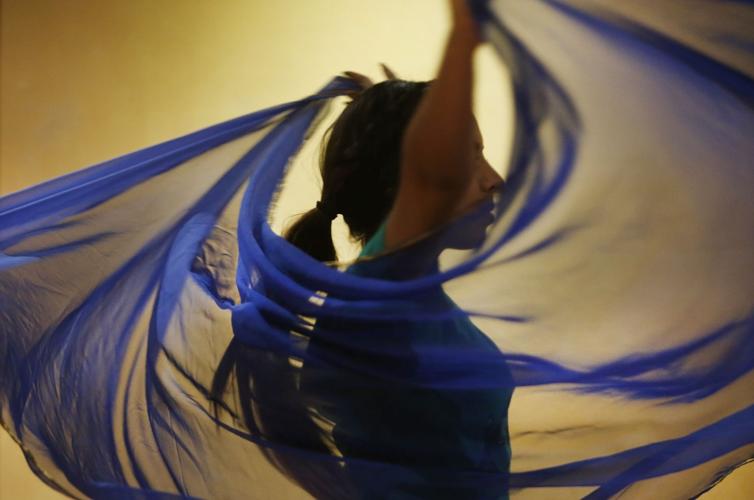
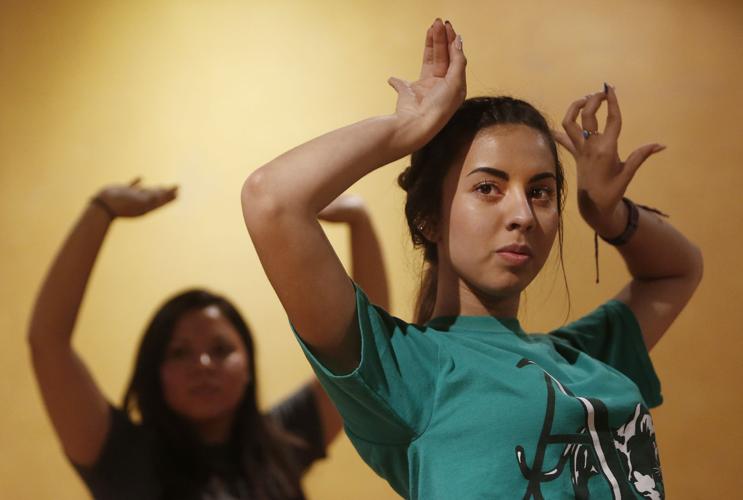
Belly dance, originating from the Middle East, primarily focuses on the movement of the hips and abdominal muscles.
Beginner classes at Belly Dance Tucson focus on moving specific muscles and parts of the body in isolation. After demonstrations, the instructor walks around and gently corrects and shows students how to do the moves, giving students personalized time.
Jessica Walker is the owner/director/instructor of the midtown studio, where beginner classes prepare students for the more involved techniques. Classes move on to sharp hip and leg movements where dancers travel forward and backwards across the floor and “snake arms” where students move their arms in a fluid motion resembling a snake.
Over time, students work their way up and start to layer their movements.
“Layering the movements is the hardest,” Walker said. “When you add them all together it falls apart.”
As students get better, they start adding arms, legs and sometimes props like finger symbols and swords into the mix.
For those who enjoy group improvisation, Belly Dance Tucson also teaches improvisational tribal style dance. It’s the Americanization of belly dances fused with other native dance styles including flamenco, classical and North African dance.
Walker compares the tribal style dance to learning a language. Dancers who know the language will be able to pick up visual cues that allow them to dance with strangers and look like they’re performing a choreographed piece.
“You can usually dance together as if you’ve danced with each other for years,” Walker said. “We think it’s fun. It gives us the freedom to play around and adjust the movements.”
Irish Dancing
Every Fourth of July since the Tir Conaill Academy of Irish Dance opened in 2005 it has sent championship dancers to the North American Irish Dance Championships.
This year several dancers placed high in the national rankings — Sarah Cherry placed eighth and Danielle Meier came in 15th in the category for ladies 20 and older; Eric Crone placed ninth for boys under 13; and Liam Critchley placed 17th.
But there’s more to Tir Conaill than training champions. It offers classes for adults and students as young as 3.
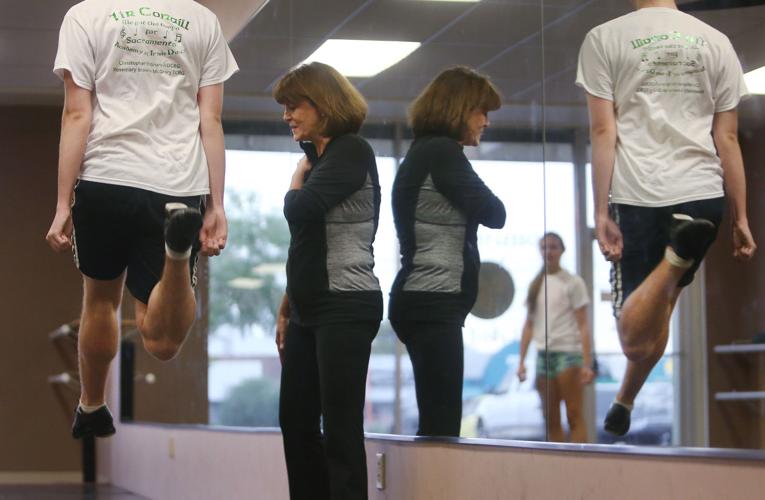
“It’s a delight to teach Irish dancing,” said Rosemary Browne, an academy teacher and co-director.
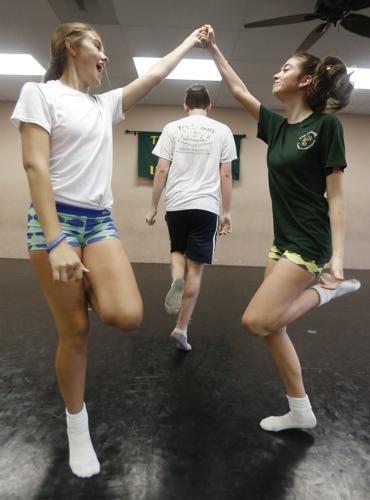
Irish stepdance has a distinctive look because of the dancer’s stiff upper body and quick footwork. It is directly connected to Irish music, with the different names of stepdances corresponding with the types of traditional Irish music that each dance uses.
The two basic classifications for types of Irish stepdance are hard shoe and soft shoe.
Hard shoes are used for dances like the hornpipe, and the shoes themselves make a distinctive noise — similar to tap shoes.
Hard shoe dances are what most people think of when they think of Irish stepdancing, with the performers drumming out a sharp staccato on the ground, said Liam Critchley, a championship dancer and assistant teacher at Tir Conaill.
“All we do is bang the snot out of the floor,” he said.
Soft shoes are used for the more graceful types of Irish dance like slip jig and are similar to ballet or jazz shoes. Beginners start with soft shoe dances.
“There’s a very vibrant Irish dancing community,” Browne said. “I was excited to find it here.”
Annie Dickman is a University of Arizona journalism student and an apprentice at the Star.


