

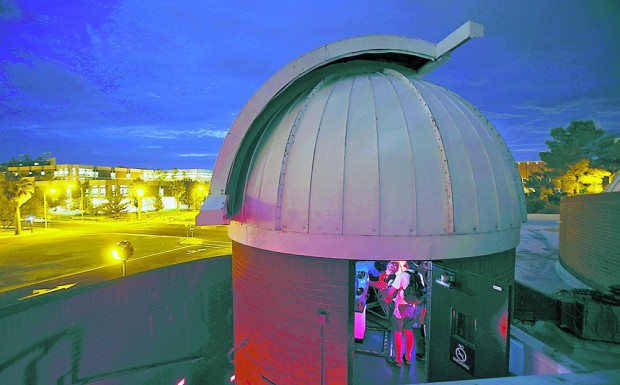

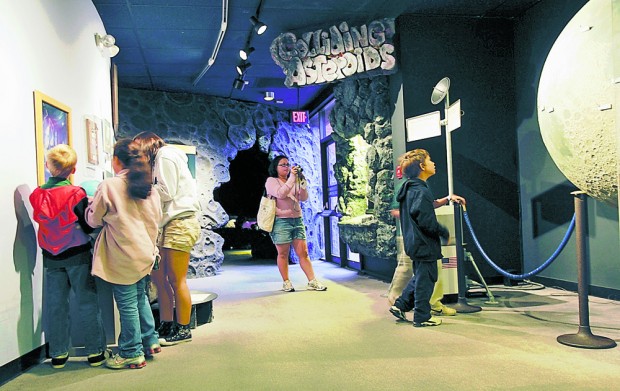
On a less busy weekend, the University of Arizona's Science City at the Tucson Festival of Books would be an event in itself.
Located on the UA Mall east of Cherry Avenue, it will encompass 11 tents, three stages, food vendors, a book shop and free admission to the nearby Flandrau Science Center.
You can learn about phenology and dendrochronology, edible bugs and venomous critters. You can learn physics by making ice cream, create a "blinkomatic" with rocket scientists from Raytheon, visit Jimmy Stewart's Weather Bus, make a DNA double helix with Twizzlers and marshmallows, and win a giant stuffed microbe.
You can sign up for guided tours of the laser lab, the Museum of Optics, the Steward Observatory Mirror Lab and more.
You can even tour the local environment with phenologists - scientists who study periodic changes in plants and animals related to variations in climate.
People are also reading…
Representatives from local scientific institutions, such as Kartchner Caverns, the Sky Island Alliance, The Audubon Society and the Arizona-Sonora Desert Museum will join UA scientists on the mall, offering information, hands-on science, exhibits and talks.
There will be performances by the Physics Factory and the Kinetic King.
There will be talks by UA scientists and authors on topics ranging from climate change to tractor beams to brainpower.
One of the UA authors, Rafe Sagarin, is a marine biologist who will speak on national security.
Sagarin's book, "Learning From the Octopus," says we humans have insulated ourselves from natural selection in our well-ordered societies and have lost the adaptability we need to counter threats to our existence.
"The octopus is a great example," Sagarin said. "It has a decentralized way of solving problems."
As it passes over a multi-colored coral reef, it adjusts its camouflage.
"Its brain isn't telling each arm to change colors, but all these different skin cells are instantly changing shape and color to match the environment.
"We do the opposite. We ask a small group of experts to come up with a solution instead of relying on our wonderful collective brain creativity and allowing all of us to solve the problems.
"Overall, an octopus has multiple ways of looking and of responding to threats - camouflage, a cloud of ink, speed. It can squeeze itself into shelter to change its form. It even uses tools. It will grab two halves of a coconut shell for a rolling suit of armor."
Other speakers at the Science City venue include Regents Professor Malcolm Hughes, who will talk about tree-ring science and climate; Dante Lauretta, who will talk about the UA/NASA mission he is leading to retrieve a sample of an asteroid from space; Gary Nabhan, who will speak on chiles and other Southwestern foods; and Sam Kean, author, science journalist and big fan of the periodic table of the elements.
Word wizards make it all plain
Among the many word magicians at the Tucson Festival of Books on March 10 and 11 are the alchemists who transform complexity into readable prose — the science writers.
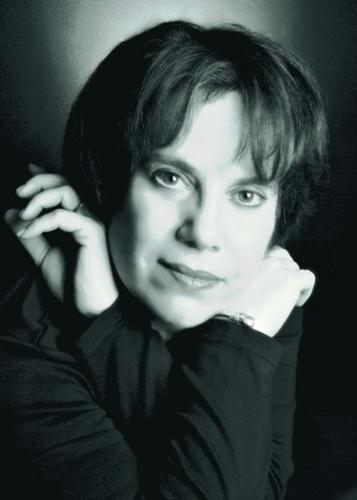
Deborah Blum, for example, likes to trick people into loving chemistry.
“I use murder and poisoning as a way to kind of seduce people into enjoying chemistry, which I find really fascinating.”
In “The Poisoner’s Handbook: Murder and the Birth of Forensic Medicine in Jazz Age New York,” Blum tells the story of a toxicologist and a medical examiner who used their scientific detecting skills to bring murderers to justice during the Roaring ’20s and Depression ’30s in New York City.
Along the way she explores the development of forensic science, the alarming death rate from alcohol poisoning during Prohibition and early advances in protection of workers from chemical toxins and radioactive compounds.
Fans of “CSI” shows should be captivated by her two main characters: Alexander Gettler, the chemist who made forensic toxicology a real science in an era when it was belittled by lawyers during court trials; and Charles Norris, who elevated the position of medical examiner at a time when death certificates were being signed by the incompetent coroners appointed by corrupt Tammany Hall politicians.
Blum is as fascinated by the chemistry of poisons as she is by the diabolical intent of the many mass poisoners she chronicles.
Blum gave up her own study of chemistry after two incidents. She generated a poisonous cloud that led to evacuation of her lab in college. In a second incident, she set off an explosion in the fume hood that set her hair on fire.
She decided to trade the lab for the keyboard, where the environment is safer but the task just as challenging.
Blum, a Pulitzer-Prize winning journalist who now teaches writing at the University of Wisconsin, said, “Science writers have to be the best writers on the staff, because you’re writing about something people are afraid of.”
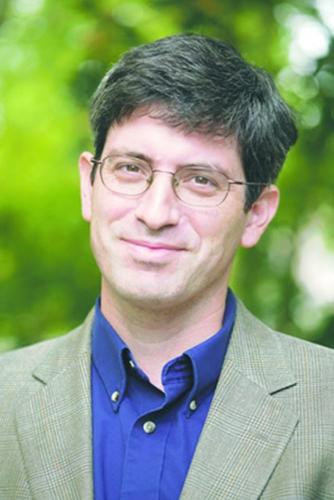
Blum will be joined in a panel at the Book Festival by another of our best practitioners of science writing — Carl Zimmer. Zimmer and Blum are both featured in the anthology “Best American Science Writing.”
Zimmer says science is “intrinsically exciting.”
“The problem is that people kind of just make a summary judgment about science in general and say: ‘Oh, I couldn’t understand that. It must be boring.’
“You need to find points of contact, like Deborah does. Lots of people are big fans of murder mysteries.”
Zimmer, who writes mostly about biology, has a variety of hooks, including the “ick” factor of organisms such as viruses and parasites. He writes so well about them, in fact, that one impressed biologist named a tapeworm for him — Acanthobothrium zimmeri.
The newly reissued edition of his book “Parasite Rex” uses this promotional message: “Imagine a world where parasites control the minds of their hosts.”
And yes, that would be Earth.
Another hook — Zimmer over the past few years has been publishing photos of scientists’ tattoos on his blog “The Loom.”
They proved so popular that they, too, have become a book, the recently published “Science Ink: Tattoos of the Science Obsessed.”
“It’s funny how you can end up talking about a lot of science writing captions for pictures of tattoos,” Zimmer said.
He said he was pleased when he was invited to speak at a recent “Inked” magazine event and ran into a reader who told him: “It was amazing. I was sitting on the train with the book and said, ‘Oh my God, I’m learning all this science.’ ”
Zimmer, who teaches writing about science and the environment at Yale University, said it is easier to teach writers how to explain science than it is is to show scientists how to write for the general public.
“You have to explain to them that they are writing or talking about science for people who are not members of their own departments ... people who haven’t spent the last 30 years thinking about plate tectonics or photosynthesis.”
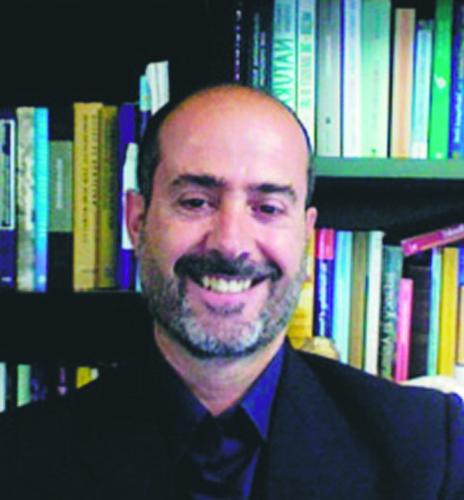
Which brings us to Dario Maestripieri, author of “Games Primates Play: An Undercover Investigation of the Evolution and Economics of Human Relationships.”
Maestripieri bridges the gap between the scientist and the reader by applying his decades of study in primate behavior to contemporary social situations.
Maestripieri is a professor of comparative human development, evolutionary biology, neurobiology and psychiatry at the University of Chicago.
In a monthly column in Psychology Today, also called “Games Primates Play,” Maestripieri has recently explained appropriate elevator behavior and how email exchanges follow accepted norms of conversation, even without emoticons or visual cues.
He uses primate behavior to explain politics, economics and relationships, and he does so in a genial, humorous fashion.
Elevator anxiety, for instance, is a holdover from caveman times when, finding yourself trapped in a confined space with another primate, killing the other guy before he killed you was a rational response.
Maestripieri found a less deadly tactic among rhesus macaques that might bare their teeth in a kind of smile and begin brushing and cleaning the other’s fur.
“So,” he writes, “if you are a rhesus macaque and find yourself trapped in a small cage with another macaque, you know what to do: Bare your teeth and start grooming. If you are a human and find yourself riding in an elevator with a stranger, I recommend you do the same: smile and make polite conversation.”
Joe Palca will also be talking about human interactions. Palca, science correspondent for National Public Radio, will talk about the scientific knowledge behind things that annoy us.
Palca and Flora Lichtman, multimedia editor for NPR’s popular “Science Friday,” decided to examine what annoys us after Lichtman said, “I’ve always wondered why I’m so easily annoyed, but that would never make a book.”
Palca, who has a Ph.D. in psychology, thought otherwise.
“Annoying: The Science of What Bugs Us” was the result.
He said “annoyance” is not an emotion that merited study in psychology, but “it’s a universal problem.”
People told him: “Oh, come on. You can’t be writing a book about annoying things.’ And then they start telling you about the 8,000 things that annoy them.”
One annoying thing that has been studied is the overheard cellphone conversation. Researchers even have a name for it, Palca said — “halfalogue.”
“It’s the idea that when you hear a half of a conversation, it leaves you in an awkward place. You feel like there is a gap. Our brains are trying actively to predict what’s going to come next in the conversation. Generally speaking, there is no clue.”
Palca’s biggest annoyance? Unexplained delays at airports. “You’re standing at the gate of an airplane and the flight says it’s on time, but everybody is just sitting there and there is no explanation. Somebody has got to know there is a delay.”
One thing that does not annoy Palca is his job.
“I think that this stuff, the things I cover are just intrinsically interesting.”
His job is “sharing that amazement or fascination.”
“You can fuzz over the details. I’m not teaching a course in molecular genetics. And I never say anything has been discovered definitively. The search goes on. I think you could end every piece that way — ‘the search goes on.’ ”
4th annual Tucson Festival of Books
• When: 9 a.m.-5:30 p.m. March 10-11.
• Where: University of Arizona campus. Attendance and parking are free.
• What: About 450 authors, book discussions, workshops, literary activities for the entire family and food.
• Sponsors: The UA and the Arizona Daily Star. University of Arizona Medical Center is the presenting sponsor. Net proceeds will promote literacy in Southern Arizona through the Tucson Festival of Books Foundation, a nonprofit organization.
• Information: tucsonfestivalofbooks.org Follow the festival on Facebook at www.facebook.com/tucsonfestivalofbooks and go to www.twitter.com/tfob to follow on Twitter. Apps are also available on the website for iPhones and Android devices.
• Plan it out: The best way to see the authors and participate in the workshops and other activities is to make a plan. Check the March 4 Star, which will feature a pull-out section that details the event - including lists of author presentations, signings and readings. There will be a map, too.
More on the Tucson Festival of Books
Food is central to the event; read about it in the Wednesday Food pages. And next Sunday in ¡Vamos! - more highlights, including lots of activities for children.
Five other 'don't miss' authors of a scientific bent:
• Timothy Egan is not a science writer per se, but "The Big Burn," his history of the massive 1910 wildfire that led to 100 years of fire suppression in our forests, is on the bookshelf of every naturalist, fire scientist and conservationist in the West.
• Patricia Churchland is a pioneer in the field of neurophilosophy. In "Braintrust: What Neuroscience Tells Us About Morality," she argues that morality resides in the biology of the brain.
• Chris Mooney writes about science and politics and is author of "The Republican War on Science."
• Lisa Sanders, clinician and professor at Yale University School of Medicine, writes the "Diagnosis" column in The New York Times - succinct little medical mysteries that inspired the TV series "House."
• Charles Moore, the sea captain and author of "Plastic Ocean," blew the whistle on the Great Pacific Garbage Patch.
Contact reporter Tom Beal at tbeal@azstarnet.com or 573-4158.


