

Finding love in Saudi Arabia is practically impossible, especially for young Muslim women.
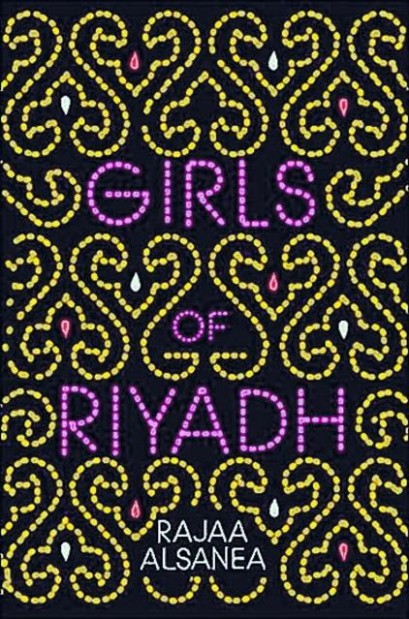
That's the premise 25-year-old author Rajaa Alsanea tackles in her novel, "Girls of Riyadh," which already has created a stir throughout the Arab world.
"In Saudi, there are a lot of restrictions," she said during an interview at the University of Illinois at Chicago's College of Dentistry. Alsanea is pursuing a master's degree in oral sciences before returning to Riyadh to live with her family, practice dentistry and continue writing fiction.
"We're living in the 21st century and there are still traditions from the 19th century, and that's just insane," she said. "You have the Internet . . . and freedom of speech. You have modern schools and modern hospitals. And everything around you is digital. And yet you have to go through all this pain when you want to get married."
People are also reading…
Alsanea, dressed in black scrubs with a pink long-sleeved undershirt and matching hijab — a Muslim woman's head scarf that signifies a strict code of behavior — said she wrote the book as criticism of her homeland.
"It's my obligation to try to fix things in Saudi. I'm not trying to fix the government or Islam. What I'm trying to fix is mentality, how people think. It's the traditions," she said. "These traditions, either (need to) loosen up, or we should get rid of them."
The novel, her first published work, examines the love lives of four upper-class Saudi Muslim women in their 20s. In the book, an anonymous writer sends a weekly e-mail to thousands of Saudis. The e-mails tell the stories of the writer's friends — Gamrah, Michelle, Lamees and Sadeem — and chronicles their courtships, which are tied in to family approval, social class and religion.
Gamrah, from an ultraconservative family, marries a man her parents chose and follows him to the United States. She soon discovers he's already in love with someone else and married Gamrah only to obey his parents. Gamrah returns home heartbroken, pregnant and unsure of her future.
Despite the buzz surrounding her book, Alsanea has no desire to pursue writing as a full-time career.
"I always say that writing is for my soul. Dentistry is a job, a skill, something that introduces you to people," she said. "I don't want to do writing as a job."
Alsanea, who learned to read and write by age 6, said her late father was her biggest inspiration. He would ask her to read the newspaper aloud in Arabic, and he would correct her pronunciation and grammar.
Through school, she developed her creativity by writing plays and short stories, including one she wrote when she was 11 that was told through the perspective of a water droplet. When none of her teachers believed that she wrote it, she vowed to write a book someday.
She won an overwhelming response from well-known Arab writers in 2005 after the original Arabic publication of "Girls of Riyadh" in Lebanon. Then 23, Alsanea also got death threats from critics who were outraged.
The novel's content is far from salacious by Western standards; there are no explicit references to sex. But for some in Saudi Arabia, where Saudi women are forbidden to drive and Islamic law limits the consumption of alcohol and discourages premarital sex, it has been considered scandalous.
In one part of the book, Michelle dresses as a man so she can drive her three friends to the mall for an all-girls outing. In another story, Sadeem sleeps with her fiance after their marriage contract is signed but before they live together. Another character drinks alcohol.
Alsanea said these episodes brought more threats.
The novel is based on true stories from women Alsanea met at King Saud University in Riyadh, where she completed a degree in dentistry in 2005.
"People who are not prepared to read something about daily life that is so true — it's like you told one of their secrets," she said.
A devout Muslim, Alsanea plans to live with her family until she gets married. But she also plans to keep writing. Her next book will again examine life in Saudi Arabia, but through a different lens.
"Some people say, 'Just settle and get married somewhere else in another country.' That's not an option for me. I'm Saudi, and people have to accept that," she said. "It's my duty to shed light on the things that I don't approve of."


