

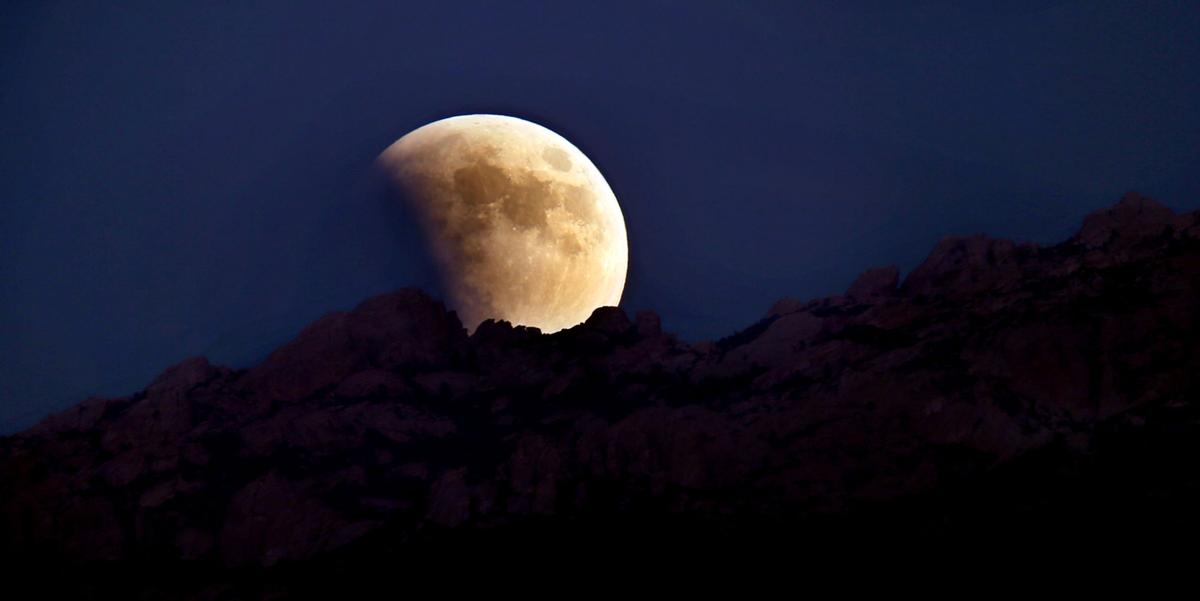
On Thursday, Nov. 17, the moon does not rise until 8:54 p.m., with astronomical twilight ending at 6:47 p.m. This gives more than two hours of dark sky in the early evening.
Take the opportunity to check out Pegasus the Winged Horse and Andromeda the Maiden, which are overhead at 8 p.m. These are large, bright constellations, but they look nothing like their namesakes.
Pegasus is a large “square” of four bright stars. Inside the square are dimmer stars—how many you can see on a given night indicates how dark the sky is. Pegasus also consists of two extensions of dimmer stars to the west from the two stars in its western end.
The northeastern star in the square of Pegasus is Alpheratz, which is actually in Andromeda, though I like to think of it as completing the square of Pegasus.
Extending from Alpheratz to the northeast are two other bright stars, Mirach and Almach—in that order—making up most of Andromeda.
People are also reading…
Seven degrees north of Mirach is a fuzzy patch that is the Great Andromeda Galaxy, a galaxy 2.5 million light years away and larger than our own Milky Way. On a good night it is visible to the unaided eye and is a wonderful sight in binoculars or a low-power telescope.
It is the most distant object most of us are able to see without binoculars or a telescope.
If you missed the “supermoon” moon on Sunday and Monday evenings, don’t worry — there will be another one next month.
“Supermoon” is a fancy, somewhat exaggerated way of saying the full moon will be a little larger than normal.
That’s because the moon is at its closest approach to Earth while it happens to be full, which makes it look slightly larger and brighter than normal.
A full moon at perigee (closest approach) is larger up to 14 percent in diameter and shines with about 30 percent more light than when the moon is at apogee, its farthest point. Otherwise, it is the same old full moon we have come to love and enjoy.
Monday’s supermoon was extra super — it was the closest the moon will come to us in almost 69 years. And it won’t happen again for another 18 years, the Associated Press reported.
Contact Tim Hunter at skyspy@tucson.com


