Back in 2020, Allen Salway walked into Lemongrass for the first time.
The small, hidden gem at 344 N. Fourth Avenue served up homemade curry and other Nepalese cuisine, gaining a dedicated following in its years of business.
He had seen the tables inside filled with friendly faces, so Salway decided to give it a try.
That fateful day changed everything.

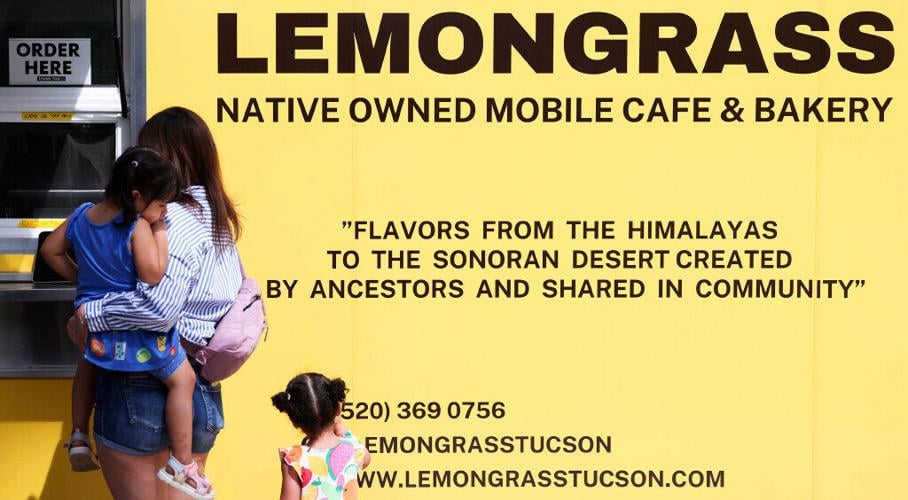
Lemongrass gives away free meals to families outside the Tucson Children’s Museum, 200 S. Sixth Ave., on a recent pop-up.
Salway quickly fell in love with Lemongrass and started going to the restaurant at least once a week to get his fix. He even became friends with the owner, “Dr. Tank” Ojha.
Things were going great until a for-sale sign popped up in Lemongrass’ window in 2025.
Dr. Tank and his wife were ready to retire and seek refuge from Tucson’s hot weather, so they made the decision to sell their Fourth Avenue location. Salway was hoping someone would take over his favorite restaurant, but month after month, the sign remained in the window.
People are also reading…
Salway, who is Navajo and Tohono O’odham, said his humble beginnings showed him firsthand how food had the power to bring people together. He was raised on the Navajo reservation in New Mexico, growing up on a huge farm with no running water or electricity.
He learned how to bake from the women in his family, seeing how good, homemade food could affect the way people feel. One bite of his coveted cardamom olive oil cake could change a bad day into a good one, putting a smile on his friends’ faces when he would bring it to their birthday parties.
He started thinking, what if HE took over Lemongrass?
He inquired about taking over the restaurant and its spot on Fourth Avenue, but the leasing company had already begun working with someone else. So, he pivoted.
He began looking for other spaces along Fourth Avenue and seeking advice from longtime restaurant owners. It was suggested he start out with a food truck, giving him a more cost-effective way to get the name out there as well as experiment with the menu.
It was settled: Lemongrass was going mobile.

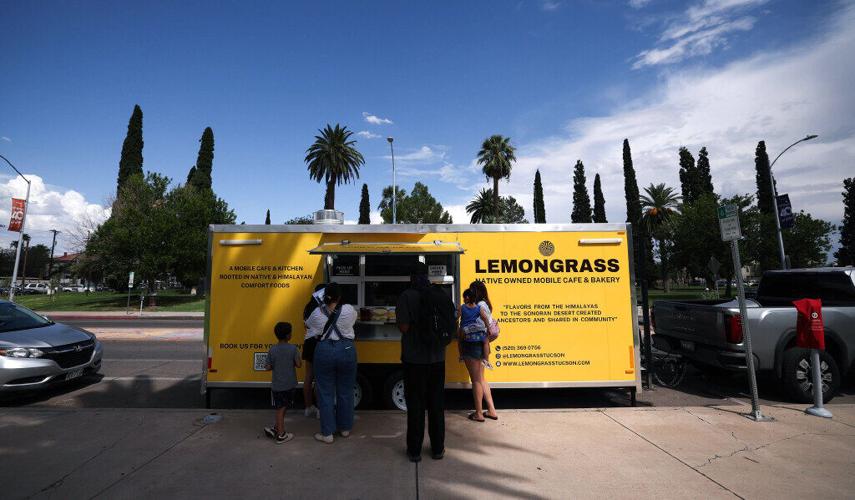
The Lemongrass food truck at a stop outside the Tucson Children's Museum.
For the last two months of 2025, Salway could be found in the Lemongrass kitchen, working intensely beside Dr. Tank. He was learning the ins and outs of his cooking skills, documenting all his recipes and secrets.
His final test was serving the curry to some of Lemongrass’ dedicated customers, seeing if they could taste the difference.
“There were loyal customers that came in, and Dr. Tank asked, how does it taste?” Salway said. “They were like, ‘It tastes just like yours!’ That's how I knew I passed his test.”
With Dr. Tank’s blessing, it was time to move on to the next step: getting a trailer.
Salway sought out various options to get funding, but doors kept closing in his face. That’s when he reached out to the community for help.
As an activist, Salway had done a lot for the Native American community in the Southwest, gaining a following on social media and a reputation for being someone people could count on.
“I think it resonated with people because they want to see more Native businesses. They want to see Native people thrive, and they saw that what I was doing wasn't just for a quick buck,” Salway said.
After months and months of hard work and $60,000 in donations, his dream became a reality.
Salway has officially taken over the Lemongrass brand, starting a food truck that is not only a love letter to Dr. Tank’s food but a way to share his Native American roots.
With support from the San Xavier Co-op Farm at 8100 S. Oidak Wog, the bright yellow Lemongrass trailer made its first pop-up appearance there earlier this year.
On the menu, you can expect to see Lemongrass’s beloved chicken curry and vegetable curry bowls.
The top stories from the Arizona Daily Star’s Caliente section for this week.
As a homage to Salway’s own roots, the menu also has a variety of frybread options. He suggests getting a side of classic frybread to dunk in your curry, combining the Himalayan and Native American flavors for a delicious outcome.
He also makes iced matcha lattes, a Sonoran Palmer tea that is made up of lemonade, Navajo tea, rosemary and prickly pear, and of course, his coveted orange cardamom olive oil cake that is topped with cookie butter frosting and crushed pistachios.
In the past month, Lemongrass has popped up at local events at the Tucson Museum of Art as well as in front of Tap & Bottle.
He donates 10% of his net profits to Community Care Tucson, making sure he is putting back some good into the community that helped him achieve his dreams.

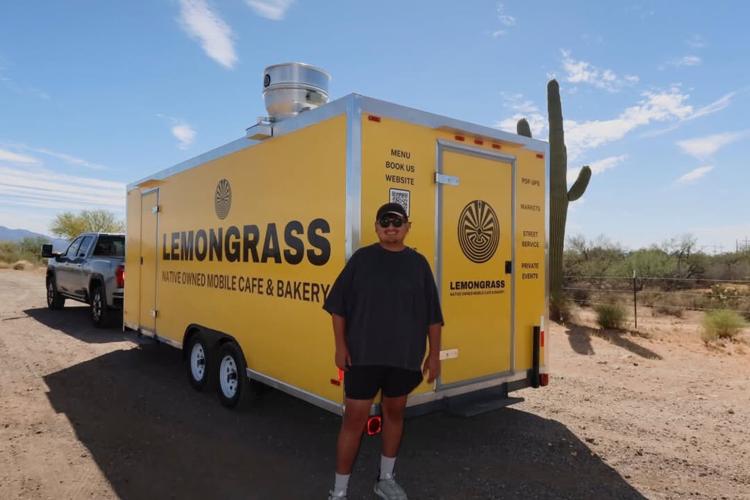
Allen Salway, the new owner behind the Lemongrass food trailer.
But Salway isn’t stopping there; he wants Lemongrass to pop up all over the Southwest, giving more people the opportunity to try his unique flavors, and giving Native Americans a space where they can come together.
“There's a big Native community here in Arizona, there's like over 20 tribes, but I feel like there's a lack of space for Native people on our own lands,” Salway said. “Everywhere I go, I sometimes feel like I'm an intruder. I don't want to feel like that.
“That’s the goal with Lemongrass. I want people to know that they can go to this place and it'll always feel the same, the food will always be good and you know that your dollar is going back into the community.”
To find out where Lemongrass is popping up for the week, visit its Instagram page.
Jamie Donnelly is the food writer for the Arizona Daily Star and #ThisIsTucson. Contact her via e-mail at jdonnelly@tucson.com
Jamie Donnelly
Reporter