Broadway in Tucson opens its 2026-27 season next week with the revival of “The Who’s Tommy,” the Brit-rockers' 1969 rock opera reimagined for the 21st century.
The story is still the same, but the delivery is a decidedly high-tech spectacle.
“We use some really awesome technological elements to further the story and make it just a more exciting sensory experience,” explained Collin Matthew Flanagan, who plays Tommy in the show’s North American tour that kicked off in Cleveland earlier this month.
Broadway in Tucson brings the show to Centennial Hall Oct. 20-25, the fifth stop on a tour that is expected to run through next June.
The musical is based on The Who’s 1969 concept album mostly written by Pete Towshend, who also adapted the work for the stage with director Des McAnuff. The musical follows the story of young Tommy, who witnesses his father murder his mother’s lover.
People are also reading…

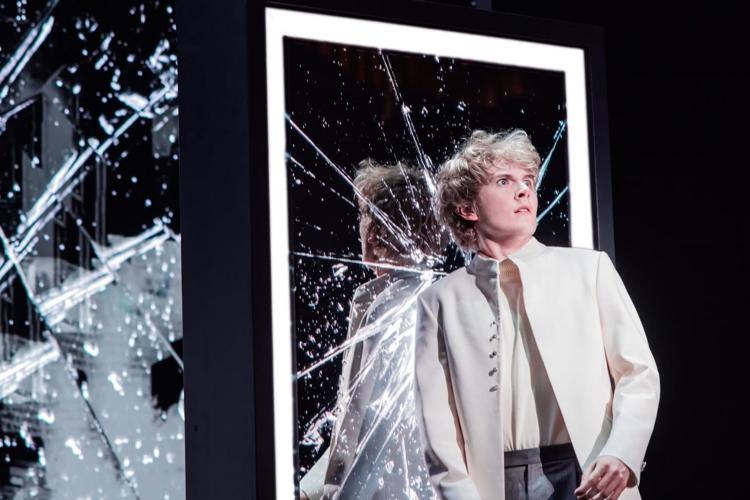
Collin Matthew Flanagan is making his Broadway tour debut in “The Who’s Tommy,” coming to Centennial Hall Oct. 20-25.
Traumatized, Tommy slips into his own world, endlessly and obsessively staring into a mirror until he finds salvation in a pinball machine.
Yes, Flanagan said, his generation still plays pinball. In fact, pinball since 2008 has experienced a stunning resurgence globally, driven largely by Flanagan’s generation.
“Don’t worry, we haven’t lost the pinball yet,” the 23-year-old New Jersey native said.
Flanagan, in his first Broadway tour, said pinball isn’t the only thing about the story that will resonate with his generation.
“I think that although this show is a little bit dated, there are so many themes that still resonate universally,” he said, including dealing with trauma and “the feeling of being outcasted and … finding who you are and what makes you special and what makes you important and unique.”

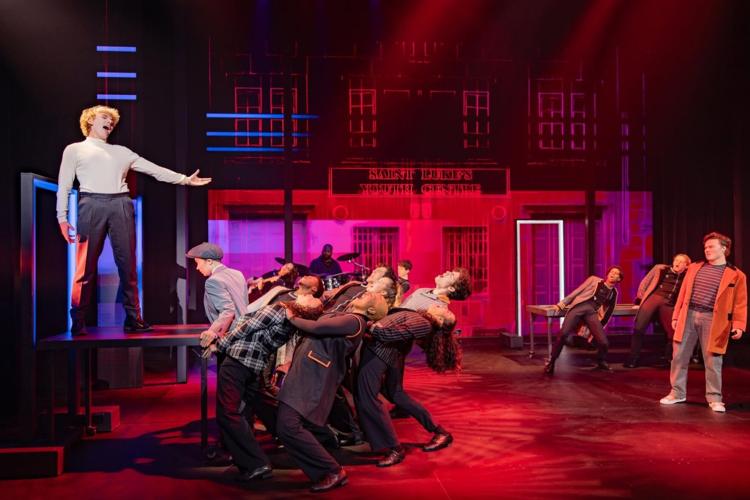
Collin Matthew Flanagan, left, and the ensemble perform a scene from the rock opera “The Who’s Tommy.” Flanagan said the revival gives the ensemble a much larger role than the 1993 original version of the play.
The revival also turns up the volume on the music — unforgettable anthems including “I’m Free,” “See Me, Feel Me,” “Sensation” and “Pinball Wizard” — creating an atmosphere akin to the arena rock shows The Who played in their 1960s and 70s heyday.
“I think it really helps build the story and build the world that (Tommy) is living in because it's a show about someone who isn't experiencing sensations,” Flanagan said. "In Tommy's brain, there's all these dreams and all of these senses that are happening that he's just not experiencing, or he's not experiencing the reality of those senses.”
Because Townshend wrote the play as an opera, there is no spoken dialogue; everything is sung. Flanagan, who went to the Metropolitan Opera as a kid growing up not far from New York City, compared it to the hip-hop musical “Hamilton” and electro-pop opera “The Comet of 1812.”
“I think that this being a rock opera does a really good job at keeping the momentum and the story going,” he said, adding that the revival gives the ensemble cast a much bigger role throughout the play.
“Using the ensemble to tell the story is a really fun update for this version of the show,” Flanagan said. “It really makes it palpable and digestible for a more modern audience.”
Contact reporter Cathalena E. Burch at cburch@tucson.com. On Bluesky @Starburch

Cathalena E. Burch
Reporter