Generation Alpha, or children who are up to age 16, are becoming influential purchase brokers in the shopping economy — and their parents are listening, according to two studies.
Youths between the ages of 8 and 15 directly control $95 billion and have a sway over bigger-picture household spending, according to a new study by DKC, a communications and marketing firm.
In a study of 1,000 parents of Gen Alpha kids, 90% said they changed their consumer behavior because of their child's preferences, and 41% said all household spending decisions are affected by their Gen Alpha child.
"More and more, this gateway generation is becoming the director of household spending for their families," said Matthew Traub, CEO of DKC.

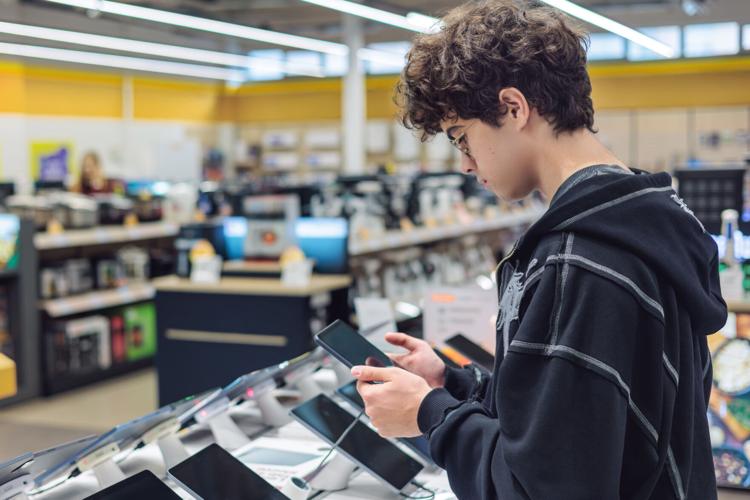
A teenager tests tablets at an electronics store.
Growing up with AI
Gen Alpha kids' spending money comes from allowances for doing chores (78%), payment for good grades (67%) and their own side hustles such as mowing lawns and babysitting (57%), the survey found; 14% get paid for online selling and reselling of goods.
People are also reading…
DKC surveyed parents of Gen Alpha kids ages 8 to 15.
It's the first generation growing up with artificial intelligence and other digital tools, which help youths as they shop and, in some cases, start their own businesses "at a very early age," Traub said.
The ease of digital transactions and kids being able to easily use their parents' digital payment methods also makes purchasing easy for this generation, he said.

Gen Alpha is the first generation growing up with artificial intelligence and other digital tools, which help youths as they shop and, in some cases, start their own businesses.
Comfortable online
Gen Alpha kids grew up on screens preloaded with payment methods during the COVID-19 pandemic, which made them "incredibly adept at navigating online marketplaces," said Ali Furman, U.S. consumer markets industry leader for PwC, a professional services company.
"Many of them learned to swipe before they could write and they learned to negotiate before they could drive," Furman said.
PwC surveyed 1,000 children ages 7 to 14 and their parents, and 97% of the Gen Alpha kids said they buy something independently sometimes.
More options are available for kids to have their own digital payment accounts, like Apple Cash, Greenlight, teen checking accounts and Cash App. Retailers like Amazon offer kid accounts with independent spending limits and parent-approval options.
In recent years, more celebrity parents have been opening up about raising their children without strict gender stereotypes, encouraging individuality over labels and expectations. In a 2018 Vogue interview, Beyoncé shared that she teaches her daughters to see themselves as leaders, saying they are “CEOs, as bosses, and that they know they can write the script for their own lives—that they can speak their minds and they have no ceiling. They don’t have to be a certain type or fit into a specific category.” She also emphasized raising her son to be both strong and sensitive, while allowing her children to love who they want to love and define themselves on their own terms. Megan Fox has also embraced gender-inclusive parenting with her three sons. She has supported her children’s self-expression from an early age, including one of her sons wearing dresses at just two years old. In an interview with Glamour, Fox explained that she introduced books featuring transgender children and stories about boys wearing dresses, helping normalize different forms of identity and expression at home. Pink has also described her household as “label-less,” telling People magazine in 2018 that she avoids placing identity labels on her family altogether. Instead, she focuses on raising her children to feel free from societal expectations tied to gender roles. And then there’s Angelina Jolie, who has long been known for supporting her daughter Shiloh’s evolving self-expression, including her choice of short hairstyles and clothing styles that made her feel comfortable. At a young age, Shiloh also briefly chose to be called by a new name, John, and began dressing in suits and slacks, all while Jolie continued to support her individuality.
Fifty-two percent of Gen Alpha survey respondents add items to shared carts for their parents to review. "It's like the modern version of 'Can we get this?'" Furman said.
Kendall Baierlein, 14, of West Islip, N.Y., puts things in an online shopping cart to signal to her mom, Kylie, to buy her something. "I tell her about it and then I ask for her permission and then we buy it," she said.
Kylie said Kendall has good self-discipline and doesn't ask for too much, so Kylie usually buys what's in the cart. Kendall said she usually shops online for clothes as seasons change or she outgrows a size.
Kylie agreed with the survey results saying parents' purchases are influenced by their children, saying she's not on social media much but knows Kendall and her friends see things they want or reviews online.
Sixty-one percent of Gen Alpha respondents in the PwC report said they were influenced by social media to buy something, while 56% cited peer influences.

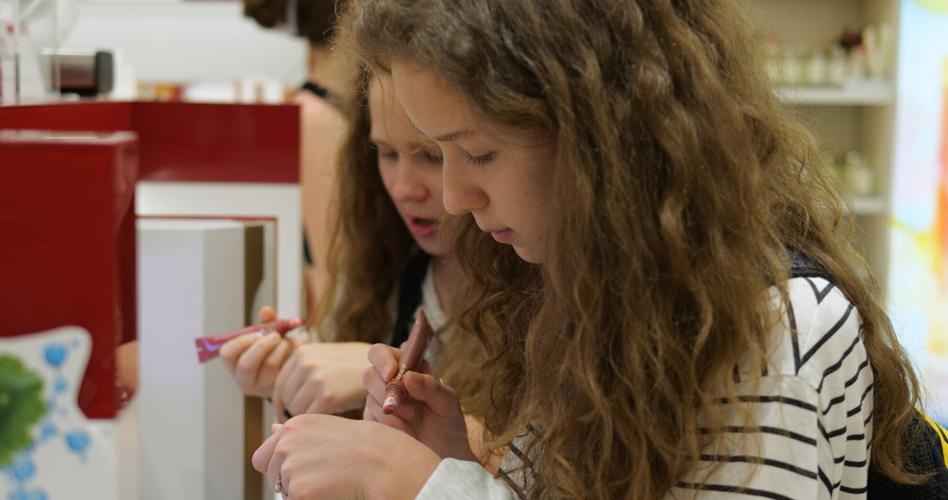
Teenagers test lipstick colors by making small swatches on their hands in a cosmetics store.
What kind of influence do they have?
Gen Alpha kids have broad influence on their parents.
Fifty-two percent of parents in the DKC study said they were more likely to try new or different foods, and 30% of parents — including 43% of moms — said they were more likely to try new beauty products suggested by their kids. Thirty-eight percent of parents said they were more likely to travel to new vacation destinations, and 33% of parents — including 47% of dads — were more likely to watch new or different sports.
Gen Alpha kids also influence what their parents don't buy: 47% of parents surveyed said they avoid brands their children dislike.

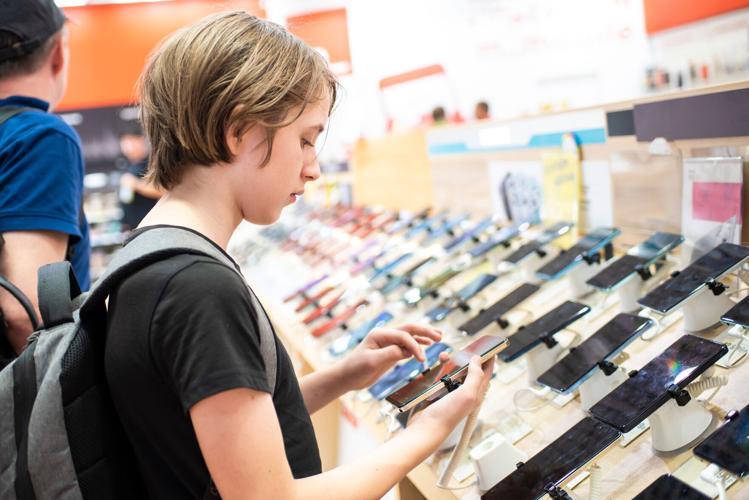
An 11-year-old chooses a mobile phone for himself in a store.
How are they different?
Kids and teens always pestered their parents to buy them things. What makes Gen Alphas more successful?
"The biggest shifts we're looking at are very digital and deal-oriented," Traub said. "Parents are saying they are paying more attention to ChatGPT and other AI tools as a result of the influence of their Gen Alpha child," and they increased their online purchases and are more likely to use social media to look up product reviews.
Gen Alpha kids are so much more comfortable than previous generations with AI, including using AI to search for and discover brands and products online to buy, and that makes them different than previous generations of kids asking parents to buy them something, Furman said.
"Kids have nagged their parents for things they wanted throughout time. But I think that this generation is particularly adept at strategic negotiation and they're using other means of convincing their parents that frankly didn't exist before," Furman said, including making PowerPoint presentations.