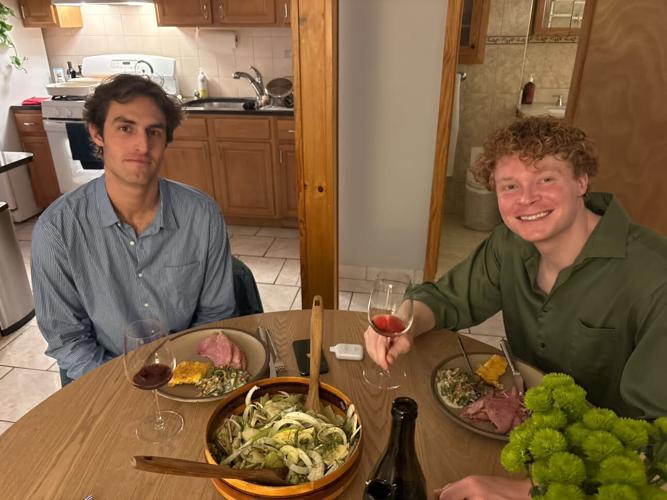
In the days leading up to Jackson Strike's Friendsgiving dinner, the guest list continued to shrink.
One friend injured her foot. A couple got sick. The day of, another friend canceled because of a "rough day at work."
The RVSPs dwindled until it was just a group of three: Strike, the co-host and one remaining friend.
Strike, 31, posted a now-viral TikTok of their small Friendsgiving, jokingly telling their sole friend upon arrival that he was the only one coming. He was worried that if the friend knew ahead of time, he'd bail too.
"We're going to have an amazing time," he reassured the friend, who smiled nervously in response. "We have a 6-pound ham."

Jackson Strike's Friendsgiving dinner went viral after only one friend showed, sparking conversations on how "bailing culture" has "gotten out of hand."
Comments and reaction videos flooded TikTok, calling out the "bailing culture" of Generation Z and Millennials at a time when young people report feeling lonelier than ever.
People are also reading…
"Everyone wants a village until they have to be a villager," one person wrote. "What happened to the price of community is inconvenience," replied another. "Can we normalize showing up again?" another commenter begged.
"I fear that we need to have a serious conversation … boomers would never do this," Chelsea Fagan, author of "Having People Over: A Modern Guide to Planning, Throwing and Attending Every Type of Party," said in a reaction video. "It is crazy that we have gotten to this place as a society."
She called out "just how broken the social contract has gotten among young people specifically." "It quite clearly demonstrates anti-social behavior," she added.
Strike was surprised by the strong reactions — he wasn't upset with any of his friends for their lack of attendance — but in the comments, he was struck by the number of stories about friends bailing on plans at the last minute. One user commented that "modern day bailing culture has gotten so out of hand."
A new Tulane University study shows that loneliness can reduce healthy life expectancy by about five years, with men losing more years to mental health issues than women. Despite increasing social isolation, many people do not report feeling lonely, making the health risks less obvious. Disclosure: This video contains stock footage and content created or enhanced using AI-assisted tools. WooGlobe Ref : WGA464440
Is it 'protecting your peace,' or being a bad friend?
Conversations about men’s mental health moved to the forefront as experts sound the alarms on the “manosphere” and “male loneliness epidemic.” According to a 2025 report from Pew Research Center, self-reported rates of loneliness are about equal for women and men, but men are less likely to reach out to their social networks for support and tend to communicate with their close friends less often than women.
These concerning rates of loneliness come as popular Gen Z speak includes advice like "you don't owe anyone anything" and "protect your peace."
However, "protecting your peace" by bailing on plans and social commitments can quickly turn into simply being a bad friend.
“The use of therapy speak to justify, in essence, being non-committal socially, sort of withdrawing socially or having the right to withdraw socially, I think, is really hurtful,” Jamil Zaki, a professor of psychology at Stanford University and director of the Stanford Social Neuroscience Lab, previously told USA Today.
Strike moved to New York City half a decade ago, and as he gets older, he says it's been increasingly difficult to get people together. Friends get into relationships and start to move farther out of the city, and group hangouts become few and far between. For that reason, he's happy he didn't tell the one friend that everyone else bailed.

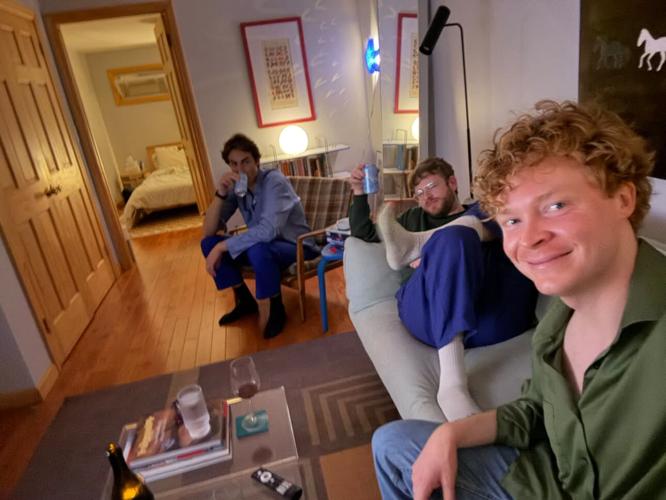
Jackson Strike, his friend and co-host hang out on the couch after a Friendsgiving dinner. Strike says despite the low turnout, the night still ended up being great.
"We had an amazing night regardless, and there was the perfect amount of wine for three people," Strike said. "That was a silver lining, and I had leftover ham all week. And, I will absolutely take a three-person Friendsgiving over a one-person Friendsgiving."
He's hoping the conversations his video sparked indicate a positive shift in bailing culture.
"The early 2020s were the era of 'you don't owe anyone anything' culture, and now maybe the late 2020s will be an era of 'actually you do owe people things' culture," he said.
Showing up isn't just good for the friendship. Nurturing those connections can have tangible benefits on your physical and mental health, too. Studies have shown connections and friendships are good for our health and longevity.
"If we focus on keeping ourselves comfortable … we're missing out on a critical opportunity," Zaki said. "When we show up for others, our stress decreases, our sense of agency and autonomy increases, our happiness increases, and so when we focus on a hyper individualistic almost single serving version of wellbeing … we actually are depriving ourselves of one of the great sources of wellbeing."
Next year, Strike said, his Friendsgiving is going to be "huge."
"Everyone who commented has an open invite," he said.