

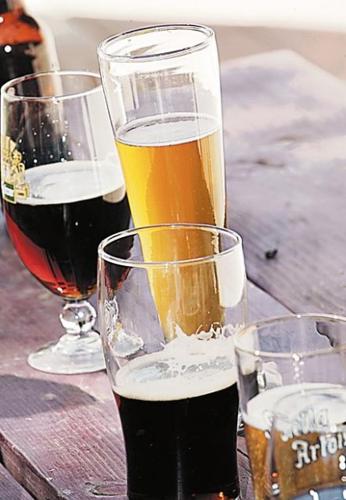
Beware the Father's Day gift that becomes an obsession. Since the 1970s when home brewing was legalized during the Carter Administration, a popular present has been the beer-brewing kit.
Retailing now for about $30 and up, brewing kits are the Easy-Bake Oven for adult males. Just like the popular plastic bake set, many home brew kits such as Mr. Beer are essentially toys.
But danger lurks for families where the first few batches of brew actually turn out to taste like beer. Because the little plastic barrel and flex tubing setup can quickly escalate into . . . a hobby.
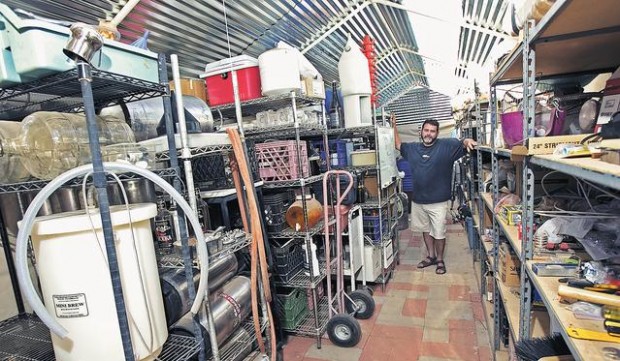
It's happened to others, including John Adkisson, a former officer in the 60-member Tucson Home Brew Club. "My wife bought me a kit," he said. That was back in 1991. Now, the self-employed accountant estimates he has about $5,000 in equipment, mostly scavenged, he says, stashed in a shed and all around the house.
People are also reading…
"You can't buy beer as good as you can make," Adkisson said. Which could serve as the mantra of home brewers. Certainly, it's not easy to find the variety and tastes that home brewers concoct. Or the care they put into it.
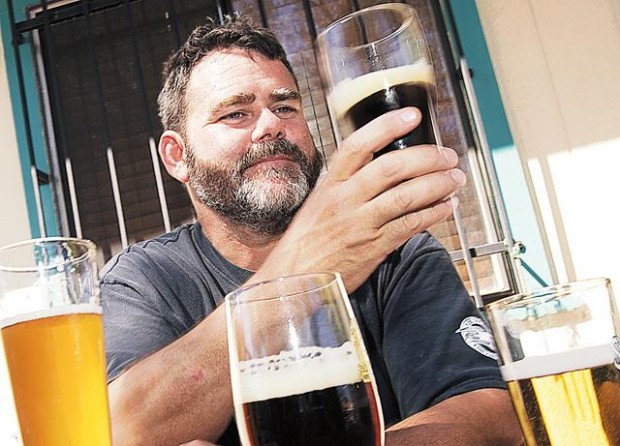
At a recent home tasting, Adkisson invited brew buds John Francisco and Steve Onofryton to sample a number of his specialty brews, including a light yellow, green chile Pilsner beer, a darker English-style ale with Jack Daniels barrel chips added and a very dark, aged, high alcohol brew he calls "the Sword of God."
None of those would have much in common with an off-the-grocer's-shelf beer, which for home brewers is really the point. Francisco said he likes ruining the palates of regular beer drinkers. "I take great pleasure in changing their flavor profiles," he said. A few tasting sessions and "they can't drink what they used to drink."
Adkisson said that three kinds of people will wind up as home brewers — flavor addicts and foodies, frustrated and real engineers who like to tinker with gauges and equipment, and those who find a beer they like and are content to make it over and over again.
Francisco and Onofryton would fall easily into one of the first two categories. Francisco, an IT manager at the UA, has been brewing for more than two decades and operates a reasonably simple but elegant three-tiered brewing system. Onofryton ("my wife bought me a kit") has been brewing for about 11 years and liked it so much that he turned professional — he's a brewmaster at a local brew pub. Both say they have about $1,500 or so invested in home equipment.
The equipment and ingredients can be ordered through catalogs and online, but Adkisson said, "Gary stocks everything." That would be Gary Wilder, owner of Brew Your Own Brew at 2564 N. Campbell Ave., the, ahem, spiritual home of Tucson's amateur brewers, wine makers and home soda pop enthusiasts.
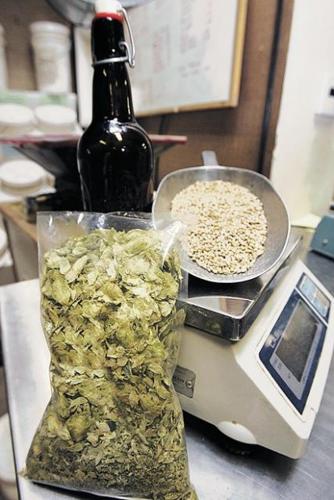
Wilder, an award-winning amateur brewer, opened the store 10 years ago after earning a brewing certificate from the University of California at Davis. "American Pale Ale is our biggest seller" as far as brewing ingredient kits go, he said. But he stocks by his own count 65 grains, 68 hops strains, and 45 different yeast strains. "You can make any style beer you want." He also offers an extensive variety of wine making equipment and supplies.
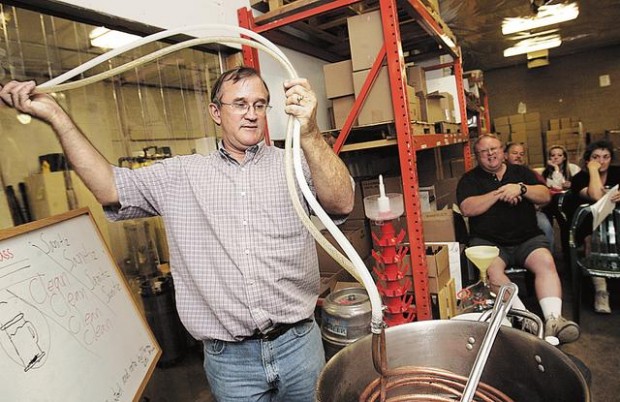
He said in the store's early years it was difficult to find a variety of beer ingredients kits (grain, yeast and hops), but due to the increasing popularity of home brewing, he now carries stock from all over the world. Brew Your Own Brew gives free introductory classes, holds intermediate classes for $5 and teaches an advanced class when there is demand.
The beer-making process is fairly easy to describe but difficult to master. Basically, the ingredients are boiled, allowed to cool and ferment and then poured off as beer.
That's a lot like saying Randy Johnson is a baseball pitcher. It's true, but it doesn't describe the pitcher's long-time dominance on the mound. And just like any sport, there is an element of competitiveness among home brewers.
"I compete all the time," Onofryton said, explaining one of the reasons he enjoys making beer. Like most club members, he brews his home beer in 5-gallon batches.
"I like the recognition," Adkisson said. He's won a couple of gold medals over the years. He said he probably gives away 90 percent of the beer he makes.
From county fairs to national festivals, the American Homebrewers Association sanctions competitions and holds conferences and rallies all over the country. Some are individual competitions; others are club-only events. The AHA tries to disseminate uniform criteria for competitions and foster consistent judging.
Francisco said the Tucson club participated in the National Home Brew Conference in Las Vegas last year. The club came away with one award.
Now 10 years old, it embraces brewers, wine makers and home soda pop producers. The club meets monthly and also holds weekend campout get-togethers a couple of times a year.
Adkisson said because some members are food professionals, last fall's Octoberfest campout on Mount Lemmon resembled a catered event with great food and drink. And lots of beer talk.
"The best beer is made in Belgium, not Germany," Francisco said. He and his wife travel frequently, and wherever they go, they make it a point to seek out local beers and the people who make them.
With Father's Day approaching, you may be out shopping and see the beginners' home beer kit and think, "Now that's something Dad would love." A word of warning — within its cute little brown plastic barrel and embossed staves is a lifestyle change, poised and just waiting to strike.
● Gary Wilder, Brew Your Own Brew, 2564 N. Campbell Ave., 322-5049, www.brewyourownbrew.com
● American Homebrewers Association, www. beertown.org