Grain, water, yeast — and CO₂? On average, crafting a single 750-milliliter bottle of liquor results in some 6.5 pounds of carbon dioxide being released into the atmosphere, equivalent to burning a third of a gallon of gasoline, a recent report from the Beverage Industry Environmental Roundtable concluded.
Specifically, making whiskey is such an energy-intensive enterprise because it requires weighty raw ingredients to be trucked over long distances. And distillation itself is a largely inefficient process — heating the stills and maintaining temperatures only to keep less than 40% of the final distillate once you discard the heads and tails. An immense amount of grain produces relatively little liquid: Approximately 100 kilograms (222 pounds) of cereal will make 600 liter of mash, yielding up to 87 liters of 80-proof whiskey. Creating all those barrels and glass bottles has an immense carbon footprint, too.
People are also reading…
As with other industries, consumers are demanding better, and whiskey makers are clamoring to claim at least some commitment to the cause.
Buffalo Trace — among the biggest whiskey makers in the U.S. — recently joined with the University of Kentucky to help promote the long-term sustainability of white oak, the wood used to make bourbon barrels. Johnnie Walker, the world’s largest Scotch producer, is ambling in the right direction with its Next Steps Initiative, which pledges to reduce the distiller’s carbon footprint by 15% before 2030.
An ecological approach can also be an economical one in several key elements of production. Harnessing the heat of wastewater in a closed system, for example, is ultimately cheaper than paying to have it treated and reintroduced to the municipal supply. Gifting the spent grain of fermentation as cattle feed sidesteps the cost of having it carted away as refuse. Growing your own grain is even better, removing the fuel necessary to transport it to the stillhouse.
Advancements in solar technologies, heat reclamation systems, rainwater collection, and ways to more efficiently direct energy and temperature management: These are being built into operations including Company Distilling, a project from Jack Daniels’s former master distiller that’s set to open later this year in eastern Tennessee. Anaerobic digesters have come a long way since they first started making their way into distilleries in the 1980s. It’s not uncommon for operations to produce 30% to 40% of their energy from the waste/spillage that they create during production.
Time, as with everything whiskey, is key to achieving meaningful sustainability — and cutting through greenwashing marketing efforts. Brands are all too eager to advertise that they are employing environmentally conscious methods: planting trees, offsetting carbon, etc. Yet more often than not, when you dig through the marketing material, you find that it’s just that.
Here’s a look at the bottles you can buy now that have already been maximizing green in the grain in a real, impactful way.
Marble Distilling Co.

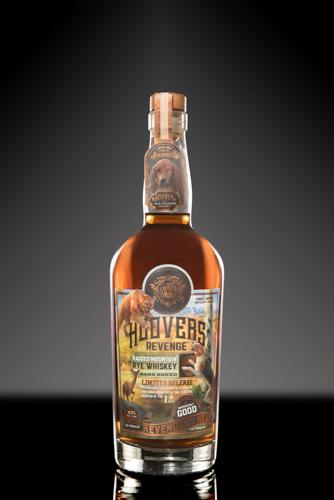
Hoover’s Revenge Ragged Mountain rye. (Petr Wiese/Marble Distilling Co./TNS)
For its Hoover’s Revenge Ragged Mountain rye ($66), this Carbondale, Colorado-based distillery sources its grains from a farm less than a mile away. A full 100% of the water used on-site—from fermentation to distillation, to proofing down, to heating and cooling—is reused, saving more than 4 million gallons of runoff per year. The whiskey itself is round and robust, thanks to the inclusion of high-altitude wheat in its mash bill.
Bowmore

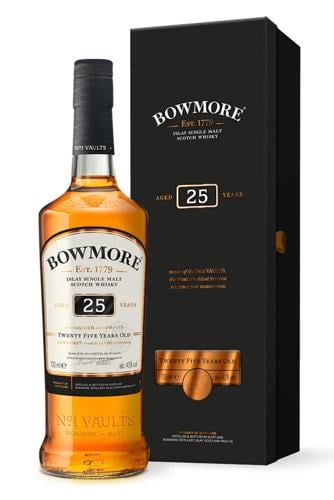
Bowmore 25 Year Old single malt. (Bowmore/TNS)
Malting is the process by which barley is heated and readied for fermentation. Although in Scotland it was traditionally done on perforated floors at the distillery, it largely takes place off-site in massive industrial kilns these days. Since 1984 on the Hebridean isle of Islay, Bowmore has been utilizing a heat recovery system to keep the past alive—and low impact. Hot air rolling off the stills is piped to the malting floor during the heating process. The system also heats the local community pool, which sits in what was once a distillery maturation warehouse. And even as Scotch prices soar, the 25 Year Old single malt ($400) remains one of the best value luxury labels on the market.
Blinking Owl

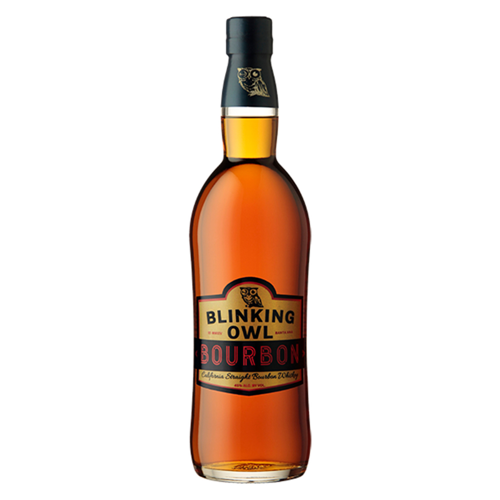
Blinking Owl Bottled-In-Bond bourbon. (Blinking Owl Distillery/TNS)
Ever since it opened in 2013, this Orange County, California, craft outfit has neurotically pursued the goal of offering a 100% state-grown product. Beyond keeping things as local as possible—removing the diesel fuel inherent to long-distance sourcing—Blinking Owl works almost exclusively with organic producers and growers who employ sustainable farming practices. A limited edition Bottled-In-Bond bourbon ($250) is easily among the tastiest American whiskey releases of 2021.
Belgrove Distillery

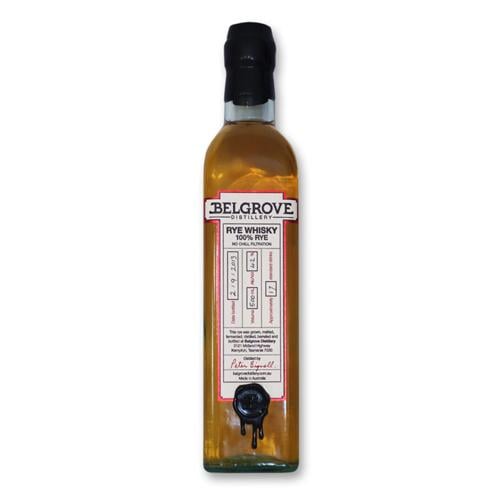
Belgrove rye whisky. (Belgrove Distillery/TNS)
When you’re thinking of a hearty rye, Tasmania is likely not the place that comes to mind. Yet this estate operation from the far-flung corner of southeastern Australia is fashioning the grain into their eponymous A$155 ($120) Belgrove rye whisky, which is sturdy enough to rival the best that Kentucky or Pennsylvania has to offer. It’s birthed from the world’s first—and only—biodiesel still, fueled by waste from a local fish-and-chip fryer. Owner Peter Bignell grows his own grain and feeds leftover mash to his sheep. He’s even considering using their dung in lieu of peat to smoke future batches.
The Macallan

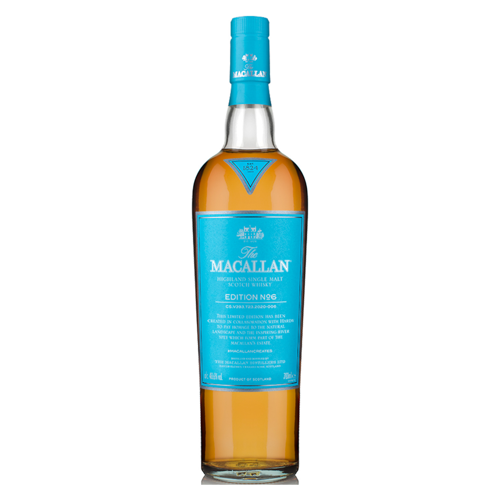
The Macallan Edition No. 6. (Macallan Distillers Limited/TNS)
Opened in 2018, the Macallan’s new $200 million home is a stunning structure with undulating contours meant to evoke the surrounding Scottish countryside — and protect the water of the nearby River Spey, the very heart and soul of Speyside whisky. The entire operation is capped under one of Europe’s largest green roofs, spanning just over 12,000 square meters. It’s planted with a mix of native grasses and herbs, providing food and nesting space for birds and insects and regulating thermal transfer into and out of the facility. A water management system returns cooling water pulled from the Spey to the rolling river in full, absent only a scant amount of evaporation.
Scotch, by law, has to be a minimum of 3 years old, so very shortly we should see some of this sustainably produced liquid working its way into some non-age-statement expressions. In the meantime, every bottle of Edition 6 ($150) funds a charitable partnership between the distillery and the Atlantic Salmon Trust, funding research into protecting the fragile ecosystem of the fish along the waterway.
Tamworth Distillery
The craft darling of central New Hampshire relies exclusively on organic corn to produce its award-winning Old Man of the Mountain Bottled-In-Bond bourbon ($55). But working with sustainable crops results in acidified byproducts just the same. Shortly after opening in 2015, the distillery invested in a centrifugal separator, which efficiently processes and upcycles 250 gallons of spent grain slurry a day. Partnering with nearby Sunnyfield Brick Oven Bakery, close to a half-million pounds of “waste” finds new life in Distiller’s bread: a combination of organic flours, cornmeal, blackstrap molasses, yeast, sea salt, and malted barley.
Maker’s Mark

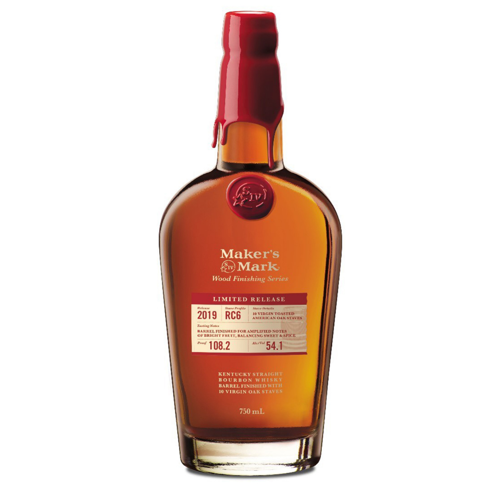
Maker's Mark Wood Finishing Series 2019 Limited Release. (Maker's Mark/TNS)
In Loretto, Kentucky, one of the world’s biggest bourbon brands had been using its spent grain as an alternative source of fuel for its signature wax-dipped bottles ($30). “Thick slop”—as it is affectionately referred to in the industry—was treated aerobically in a reactor. The result was a high-methane biogas, which was collected and compressed before being fed to the boilers (and byproducts from that fed to cattle). It accounted for a 25% reduction in natural gas consumption at the distillery from 2010 until 2013. Some of that liquid is just now exiting the barrel eight years later.
Unfortunately, the technology couldn’t keep up with increasing demand, highlighting how scalability can scuttle green initiatives. But parent company Beam Suntory is taking meaningful steps to protect water sources and land adjoining the property. In partnership with the University of Kentucky, they’re working on ways to “develop watershed balance” at all of Beam Suntory’s facilities across the Bluegrass State.
Far North Spirits
As advertised, this producer is the northernmost craft distillery in the continental U.S., located less than 20 miles below the Canadian border in Minnesota. It’s also among the greenest, growing all its grain on site, which is the biggest eco boon a distiller can achieve. The vast majority of other materials Far North uses are either source-reduced (meaning only low-impact products are even considered), composted, or reused (e.g., spent grain as fertilizer). A retrofit to the boiler has reduced water consumption by half as well. You won’t even find a trash dumpster on the property. If you want to sample how tasty sustainability can be, secure a bottle of the Roknar Minnesota rye ($35), distilled from estate-grown Hazlet Winter rye and heirloom corn, then finished in cognac barrels.
How to pair food and beer
Contrasting flavors
Contrasting flavors means you take a beer that has a commanding flavor profile and pair it with a mild dish, or vice versa. Jennifer Price, creator of the Atlanta Beer Boutique and author of “The Chick’s Guide to Beer” says that contrasting flavors is the easiest way to pair super bitter, tart, dark or otherwise bold beers, like India Pale Ales (IPA) or Imperial Stouts, with food.
“If you’re a beginner and you have an IPA, then you may choose a food that will balance those robust flavors out,” Price says.
On the flip side, if you’re serving food that has a dominant flavor profile, like a plate of hot wings, you might want to pair it with a beer that has cool and clean properties, such as a pilsner.

Complementary flavors
Another thing Price likes to do when pairing beer with food is to find harmony between the flavors. The easiest way to do that, she says, is to find beers and foods that have similar ingredients. Imperial stouts, for example, often have flavors of bittersweet chocolate, cocoa or coffee that might pair well with chocolate cake or foie gras.
“Beers are becoming like a meal in a can,” Price says. “Brewers are getting more and more creative. They’re creating more depth in their blends and in their recipes and that gives you the opportunity to find foods that may have some of those same elements.”

Match strength for strength
Another way to set up a food and beer pairing is to match strength for strength (one of Price’s go to methods of pairing beer with food). Coupling a bold beer, like a stout, with an equally bold food such as a plate of BBQ ribs is an example of matching strength for strength. In that same vein, you should pair mild beer with mild food, like fish or salad.
“A food that’s more aggressive or in-your-face will normally pair with a beer of the same sort of strength,” she explains.

Beer as a palate cleanser
Another simple way to pair beer with food is to use beer as a palate cleanser for boldly flavored dishes, like Korean fried chicken. According to Price, beers that are lighter in flavor are best used as palate cleansers because the flavors don’t compete with the flavor of the food. Light lagers (like pilsners) and Kolsches work well as palate cleansers because of their mild flavor profiles.

Basic Flavor Profiles of Beer
According to cicerone-certified beer server and creator of the Black Beer Experience, Shani Glapion, the most important things for beginners to keep in mind when pairing beer with food is to understand the profile of the beer.
Each flavor profile is determined by the beer’s blend of carbonation, hops, malt, water, yeast and other ingredients which are all used during the brewing process. One simple way to pair beer with food is to identify the ingredients of your dish and compare them to the main beer flavors listed below.

Crisp and Clean
Crisp beers are light and refreshing with low to medium alcohol by volume (ABV). A classic example of a crisp beer is the Pilsner, a lager that’s light in color and is considered the standard beer across the world. The American Lager is also an example of a crisp and clean beer as it’s highly carbonated and has a low hoppy character. Crisp and clean beers often pair well with spicy foods, salad and seafood.

Hoppy and Bitter
Hops give beer its bitterness, and beers that are heavy on hops, like American pale ales and English-style pale ales are often medium to full bodied, but can vary dramatically when it comes to ABV. These beers find a delicate balance between hop bitterness and malt, which gives beer its color and flavor. Hoppy and bitter beers are typically yellow to brown in color. They pair well with aged or hard cheeses, fried foods like fish and chips and creamy dishes like fettuccine alfredo or a mild curry with yogurt sauce.

Malty and Sweet
Malty and sweet beers are light to full bodied beers with a wide ABV range. They’re often toasty and have notes of caramel, toffee and nuts. The English-style brown ale is an example of a malty and sweet beer and it pairs well with hearty meats, like roasted pork and steak (a classic pairing for malty and sweet beers).

Dark and Roasty
Dark and roasty beers are often black or deep brown in color and have a wide ABV range. These smooth beers are typically medium-light to full bodied and use roasted malts that add notes of chocolate and cocoa. An example of a dark and roasty beer is an English-style brown porter, which pairs well with grilled meats and gruyere cheese.

Fruity and Spicy
As implied by the name, fruity and spicy beers are just that: fruity and spicy. They’re low in bitterness with a wide ABV range. They pair well with shellfish, like clams, scallops and lobster and vary in color from golden to dark brown. Examples of fruity and spicy beers include saisons and hefeweizens.

Tart and Funky
Tart and funky brews aren’t as cut and dry as other flavor profile categories. They have a wide ABV range and can be light to medium-full bodied. As far as flavor goes, tart and funky brews can be acidic, sour, winey, fruity ... you name it. Tart and funky beers, like an American Brett, pair well with earthy cheeses, grilled or roasted game and fruit filled pastries.

Beer Styles and Recipes for Pairing
If you haven’t noticed by now, beer is complex. The drink’s varying styles and intricate blend of ingredients makes it great for pairing with food.
Glapion explains that “Because craft beer has so many different profiles, the pairing is endless and you can mix and match different things.”
If you’re a beginner it can be confusing to remember which beers go with which foods.
Infinite pairing possibilities are great and exciting but it might be easier to keep a few classic pairings in mind if you’re just getting started. We’ve broken things down into a few popular beer styles and some of their go-to food pairings.

Pale Lagers
Pale lagers, like the American Lager, are light and refreshing. The highly carbonated and crisp beverage pairs well with spicy foods like Buffalo hot wings and noodle-based dishes like Vietnamese pho. According to Price, light lagers also go well with bitter foods like asparagus because they take away some of its astringency — try it with this prosciutto wrapped asparagus.

Dark Lagers
Toasted and caramel flavors are prominent in dark lagers because of the roasted malts. These beers should be paired with grilled meats and vegetables as they complement the roasty nature of grilled foods. When serving a dark lager, like an American Amber Lager or Vienna-Style Lager, try this harissa grilled chicken recipe or this recipe for easy grilled zucchini.

Brown Ales
Brown ales typically have roasted malt and chocolate-like characteristics with low bitterness. The beer’s flavor profile makes it versatile for food pairings, but typically brown ales go with roast pork, smoked sausage and game birds. Try this duck leg ragu with an American Brown Ale, the fat will neutralize any of the beer’s bitterness and complement its roastiness.

India Pale Ales
India Pale Ales (the highest selling craft beer style across the United States) are a good way to enhance the flavor of your food. Because IPAs are so robust, Price likes to pair them with dishes that will balance the beer out, such as a mild curry dish. But there is a lot of variety within this one style. The American IPA is known for its citrus-like and piney hop flavor and pairs well with a spicy tuna sushi roll. Then there’s the New England IPA, which is juicy and tropical and pairs with dishes like Hawaiian pork tenderloin because the flavor from the pork matches the intensity of the beer.

Pilsners
Pilsners are a type of lager that are hoppy with bread-like malt flavor. Perhaps the most popular pilsner is the German-Style pilsner. The light and balanced lager pairs effortlessly with lighter food, like chicken, salads, and shellfish. Try pairing it with air fryer garlic shrimp or this cobb salad recipe.

Wild and Sour Beers
Wild and sour beers get their acidity because they’re brewed with “wild” microorganisms to give the brew complexity. One example of this style is the American Sour, which gets its acidity from lactic acid and can range in color and bitterness. You can pair it with a variety of foods, including strongly flavored cheeses and creamy desserts with fruit, like this classic peach cobbler. Another example is the Belgian-Style Flanders, which is known for its lactic sourness. This beer is typically copper to very dark in color and pairs well with dishes like beef carbonnade and pumpkin pie.

Wheat Beers
Because wheat beers are brewed mostly with wheat they tend to have a creamy and almost tangy flavor that’s not comparable to other beers. There’s a lot of variety within this style because of the different types of yeast that are added. One example is the American Wheat Beer, a light brew that pairs well with a range of food.
Similar to the American Wheat is the German-Style Hefeweizen; it’s one of the most popular beers around and uses a specific type of yeast that gives it a fruity flavor. Then you have the Belgian-Style Witbier. Witbiers are distinct because they’re spiced with coriander and orange peel but are still in the wheat beer family. Generally speaking wheat beers pair well with lighter dishes; try serving them with Caesar salad or this fresh cod recipe that’s served with salsa verde.

Porters
Porters are dark in color and have flavors of chocolate, coffee, caramel and nuts. The beer’s rich flavor is best paired with roasted or smoked foods like barbecue, sausages and blackened fish but they also pair well with desserts, like these peanut butter cookies. If you’re serving a Baltic Style Porter (a smooth and boozy beer with malt aromas of licorice and chocolate) try it with this prime rib recipe.

Stouts
Stouts are very dark beers that often have stronger roasted flavors than porters. Because of their rich, chocolate notes they’re a great beer to pair with dessert. If you’re serving an Imperial Stout, try pairing it with these chocolate truffles. If you’re serving an Oatmeal Stout, which has coffee-like aromas, pair it with these chocolate-espresso pizzelles.