

Shake the salt habit, especially in processed foods. Eat more seafood, fruits and vegetables, and choose fat-free or low-fat dairy.
And, please, get moving.
These are nuggets from the newest Dietary Guidelines for Americans, released in January by the U.S. Departments of Agriculture and Health and Human Services. The guidelines have consumer-friendly but straight-to-the-point messages, like, "Enjoy your food, but eat less."
"It's more on weight management and balancing calories" to manage weight, says Bethany Thayer, a registered dietitian and wellness manager at Henry Ford Health System and national spokeswoman for the American Dietetic Association.
The guidelines, released every five years, offer nutritional help to promote health and healthy lifestyles.
So, how are you measuring up?
People are also reading…
Are you eating your two cups of fruits and 2 1/2 cups of vegetables a day? Have you curbed your sodium intake, keeping it below 2,300 milligrams (1,500 if you're 51 or older, African-American or have hypertension)?
Do you include more seafood as a lean source of protein?
Now is a fine time to spring into action on reaching the guideline goals.
The ADA's main message is "Eat Right With Color." The focus is on learning how to meet dietary needs by grouping healthy foods by color and knowing their nutritional value.
For example, green fruits such as avocados, apples, grapes and kiwis have anti-oxidant properties that may help promote healthy vision and reduce some cancer risks. You can find more examples from the ADA of eating the right colors at www.eatright.org
"A rainbow of foods provides a variety of different nutrients with health benefits," Thayer says. "And it makes your plate more colorful, and it's fun and prettier to look at."
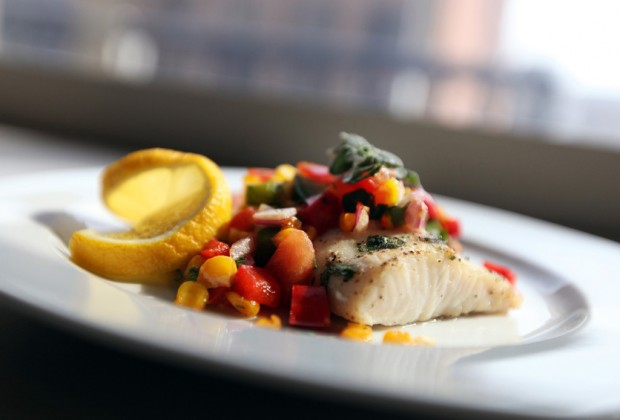
Broiled or Grilled Halibut with Corn and Pepper Relish
Serves: 4
• 4 fresh or frozen (thawed) halibut steaks (about 5 ounces each and 1-inch thick)
• Kosher salt and freshly ground black pepper to taste
• 3 tablespoons olive oil, divided
• 4 tablespoons fresh flat-leaf parsley, divided
• 1 tablespoon chopped fresh oregano
• 1 1/2 cups fresh or frozen corn kernels
• 1 cup finely chopped red bell pepper
• 1 cup finely chopped green bell pepper
• 2 cloves garlic, peeled, minced
• 1/4 teaspoon kosher salt
• 1/8 teaspoon cayenne pepper
• 1/2 cup seeded and chopped tomato
• 1/4 cup finely chopped red onion
• 1 tablespoon white wine vinegar
Rinse the fish and pat dry with paper towels. Season both sides of the halibut with salt and pepper. In a small bowl, combine 1 tablespoon of the olive oil, 1 tablespoon of the parsley and the oregano. Rub both sides of the halibut with the parsley mixture; set aside.
In a large skillet, heat 1 tablespoon of the remaining olive oil over medium-high heat. Add the corn and cook about 4 minutes or until it just starts to brown, stirring occasionally. Stir in the bell peppers and cook for 2 minutes more. Stir in the garlic, 1/4 teaspoon kosher salt and the cayenne pepper. Cook and stir for 1 minute more. Remove from the heat and let cool slightly.
Preheat the broiler to high or preheat the grill.
Place the fish on the broiler pan and broil 4 inches from the heat for 8 to 12 minutes or until fish flakes easily, turning once halfway through broiling.
Meanwhile, for the relish, in a medium bowl combine the corn mixture, tomato, red onion, remaining 3 tablespoons parsley, white wine vinegar and remaining 1 tablespoon of olive oil. Mix well. Serve each steak with 1/2 cup of the relish. Cover and chill any remaining relish.
Per serving: 282 calories (38 percent from fat), 12 g fat (2 g saturated fat), 13 g carbohydrates, 32 g protein, 283 mg sodium, 45 mg cholesterol, 2 g fiber.
Adapted from "The Sonoma Diet Cookbook" by Dr. Connie Guttersen.
Agencies take aim at weight control
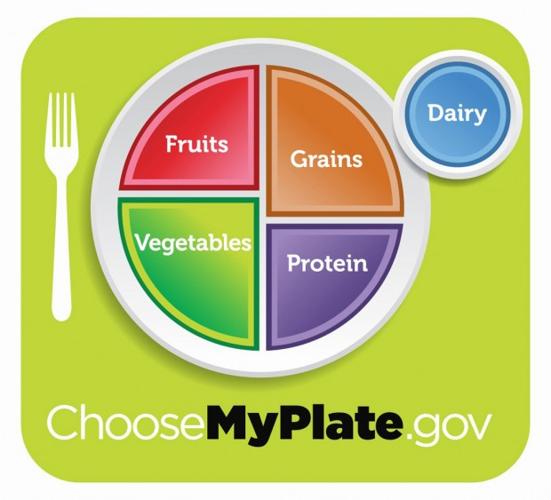
The U.S. Departments of Agriculture and Health and Human Services' newest Dietary Guidelines for Americans (above) provide a path to improving public health and reducing chronic disease.
They come "when the majority of adults and one in three children is overweight or obese, and this is a crisis that we can no longer ignore," Agriculture Secretary Tom Vilsack said.
The main focus of the guidelines is on weight management through reducing calorie intake. Here are some key recommendations:
• Enjoy your food, but eat less of it.
• Avoid oversized portions.
• Eat more vegetables and fruits. Fill half of your plate with them.
• Eat more whole grains. They should constitute at least half of all the grains you eat.
• Switch to and increase your intake of fat-free or low-fat (1 percent) milk.
• Increase the amount and varieties of seafood you eat as a substitute for meat and poultry.
• Compare sodium in foods like soup, bread and frozen meals; opt for those with lower numbers.
• Cut back on solid fats, using oils if possible.
• Drink water instead of sugary drinks.
• Balance calories with exercise.
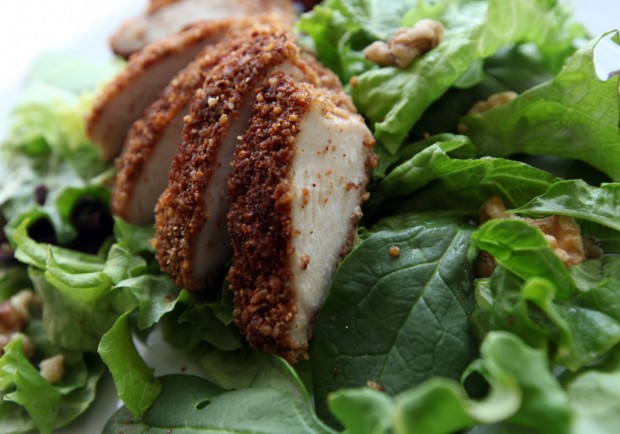
Walnut-Crusted Chicken Breasts
Serves: 4
• 2 slices 100 percent whole-wheat bread, dried
• 1/3 cup walnuts, toasted if desired
• 2 tablespoons Parmesan cheese, freshly grated
• Coarse salt and ground pepper
• 1 large egg white
• 4 chicken breast halves, boneless and skinless (6 ounces each)
• 1 tablespoon canola or grapeseed oil
• Lemon slices, for serving
• Salad greens for serving, optional
Preheat the oven to 400 degrees. In a food processor, combine bread, walnuts and Parmesan; season with salt and pepper. Process until fine bread crumbs form. Transfer to a shallow bowl. In another shallow bowl, beat egg white until frothy.
Season chicken with salt and pepper. Dip each breast into egg white, letting excess drip off, and then into crumb mixture, pressing to adhere.
In a large, nonstick, ovenproof skillet, heat oil over medium heat. Add chicken and cook until lightly browned, 1 to 3 minutes. Carefully turn chicken over and put skillet in oven. Bake until chicken is golden brown and cooked through, 10 to 12 minutes. Serve chicken with lemon slices and green salad.
Per serving: 331 calories (27 percent from fat), 10 g fat (2 g saturated fat), 9 g carbohydrates, 44 g protein, 603 mg sodium, 101 mg cholesterol, 2 g fiber.
Adapted from "Power Foods" by the editors of Whole Living magazine.
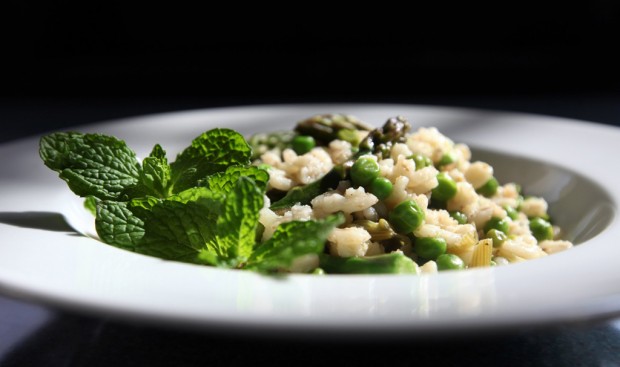
Barley Risotto
Serves: 4
• 2 tablespoons olive oil
• 1 cup pearled barley
• 2 leeks, white and light-green parts only, thinly sliced
• 1/2 cup dry white wine (can substitute water)
• 2 cups water
• Coarse salt and freshly ground pepper
• 1 can (14 1/2 ounces) vegetable broth
• 1 bunch asparagus (about 1 pound), trimmed and cut on bias into 2-inch pieces
• 1 box (10 ounces) frozen peas, defrosted
• 1/4 to 1/2 cup freshly grated Parmesan cheese
• 1/4 cup thinly sliced mint leaves, plus small leaves for garnish
In a large saucepan, heat oil over medium heat. Add barley and leeks; cook until leeks begin to soften, 5 to 7 minutes. Add wine; cook until evaporated, about 5 minutes. Add 2 cups water; bring to a boil and season with salt and pepper. Reduce heat; simmer until liquid is absorbed, about 10 minutes.
Add broth and continue to cook, stirring occasionally, until barley is tender and creamy, about 10 minutes. Add asparagus; cook until tender, about 5 minutes. Stir in peas until heated through. Add Parmesan and mint; season with salt and pepper. Garnish with mint leaves.
Per serving: 388 calories (24 percent from fat), 10 g fat (2 g saturated fat), 58 g carbohydrates, 15 g protein, 563 mg sodium, 6 mg cholesterol, 16 g fiber.
Adapted from "Power Foods" by the editors of Whole Living magazine.