

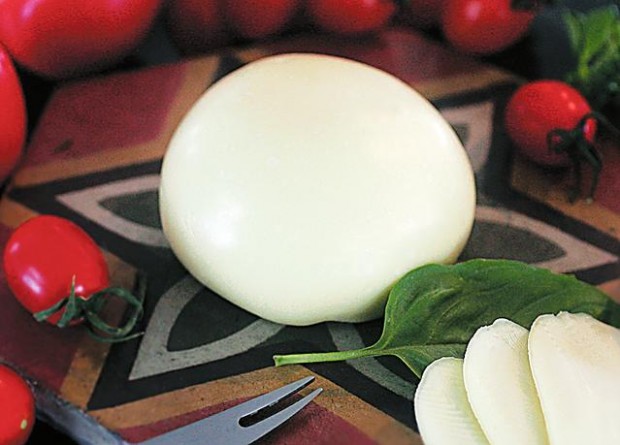
If you're growing your own tomatoes and making your own dough, why not make your own mozzarella cheese to finish that pizza?
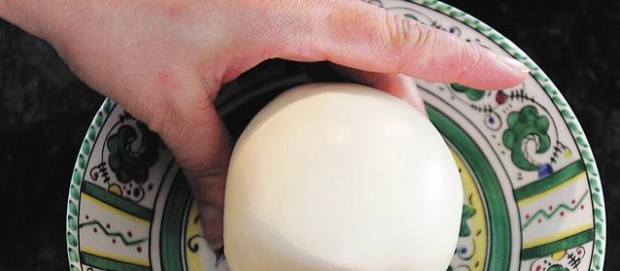
The perfect ball of mozzarella, made fresh in your own kitchen, can be yours in an hour or less.
Home cheese-making is a fast-growing hobby. Once you discover how simple it is, you may find that you can make your own cheese as fast as you can make a trip to the grocery store.
Like a wine that's only as good as the grapes it was made with, a good cheese starts with the milk.
Cheeses can be made with store-bought milk, but whole milk is best. If you can find milk that hasn't been homogenized, called creamline milk, that's even better.
Most milk available in grocery stores has been homogenized — spun so it doesn't separate — and pasteurized — heated to kill bacteria.
People are also reading…
For making cheese, creamline milk is optimal.
"You don't have to use raw milk (milk directly from the cow with no treatment) but it can't be ultrapasteurized over 172 degrees," said Ricki Carroll, a cheese-making expert and author of "Home Cheese Making."
For the past 30 years, experimentation and study, including time spent studying with European cheese makers, have earned Carroll the national reputation of "cheese queen."
"We had goats, from a neighbor, and had to do something with the milk," Carroll said, explaining her entry into the field in 1978.
Carroll said the popularity of home cheese making has been growing. "We see people making it more and more ... much more as people are becoming aware of eating locally," she said.
But cheese making as a hobby also is growing. "It's a nice family activity," Carroll said.
Jim and Eileen Leverentz opened Leeners in Northfield, Ohio, in 1996 to sell beer- and wine-making supplies. The expansion into cheese wasn't a big stretch. "We're about fermented foods, and cheese is just fermented milk," Jim Leverentz said.
Following are two recipes for mozzarella. The Leeners formula produces a drier mozzarella, perfect for grating on pizza, while Carroll said her version is a softer, fresh-mozzarella style.
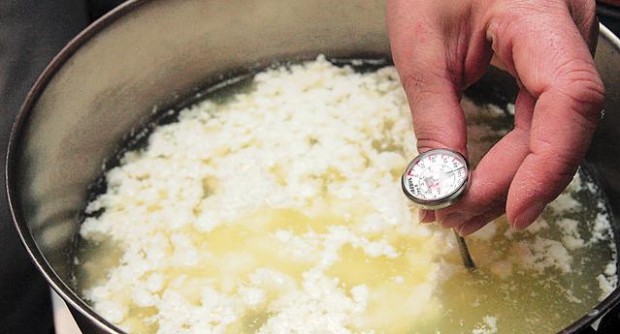
Stove
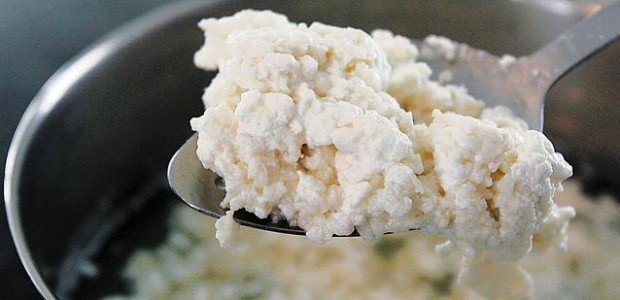
Strain
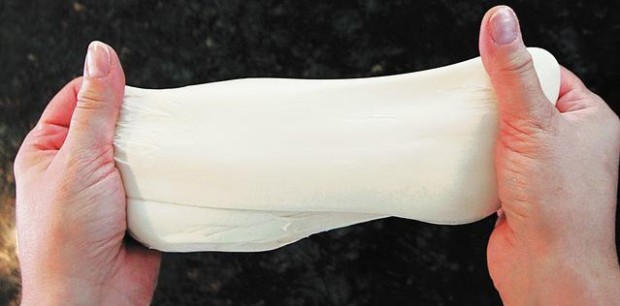
Stretch
Serve
Leeners Mozzarella
Makes about 1 pound.
• 1 gallon whole milk (not ultra-pasteurized)
• 2 teaspoons citric acid
• 1/4 teaspoon mild lipase powder dissolved in 2 tablespoons distilled water
• 1/4 teaspoon calcium chloride dissolved in 2 tablespoons distilled water
• 1/2 rennet tablet, crushed and dissolved in 1/4 cup distilled water
• 1/2 teaspoon flaked salt
Place milk into a stainless steel pot.
Place the pot of milk on the stove over medium heat. It is important that you heat the milk slowly. Sprinkle in the citric acid, lipase powder and diluted calcium chloride while you gently stir. Heat slowly until the milk reaches 88 degrees. Stir every few minutes to prevent scorching the milk on the bottom of the pot. You will begin to see the curd develop.
Once the milk reaches 88 degrees, stir in the rennet and water mixture. Continue stirring every few minutes until the milk reaches 105 degrees.
Remove from the heat and let the milk set, covered, for 20 minutes at 105 degrees. The curd (white mass) and whey (greenish liquid) will now be fully separated.
Use a slotted spoon or strainer to transfer the curd to a microwave-safe dish. If the curd is too soft to transfer, let the milk sit a few more minutes. Pour off as much of the whey as you can. Gently press the curds together with the spoon and force more whey out of them. Squeeze out and drain as much whey as possible.
Place the curd in the microwave on high for 1 minute. Remove and press the curds again to force out more whey. The cheese should begin to mass together and become sticky. If it does not, you will need to leave it in the microwave a few seconds longer. Not all microwaves are equal. It will not hurt to place the cheese back in the oven for 20 to 30 seconds more if necessary. Note the total time needed for future reference.
Add the flaked salt a little at a time and knead the cheese with a spoon as you would bread dough. It will become smooth and shiny. Place the curd back into the microwave and heat on high for 1 more minute. Remove and drain any remaining whey. This time your cheese will be too hot to handle, about 130 degrees.
Knead the cheese again until it sticks to the spoon and pulls away from the bowl.
When the cheese begins to stretch like taffy, it is almost done. You can have some fun now by pulling and stretching the cheese until it is completely cooled. This is an important step. Stretching will make the cheese firm and stringy. If you prefer a softer texture don't stretch as much.
Place the cheese in an airtight container or wrap in plastic wrap and refrigerate. Use this cheese within one week or store it in the freezer for up to one month. If your cheese is too soft to shred for pizza, place it in the freezer then shred it partly frozen.
Leeners