


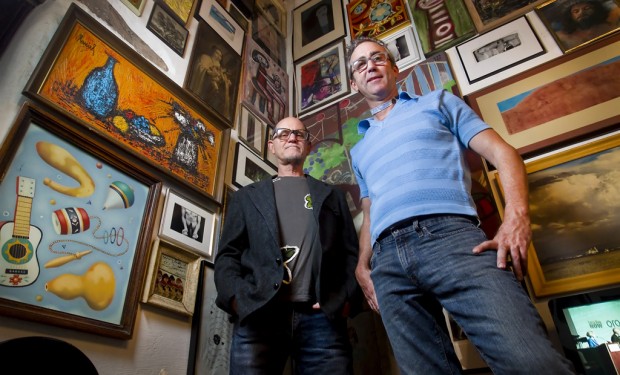
You may not know Gary Patch or Darren Clark, but you've probably seen their work.
They've transformed the Rialto Theatre for Calexico's Día de los Muertos concert and film.
Their fingerprints are all over The Cup Café at Hotel Congress.
They've done a commercial for the Discovery Channel's "Brew Masters" show, worked on a J. Crew catalog, put thousands of Tucsonans' faces on tiles at the Fourth Avenue Underpass - and may have urged your neighbors to knock down a wall or helped them rearrange their furniture.
They freely offer insights as Patch & Clark Design, and they're OK whether it inspires you to do something original, borrow an idea or outright steal. Their work involves some of each.
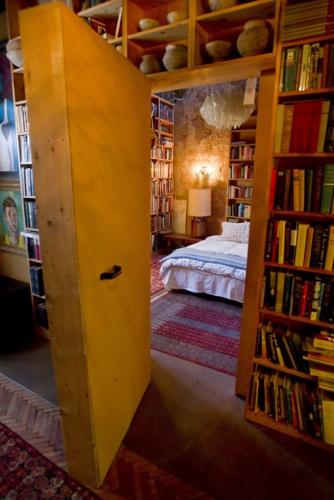
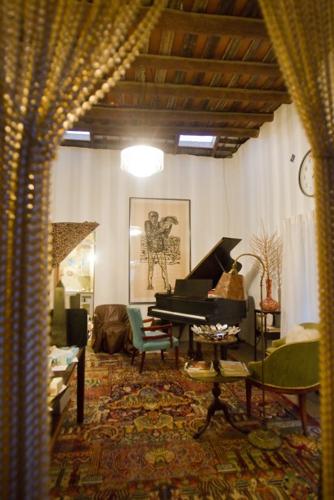
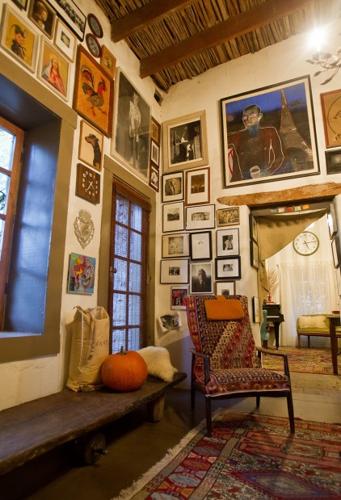
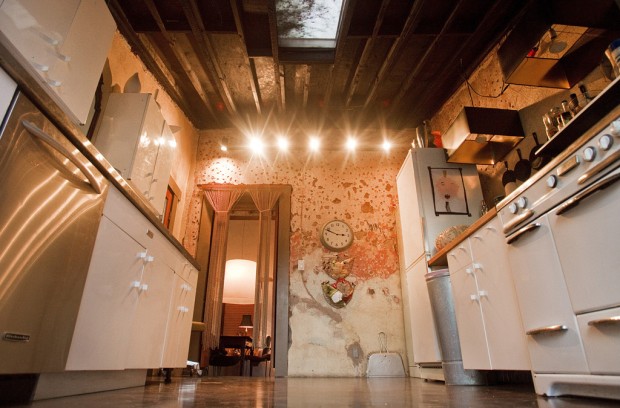
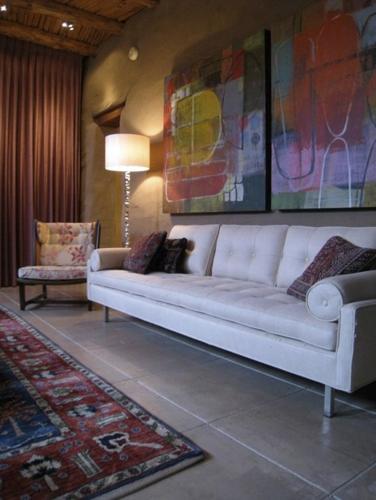
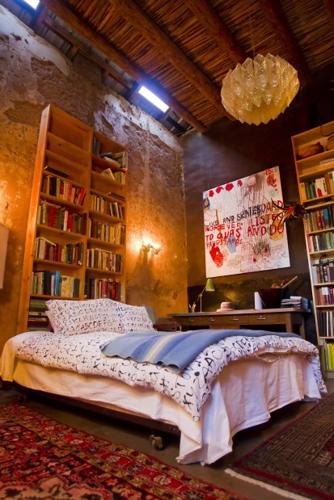
One thing is certain: You won't be borrowing any Southwestern kitsch from Patch & Clark. There's not a Southwestern trinket in the century-old barrio adobe home that doubles as a laboratory for many of their ideas. They're not into sterile, form-over-function living spaces. This home proves it.
People are also reading…
Some rooms border on clutter, but all are welcoming and have a genuine lived-in look, and not the studied casual look of a model home or foothills home magazine layout.
There's not an "architect's chair" to be seen. And if Patch saw a bandanna-wearing coyote or Kokopelli, he'd likely pulverize it with his beloved sledgehammer.
"I hate to see that whole Santa Fe aesthetic bleeding over into Tucson because it has nothing to do with this part of the country. Painting everything bright colors," he says dismissively. "Tucson was brown and white."
NO ONE STYLE
They're both used to working in other people's worlds, whether commercial clients or humble-to-wealthy homeowners. So, they don't have any single "look" or style.
Patch is a graphic artist and painter with a background in design, and a degree from Brigham Young University in painting and printmaking. He worked commercially in Minneapolis doing graphic and packaging design before coming to Tucson.
Clark's education is in creative writing and photography. He's run art galleries and worked in opera, theater and film.
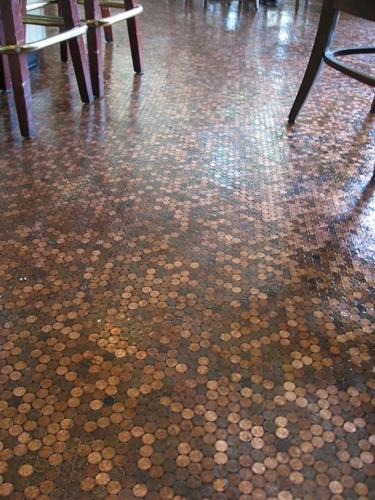
Their penny-covered floor at the Cup Café in Hotel Congress may be the project for which they are best known. Like much of their work, it combines a playful artistic vision and technical innovation.
Clark says they had to devise a system of attaching the pennies to a tile-sized mesh backing and suspending them in a clear matrix - all 172,000 of them. Their penny floor concept has since showed up at trendy places, including The Standard Hotel in Manhattan, and in private spaces mentioned in design magazines and blogs.
" 'Good artists borrow, great artists steal.' That's Picasso," says Clark. "If our ideas are being taken from Tucson to Manhattan, you know you've done something."
They readily 'fess up to doing their own borrowing on their patchandclarkdesign.com Web page. Under TWL ("Things we love. Design ideas we have scavenged from around the world") they show work they've done that's been influenced by things they've seen.
Their Tucson Portrait Project involved taking digital photos of several thousand Tucsonans at local events and then using a newly patented technique to apply them to tiles, which now cover large sections of the Fourth Avenue Underpass.
Constructive destruction
For homeowners, their best work may be less tangible and technological. Often, they both say, less is more. Making things disappear, or at least rearranged, is often their strongest move.
Patch in particular, relishes demolition of obstructing walls - not just the resulting open space, but the act of demolition itself.
"We'll be with all these fancy designers," Clark says of working on a collaborative project. "Gary will make sure he's on site when they're demo-ing, work pants and 'Where's the sledgehammer?' Then these people see Gary gorilla-arming this wall and say, 'Can I try?' "
"I love demolition, it's my favorite part," admits Patch. It's fitting that something so physical should have a dramatic effect. "There's nothing more transforming than removing a wall in a room," says Patch. Most clients can't imagine what a room will look like once the dust is settled and a wall is gone.
"Even though we've talked about it, when the day comes," he says people are amazed with what happens when you remove a wall - or even just open up a space by rearranging furniture they already own, or, sometimes, only removing a piece or two.
"We're paid to hallucinate, see things that aren't there," says Patch.
Fearlessness prized by Patch & Clark
Asked for the cheapest, largest impact that a do-it-yourselfer can try, Darren Clark says, "Move your furniture. And don't be afraid to throw out ugly furniture you inherited from your family."
Next? "Don't be afraid to paint wood. People think it's sacrosanct, you know, 'You can never paint wood,' " says Clark.
"I'm always amazed at what people get accustomed to living with, because it happens over time, one chair at a time. They know it's not right, but … then we'll come in. That's what I love, coming in and keeping their same stuff, but moving it around," says Clark. He refers to the work as "editing," working with what they already have.
They're not snobs, admitting to shopping high-end shops and thrift stores to find what they need to get the look they want.
"We'll jump into any thrift store," says Gary Patch.
"Flea markets, estate sales," adds Clark. "That's where you get this crazy stuff," he says, pointing up at a giant - at least 6 foot wide - lampshade by a famous designer hanging over their dining room table. "That's from a thrift store in downtown Phoenix right next to a shop that sells goat meat."
Contact Tucson freelance writer Dan Sorenson at d.sorenson@cox.net