

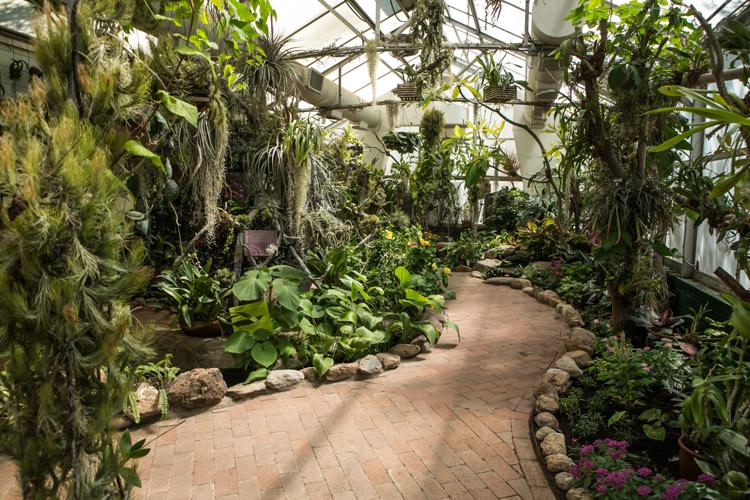
When you visit the tropical butterflies at Tucson Botanical Gardens, take notice of the redecoration in the greenhouse. You’ll find that the clutter is cleaned up, unwanted guests have left and plants have been rearranged.
Butterfly Magic launches Oct. 1 for a seven-month run in the Cox Butterfly & Orchid Pavilion. It’s the same place where the exotic butterflies have been released in the last 13 seasons, but it looks a bit different this time.
For one thing, a lot of the plants were taken out of containers and put into ground-level beds.
“We removed the vast majority of pots in here,” says Michael Madsen, the gardens’ exhibit manager, as he stands in the middle of the greenhouse. He estimates that hundreds of pounds of containers were moved out during last summer’s renovation.
Removing the pots instantly opened up the space, making it feel lighter and airier.
People are also reading…
The removal also got rid of an ant problem. Madsen guesses that the industrious insects built colonies in the cool, damp potted soil. The gardens couldn’t treat the pots for fear of harming the butterflies.
The gardens’ crew saved all the plants and put them back into the greenhouse. They’re now displayed in different ways from before the renovation.
TROPICAL PLANTS
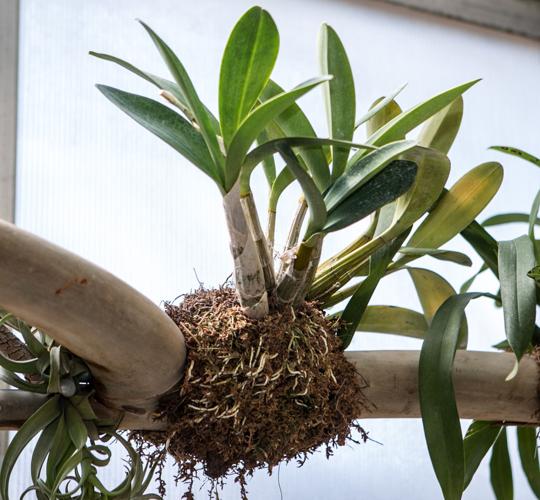
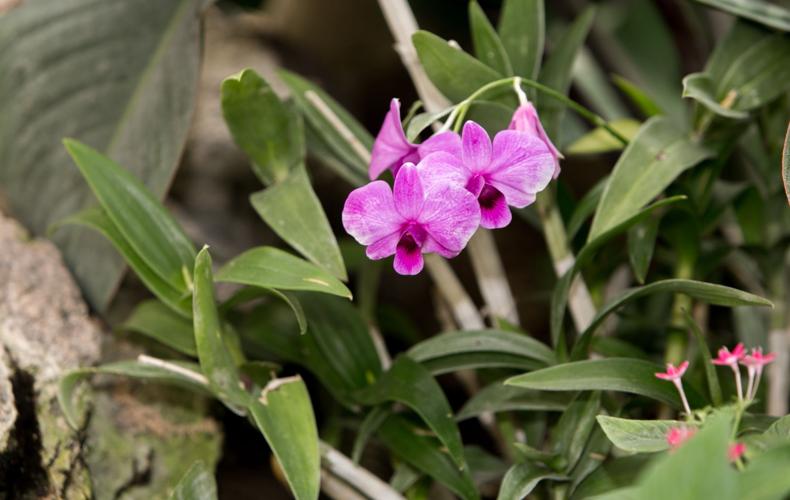
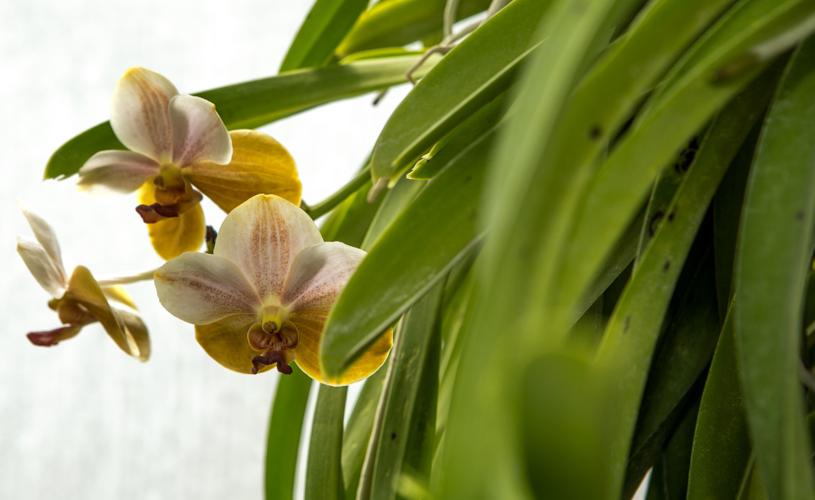
That includes some 50 species and hybrids of orchids that live in the pavilion, including species of phalaenopsis, oncidium, cattleya, vanda and dendrobium. Now they literally hang out on eucalyptus branches that broke off trees on the gardens grounds.
Orchids are epiphytes, which means they don’t need soil to grow. They naturally wrap their roots around anything nearby to anchor them to their nurturing spot.
In the pavilion, the branches are hung along the walls like shelves. Each orchid sits in a nest of peat moss (sphagnum) on the branch. Some already have begun wrapping roots around the branches.
“It’s a more natural way to display them,” Madsen says.
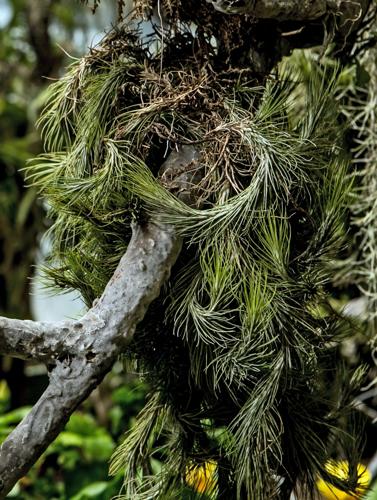
Other epiphytes such as the ivy-like Hoya imbricata, wispy Spanish moss and spiky tillandsia are anchored to living trees in the pavilion. The popular funckiana, which looks like branches of pine needles, grows in abundance.
At ground level are many plants that most gardeners are familiar with as house plants, including philodendron and spathiphyllum (peace lily). You’ll also find hibiscus, dianthus and night-blooming Selenicereus testudo (dog tail cactus).
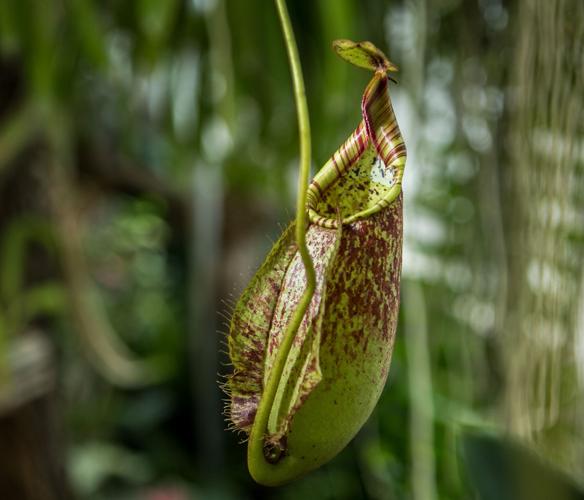
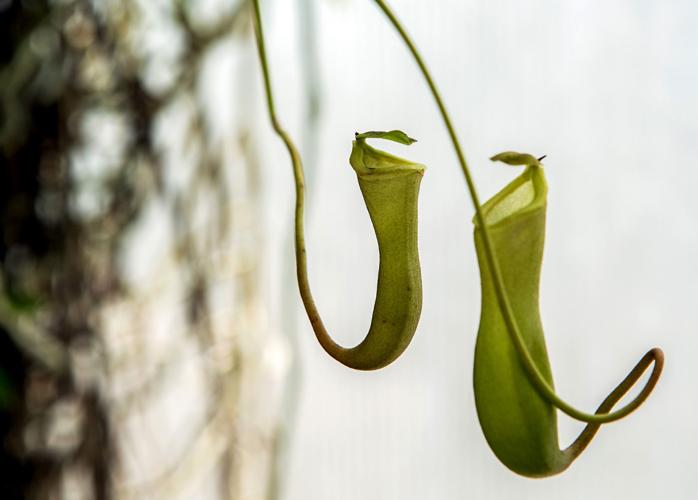
Madsen donated some of the exhibit’s carnivorous pitcher plants from his personal collection. The meat-digesting pitchers are too small for the butterflies to fall in. It’s growing not too far from the potted titan arum (corpse plant). While that’s still at least two years away from blooming its gigantic, stinky flower, when it does it will be easily seen from its new, prominent spot in the greenhouse.
None of these plants provide nectar to the butterflies, which are shipped in chrysalis form to Tucson Botanical Gardens from Central and South America, Malaysia, Africa and Australia. Instead, the bugs feast on planted pentas (star flower) and artificial nectar in tubes and bowls.
None of the plant species in the pavilion are host plants that feed caterpillars, either, so no eggs will likely be laid. If eggs are deposited, Madsen says, they and the plant have to be removed and destroyed.
Most of the plants in the pavilion really were selected to create a photogenic, tropical backdrop, he says. However, butterflies still play a role in this artificial environment. They search for nectar on the plants, getting pollen on themselves. Then they move on to another flower and, in doing so, drop off that pollen.
The redecorating effort also resulted in more plants in the pond, a new water misting system, a widened brick walkway and lots of trimmed foliage.
Plants in front of the picture window into the pavilion have been trimmed back or moved elsewhere so that people standing outside can peer into the greenhouse to catch any butterfly action.
The new walkway makes it easier to fit and move the crowds that grow each year.
EXOTIC BUTTERFLIES
Butterfly Magic will still include its chrysalis exhibit so that you can learn about the lifecycle of a butterfly. You might even see one emerging from its casing.
Nearly 120 species are available to the gardens. The most popular among visitors is the blue morpho with its multi-blue-hued wings framed in black. Other butterflies commonly found in the exhibit include swallowtail, longwing, clipper and charaxes. There also is room for moths like the luna and atlas.
Also coming back is the dart frog terrarium, which is unchanged from the renovation.
OUTDOOR FLUTTERERS
Make your Tucson Botanical Gardens visit a butterfly twofer. Stop by the outdoor Butterfly Garden. There are more than 100 different plants in the floral collection that attracts resident and migrating butterflies, says Adam Farrell-Wortman, the gardens’ horticulturist.
The flowers–milkweed, agave, lantana and aster among them–provide food for both butterflies and caterpillars. “We keep these flowering spring through fall,” says Farrell-Wortman.