

Gordon Jensen first tried his hand at growing irises more than two decades ago, when his daughter was selling rhizomes for a band fundraiser.
That first attempt was a complete failure.
"I planted them in the clay soil of California where I lived and they did not survive," recalled the Vail resident. "I gave up on them for a while."
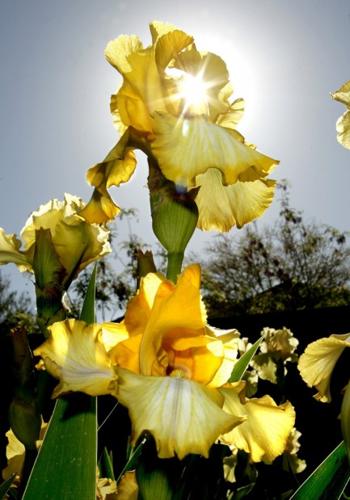
Today, Jensen, 59, tends a spectacular iris garden in his backyard, with more than 200 varieties. Read his story on Page E9.
A nibble from the love bug a few years after Gordon Jensen's first failed attempt at growing irises inspired him to give them another try. Jensen was dating a woman in California, and he asked her what her favorite flower was. Iris, of course. Jensen, who had been gardening for much of his life, gave it one more shot.
People are also reading…
He started with six rhizomes - or stems - this time in better soil. They did a little better, so he built up the garden, mixed in compost and used railroad ties to build beds. He eventually flew to Oregon to visit the major iris growers to learn more about the plant.
By then, Crystal had become his wife, no doubt impressed by his devotion to her and her favorite flower. "I had the iris virus,'' Jensen admitted.
He and Crystal moved to Vail in 2007 to alleviate his wife's allergies, but not before Jensen did his homework. He called the then-president of the Tucson Area Iris Society to make sure his beloved plants would indeed grow in the desert before moving his collection to the Southwest.
And grow they do. "They grow like weeds in Tucson, as long as you amend the soil,'' he said.
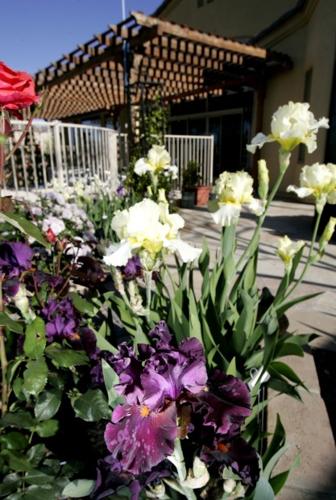
When the couple moved into their new construction home, Jensen dug out two feet of caliche from the backyard. He built up the soil and created a lovely garden with a southern exposure, with flower beds, a pool and sitting areas.
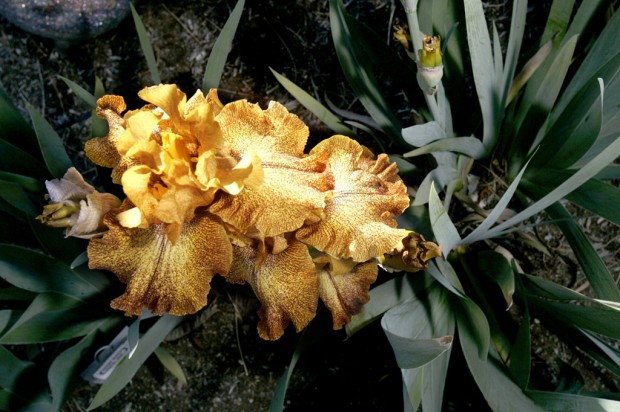
Sprinkled among the bearded irises are 30 rose bushes, fruit trees, snapdragons and other flora. Wandering through Jensen's garden, visitors admire the many varieties of iris - each carefully labeled. There is everything from Kickapoo Kangaroo to Afternoon Delight and No Bikini Atoll.
So how do hybridizers think up all of those names? "They sit around the kitchen table coming up with them,'' Jensen said.
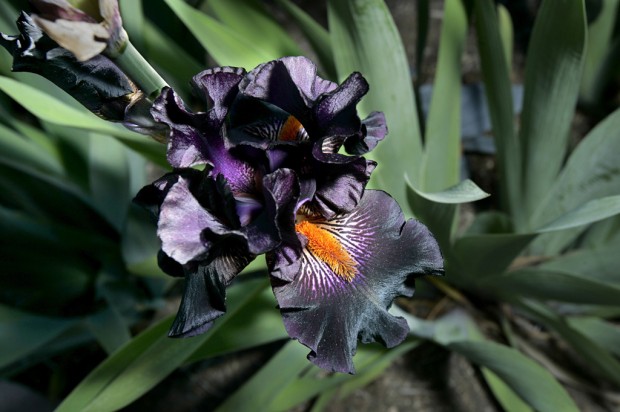
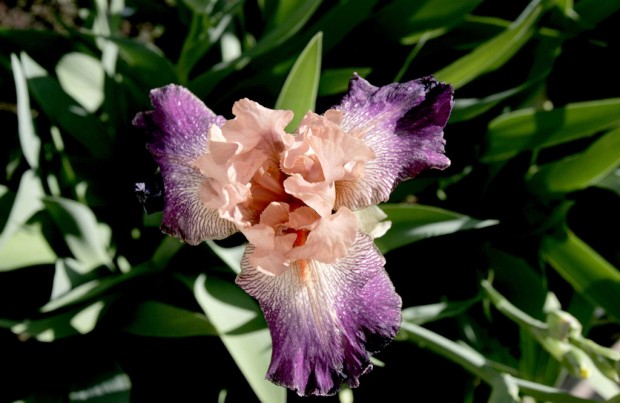
One Sacramento grower's wife names his hybrids after '70s and '80s songs. Night Moves, straight off an old Bob Seger album and with a showy, deep-purple bloom and fuzzy orange beard, graces Jensen's garden. Jensen's favorites are the deeply hued blooms, in shades of black plum and rust.
Now president of the Tucson Area Iris Society, Jensen's hobby takes up much of his time.
"I'm out here every day because I can be,'' said Jensen, who is retired. "In the spring I'm out here a couple of hours a day. Most of that is just looking, but there is a little weeding and fertilizing involved.''
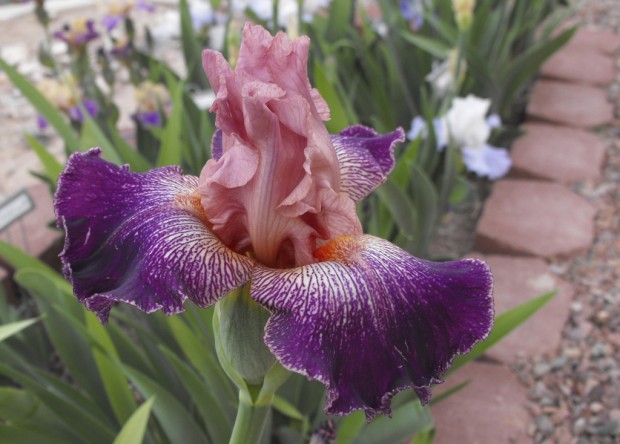
He shows his irises and has become a hybridizer, developing his own varieties. His most recent creation is the purple and mauvy-pink Iris Melodies, which he sells on his website, www.irismelodies.com
He cherishes the time in his garden. "We'll sit out here and read in the evening when it's cool. We love to watch the monsoons come in.''
What he loves most about his garden are the irises.
"I love the beauty and the fragrance and the challenge of hybridizing them,'' Jensen said. "And I've always loved playing in the dirt.''
Iris 101
Interested in starting an iris garden?
The Tucson Area Iris Society Show and Sale, being held 1-4 p.m. today at Tucson Botanical Gardens, is a good place to start.
The show will be held in the Porter House at the gardens, with prize-winning irises on display.
The sale will take place in the SAHBA Pavilion at the east end of the parking lot. Expect to spend about $6 for iris plants in 1-gallon containers. Looking for more exotic hybrids? You can expect to spend $40 to $50 for rhizomes when buying them online or from collectors.
Depending on the temperature, irises can start blooming in Tucson as early as February, and they keep blooming until June. Plants stay green throughout the summer and are frost-resistant.
Here are tips on growing iris in the desert, from Tucson Area Iris Society President Gordon Jensen:
• Make sure your soil is well-fed and provides plenty of drainage. In the fall, Jensen feeds with Triple Super Phosphate and in February he uses Miracle-Gro LiquaFeed Bloom Booster Flower Food.
• Plant in full sun. They love the sun.
• Iris grow well paired with roses, as they like the same soil, but a little less water.
• When they get too crowded, thin the plants. Jensen offers directions on his website, www.irismelodies.com
If you go
• What: Tucson Area Iris Society Show and Sale.
• When: 1-4 p.m. today.
• Where: Tucson Botanical Gardens, 2150 N. Alvernon Way.
• Price: Free
• Information: 326-9686, www.tucsoniris.org
Contact local freelance writer Gabrielle Fimbres at gfimbres@comcast.net