



You know what’s hard about photographing butterflies?
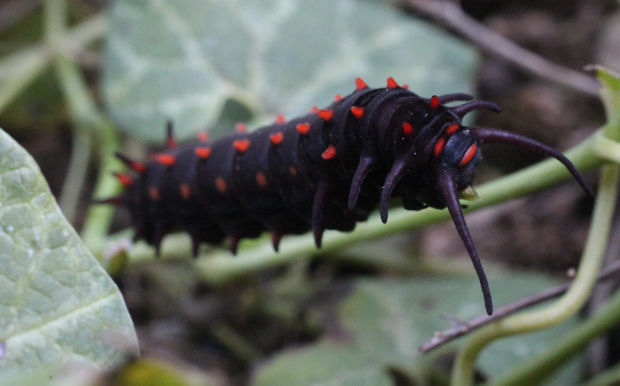
Caterpillars.
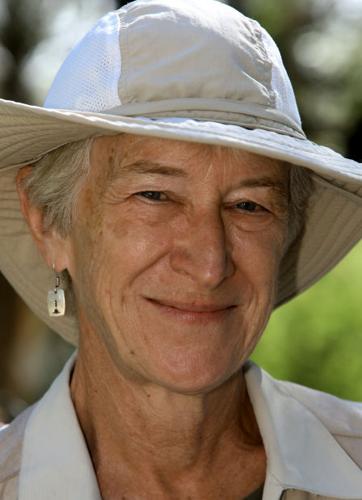
That was the biggest challenge author Sue Feyrer faced when she put together her newest book, “The Butterflies of Tohono Chul and the Plants They Love.”
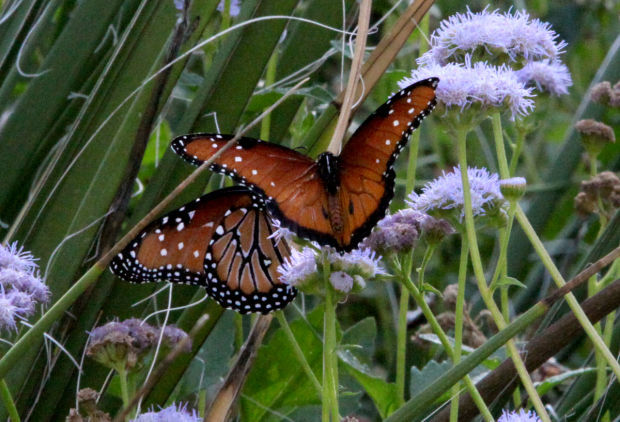
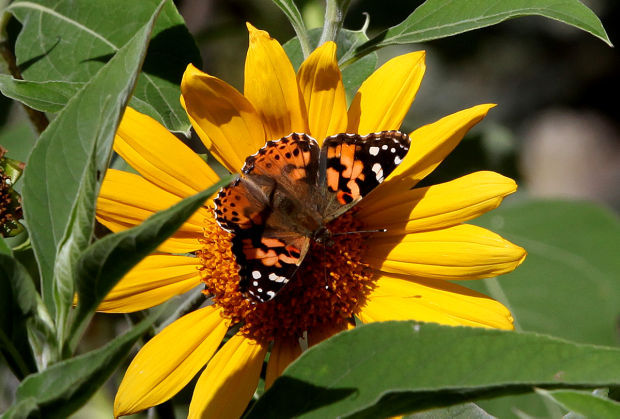
As a serious butterfly watcher for the last two years, Feyrer was able to photograph all of the 42 species that you’re likely to see at Tohono Chul Park.
Adult butterflies are easier to photograph than birds, which Feyrer, a docent at the northwest-side botanical garden, also enjoys watching.
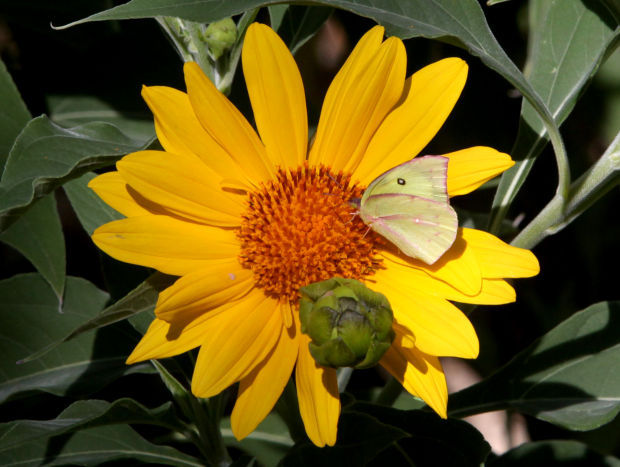
“Birds tend to be farther away and hiding behind this and that leaf,” she says. “Butterflies will perch nicely on flowers.”
But caterpillars were downright difficult.
People are also reading…
“Originally, I wasn’t going to include caterpillars, but some people thought they were important,” Feyrer says.
She spent days and days bending down and studying host plants where butterflies lay their eggs. “People thought I was crazy,” she says. One person thought Feyrer was looking for a lost contact lens.
“I got kind of obsessed with it. They’re so tiny.”
Alas, she only captured 13 images of the larvae included in the field guide.
Enter Jim Brock, a butterfly enthusiast and “self-trained lepidopterist,” as he calls himself, who has been taking pictures of the insect for decades.
He’s co-authored three books on butterflies and caterpillars and often leads butterfly field tours. He furnished the bulk of caterpillar images in the book.
Even with his expertise, Brock admits caterpillars get the best of him.
“They’re not that easy to find,” Brock says, because they’re very small and often camouflaged.
Sometimes he has had to resort to human intervention in order to get a shot. Take, for example, the Palmer’s metalmark in Feyrer’s book.
The caterpillar is a half-inch long and as green as the mesquite leaves it eats.
Brock caught a female, brought it to his house and confined it on his mesquite. It laid eggs, which hatched and gave Brock his subjects to shoot.
“Talk about patience,” he adds. “I collected the female in late April-early May and took a photo of the caterpillar in late June.”
BUTTERFLY BEAUTY
Feyrer will sign copies of her book during special butterfly events at Tohono Chul on Saturday. All proceeds from sales of the field guide will go to park activities.
Organized by family, each page in the insect section of the book is devoted to one species, from the half-inch elada checkerspot to the 5.5-inch two-tailed and giant swallowtails. Photos and Feyrer’s drawings detail the butterfly with wings open and wings folded, as well as at the caterpillar stage.
Feyrer felt presenting both sides of the wings was important because each could be so different, she says.
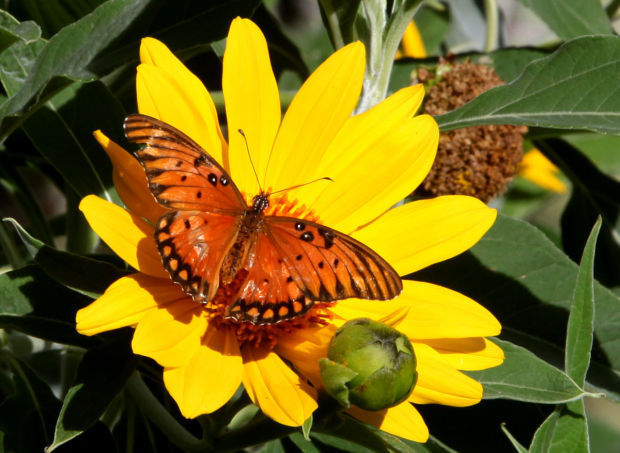
For instance, the gulf fritillary, Feyrer’s favorite butterfly, has wings whose tops are covered in orange edged in black.
“The underside of its wings looks like a stained-glass window” of browns, whites and oranges, she says.
The section also gives the size of the butterfly, the habitat where it’s found and the plants it uses for food and for laying eggs.
ATTRACTING BUTTERFLIES
While the book is meant to help identify butterflies in nature, Feyrer includes information on what plants to grow to attract certain species.
This second section is divided into host plants, plants that provide food for both caterpillars and adults, and nectar species that attract adults.
Each entry includes pictures of the plant and its flower, when it blooms, how to care for it and what it attracts.
“I hope it gets more people looking at them, appreciating them and hopefully get them planting more butterfly plants,” she says.
She estimates that two-thirds of her own northwest home’s garden is filled species that attract butterflies. Some annually suffer a bit of damage from hungry caterpillars.
“There aren’t that many caterpillars that really decimate the plants,” she says. “In most cases, as long as (the plants) are established, they will come back.”
Feyrer has a lemon tree, a host plant for swallowtails, that had died back in a freeze. It revived the next year into a four-foot plant that was covered in caterpillars.
“I keep it around as a lemon shrub just for the caterpillars,” she says.
When it comes to plants vs. butterflies in her garden, she says, “I let the caterpillars win.”
