

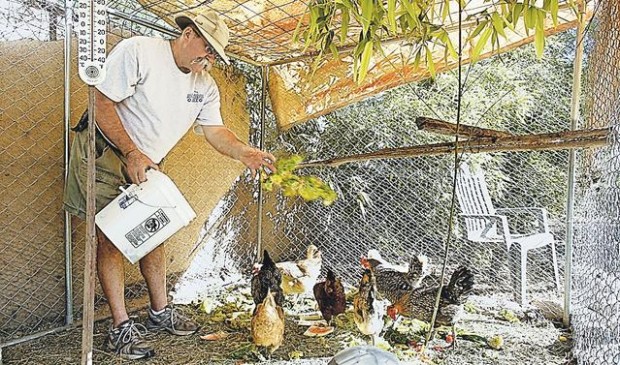
Chickens serve up more than eggs for Colette and Jonathan Landeen. The eight cluckers help keep the vegetable garden and the rest of the backyard landscape thriving. Plus, they play a role in reducing food waste at the couple's restaurant, Jonathan's Cork.
This organic gardening cycle starts with a big daily bucket of uncooked fruit and vegetable discards from the restaurant, including melon rinds, lettuce leaves and produce trimmings.
The chickens eat the scraps, plus store-bought feed and alfalfa and any bugs they find when they're allowed out of their coop.
Alfalfa covers the dirt floor. "Every couple of weeks (Jonathan) rakes out the whole pen and roosting box," says Colette. He adds the mixture of chicken manure and uneaten bits of produce and alfalfa to their compost pile.
Inside the compost pile the manure creates nitrogen-rich soil the Landeens use in their raised beds and pots of summer vegetables as well as other plantings at their far-east-side home.
People are also reading…
Jonathan estimates they spend about $24 a month on chicken care, which is made up by selling extra eggs to friends and eliminating the cost of buying eggs, gardening soil and soil amendments. They eat fresh produce from their garden and cut down on throwing away food at the restaurant and at home.
The large amount of food waste available from the restaurant allows the Landeens to easily feed eight chickens. They have some tips for other homeowners who might want to try this:
• Arrange with a restaurant owner or manager to collect its produce scraps. Chickens will eat most any produce, but Jonathan doesn't feed them potato peels or onion skins.
• He estimates that an average family of four with a good, varied diet of produce can create enough scraps to feed about two chickens.
• Chickens can feed on only produce if there's enough, says Colette.
Getting started with chickens
A friend gave the Landeens the chickens and nesting boxes. Jonathan built the roosting area. They bought a dog run for $200 and wrapped chicken wire around it to create the coop. They also bought a feed dispenser and water bowl.
Barb Beal, a saleswoman at OK Feed & Supply (3701 E. Fort Lowell Road, 325-0122), provides this advice about setting up a chicken coop:
• Use fencing with a cover that keeps predators out.
• One chicken needs four square feet of living space.
• While nesting boxes can be ordered online, building them is cheapest.
• Spread grit if keeping chickens on an artificial floor.
The following prices come from OK Feed & Supply:
• Full-grown chicken: $6.75.
• Chicken wire: 74 cents a foot.
• Crumble feed: About $16 for a 50-pound bag.
• Alfalfa: $8.50 for a 100-pound bail.
• Grit: $4.60 for a 10pound bag.
• Feed dispenser: $25-$28.
• Waterer: About $7.