

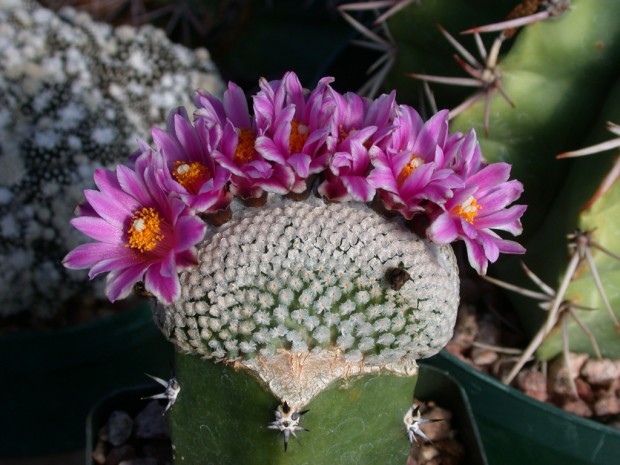
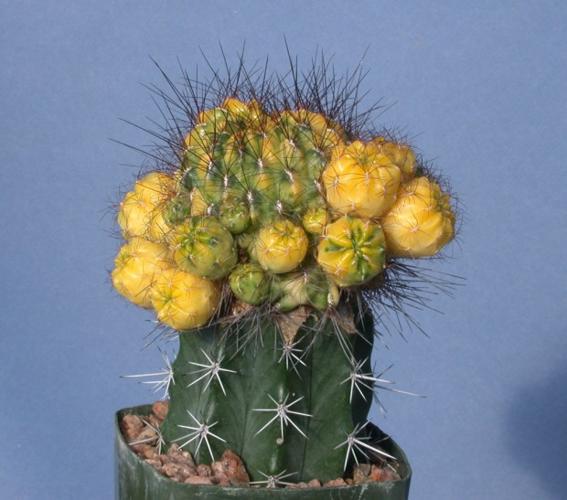
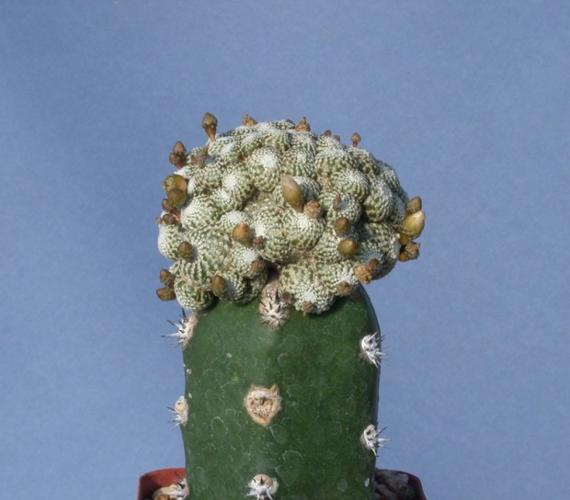
Nature has created some pretty weird cacti for our enjoyment. Add a bit of human intervention and the strangeness doubles.
Grafted cacti are two species that are fused to make one plant. This is done to propagate specimens. It also helps a weak specimen become strong enough to survive.
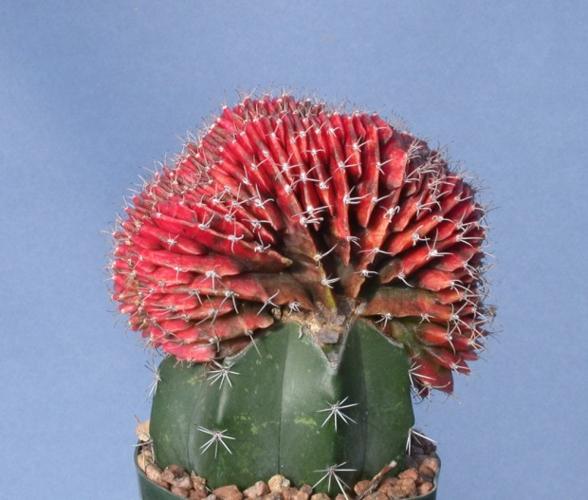
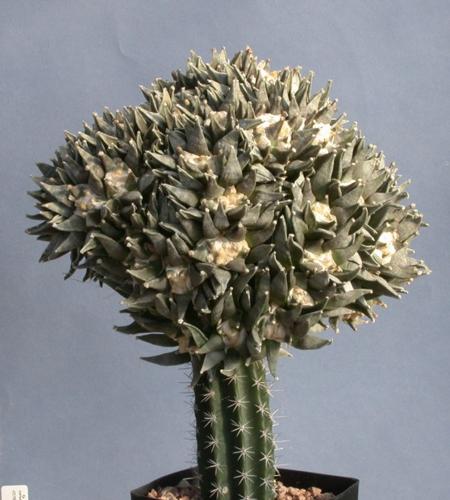
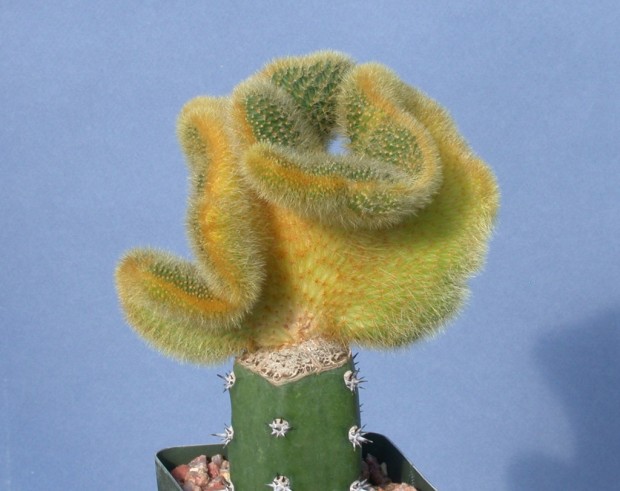
Potted grafts often look like mutant mushrooms, with a columnar species as the base, formally called the stock, onto which is grafted a scion, a second, more decorative species.
Big grafted cacti in the ground typically sprout roots of their own, says Mark Sitter, owner of B&B Cactus Farm. Eventually you can't tell that it was grafted onto a stock.
Cactus scions often are from colorful or oddly shaped species. Crested and other specimens with abnormal growth also make popular scions.
People are also reading…
In a grafted cactus, the scion is essentially "a tumor" that uses the stock to live, says Miles Anderson, owner of the online succulent store Miles' To Go.
In the landscape
It's the scion that attracts buyers to grafted cacti, says Anderson.
A popular import, for instance, is known as red cap. The scions are brilliant red, yellow or orange because they have no chlorophyll to turn green.
"That adds brightness and color to dish gardens, and they would last for months or a year or two," he says.
Small specimens and imports grow better as house plants since they may be sensitive to Tucson's temperature extremes, he adds.
A crested cactus "can be a fabulous individually potted plant," says Sitter. A crested golden barrel cactus "is a stunning container or landscape plant," he adds.
Purchase
Grafted cacti tend to make up only a small percentage of a nursery's inventory.
Miles' To Go's varying stock sells for $6 to $10.
B&B sells grafted cacti ranging from small red caps ($5) in 4-inch containers to 3-gallon containers of crested golden barrels ($125).
Bach's Cactus Nursery also sells grafted cacti at $5 or $10.
Care
Caring for a grafted cacti seems as wacky as they look.
"Generally, the stock is what you're trying to care for. It's not a scion," says Anderson. On the other hand, "The stock is not going to be growing," he says. Instead, the scion will get the benefit of care to the stock.
Generally, care for a grafted cactus as you would for a rooted cactus.
For potted cacti, Anderson suggests:
• Using a mixture of half cactus potting mix and half perlite, pumice or grit.
• Watering just as the soil dries.
• Fertilizing once a month during the growing season with general plant food at quarter or half strength.
For landscape grafted cacti, Sitter waters weekly to once a month, depending on the growing conditions. "I wouldn't wait until the soil is bone-dry," he says.
Fertilize with general plant food at half strength if you want rapid growth, he advises. Once the plant is the size you want, you can stop fertilizing.
Sitter advises monitoring cactus for possible sunburn before the summer rains come.
Contact local freelance writer Elena Acoba at acoba@dakotacom.net