

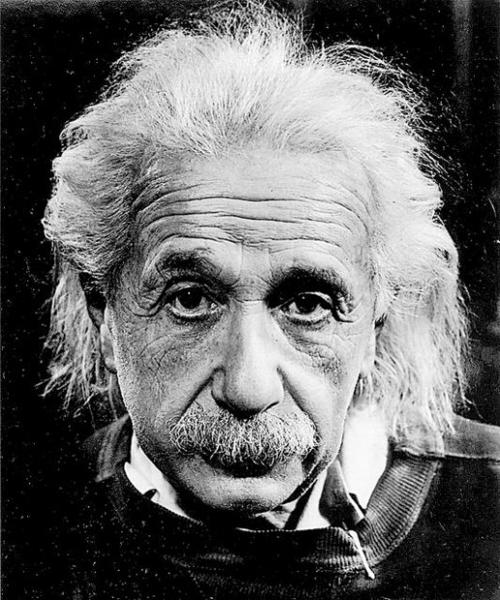
Today is the 89th anniversary of the total solar eclipse that helped prove Albert Einstein's theory of general relativity.
Measurements that English astrophysicist Arthur Eddington recorded during that eclipse on May 29, 1919, helped confirm a key prediction — that the path of light passing close to a massive body will be slightly deflected.
Eddington made his observations from Principe Island off the west coast of Africa. By carefully measuring the position of stars visible near the sun's edge during the eclipse, he determined their apparent positions had shifted nearly the amount predicted by relativity. These stars would ordinarily be hidden by the sun's brightness and so could only be seen during the eclipse.
Einstein became a sensation when Eddington announced his results the following year.
Those observations also helped Eddington cement his own reputation as one of the greatest astrophysicists of all time, though some of his best and some of his more controversial work was yet to come. Eddington was the first scientist to develop a true explanation for the inner workings of stars.
People are also reading…
So go out tonight and enjoy the star-filled sky. And while you're at it, think of Eddington's eclipse adventure and Einstein, who fundamentally changed our understanding of the universe.
