

When Tucson's temperatures soar well above 100 degrees, many people have just one thought on their minds: Mount Lemmon!
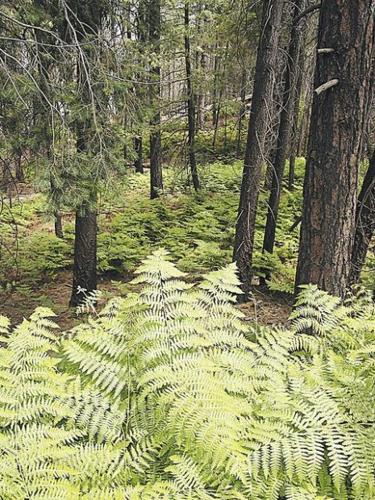
While the desert floor is scorching under the hot summer sun, a quick, one-hour drive into the Catalina Mountains promises a cool respite — with pine trees and temperatures that average about 20 degrees less than in the city below. On Mount Lemmon you can camp, hike, throw a Frisbee around or picnic by a mountain stream.
The town of Summerhaven near the top of the mountain offers restaurants and shops to visit. Many people have vacation cabins on Mount Lemmon and some live there year-round.
The best way to begin your visit is with a stop at the Palisades Visitor Center just past Milepost 19 on the Catalina Highway. The center has a friendly staff to answer your questions, a small gift shop and several interesting displays, including information about forest fire prevention and management.
People are also reading…
It's an important topic — and timely. Fire danger is currently extremely high — and the area has already experienced the devastation of a forest fire.
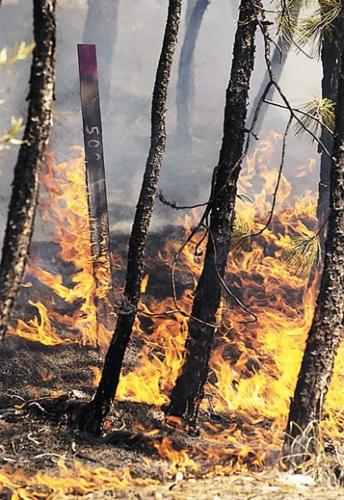
Three years ago, on June 19, 2003, the Aspen Fire swept through Summerhaven, destroying 335 buildings. The fire was human-caused and began two days earlier in Marshall Gulch, about two miles from Summerhaven.
The fire spread rapidly because of high winds, growing to 450 acres by the early morning of June 19 and to 4,000 acres by nightfall. Gov. Janet Napolitano declared a state of emergency for Summerhaven and nearby communities.
Efforts to curtail the fire began almost immediately and evolved into a full-scale operation that involved the coordination of many different individuals and groups. Planes flew over the area dropping tons of chemical fire retardant. As usual, smokejumpers were some of the first on the scene, diving out of airplanes to launch rapid initial attacks on areas that were otherwise hard to reach.
Hot shot crews were also brought in. These highly trained firefighters worked on the ground to fight the fire. In all, more than 900 firefighters from 10 Western states battled the blaze. In Tucson, large clouds of smoke blew down onto the city, and on some evenings, the mountain glowed red as the fire burned on the front range of the Catalina Mountains. Despite all of the efforts, the Aspen Fire wasn't extinguished until the summer monsoons arrived on July 15. A total of more than 84,000 acres had burned.
Although the Aspen Fire was unusually devastating, forest fires are a common occurrence in the Southwest, where we have more distinct vegetation zones than in other parts of the country. Because fire behaves differently in each vegetation zone, firefighting in the Southwest is complex and difficult.
Through the study of tree rings and fire scars, scientists have determined that the ponderosa pine forests burned on the average once every five to 12 years before settlers arrived in the area. These periodic fires provided many benefits to the forest. First, they reduced the fuel accumulations on the forest floor. They also encouraged the growth of native vegetation and even benefited many plants and animals whose habitats depended on periodic burning.
After the settlers came, they began extinguishing the fires. The result was fewer fires but an accumulation of fuel. The policy of extinguishing naturally occurring fires was followed for many years. As a result, the current conditions with the vegetation in the Southwest are unnatural and potentially highly flammable.
Today when a forest fire starts, it burns hotter and more intensely than it would if previous fires had been allowed to burn. This situation means that, despite our best efforts to prevent and suppress them, catastrophic fires like the Aspen Fire are more likely to occur.
Although we will never see Mount Lemmon looking the way it did before the Aspen Fire, it remains a beautiful place to go to escape the heat in Tucson. While you're there, take time to notice the areas that were burned and marvel at the beauty of a forest coming back to life.
Preventing forest fires
● If a parent or other adult smokes, encourage him or her to use an ashtray. When outdoors, safe practice requires a 3-foot clearing around the smoker.
● Don't park vehicles on dry grass.
● Know and follow the rules regarding burning trash.
● At the first sign of a wildfire, leave the area immediately by established roads or trails. Contact a ranger as soon as possible. If the escape route is blocked, go to the nearest stream or lake.
● Leave the campsite as natural as possible, traveling on trails and other durable surfaces.
● Inspect your site upon leaving.
● Never take burning sticks out of a fire.
● Never take any type of fireworks onto public lands.
● Keep stoves, lanterns and heaters away from combustibles.
● Store flammable liquid containers in a safe place.
● Never use stoves, lanterns, and heaters inside a tent.
Based on tips from www.smokeybear.com
Tune up your mind
Look for these related books:
"Hotshots!" by Chris L. Demarest (M.K. McElderry Books, $17.95 )
"Escape From Fire Mountain" by Gary Paulsen (Bantam Doubleday Dell Books for Young Readers, $4.99)
"Smokejumpers" by Elaine Landau (Middlebrook Press, $23.90)
Fuel for thought
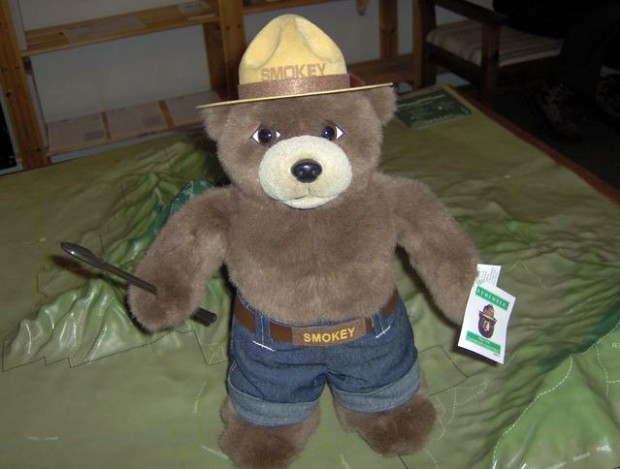
Did you know there really was a Smokey Bear? On May 9, 1959, a fire crew working in the Lincoln National Forest near Capitan, N.M., brought in a badly singed bear cub that they had found clinging to the side of a burned pine tree.
At first, the cub was given the name Hotfoot, but that was soon changed to Smokey Bear. The game warden, Ray Bell, flew him to the veterinary hospital in Santa Fe and, after the little bear had recovered sufficiently, brought him back to his home (where Smokey reportedly caused quite a few problems with the other household pets).
Eventually, Smokey left the Bell house for a permanent home at the National Zoo in Washington, D.C., where he would be visited by millions of children.
The Forest Service had been promoting fire prevention with a poster by artist Rudolph Wendelin that featured a bear named Smokey since 1944. Now that there was a real, live Smokey Bear, he became even more popular. At one point, Smokey was receiving so much mail that he was given his own ZIP code.
New question:
● If you were king or queen of the world, what would be your first decree?
What: Palisades Visitor Center
Where: Almost a mile past Milepost 19 on the Catalina Highway
When: From 8:30 a.m. to 4:30 p.m. daily during the summer months
Admission: Free, but there is a $5-per-vehicle recreation fee for many areas in the Coronado National Forest, including Mount Lemmon (weekly and annual passes are also available).
Information: 749-8700