

Three times the groups of costumed dancers march toward the church, advancing toward the line of ash that marks off the holy ground. Three times they are turned back, overcome by a barrage of flowers, the ringing of bells, the waving of flags and the songs and dances of the opposing groups.
After the third attempt, they give up and throw their masks into a huge bonfire. Once again, they have been defeated by the flowers and faith of the church people.
This colorful, elaborate ritual is all part of the annual Hiaki (in Spanish, Yaqui) Easter celebration, which concludes on Easter morning with more dances, followed by a final procession. The Easter ceremonies of the Hiaki people of Arizona and northern Mexico represent a tradition that dates to the early 17th century. When the early Jesuit priests came into what is now Sonora, Mexico, they introduced Catholic ceremonies, which blended with Hiaki tradition. Flowers are very important in Hiaki culture. They represent beauty, but even more, in the desert, an abundance of flowers means that the right rains have come; the desert and the harvest will be fruitful and the people will prosper. Both in the ceremonies and the daily lives of the Hiaki people, flowers are used as powerful weapons against evil and are an important symbol, found in the elaborate floral designs on traditional Hiaki clothing.
People are also reading…
Dances are another important part of the Hiaki culture and help them to maintain a strong sense of identity. Two of the main dances are the Deer Dance and the Pascola Dance. The Deer dancer is best known to most non-Hiakis as he also serves as the tribal symbol. The dancer wears a headdress depicting a deer's head, and his steps imitate the movements of a deer. The deer dancer wears a breechcloth, a belt of deer hooves, and cocoon rattles around his ankles. Deer dancers perform at many Hiaki events, but not as often as the Pascola.
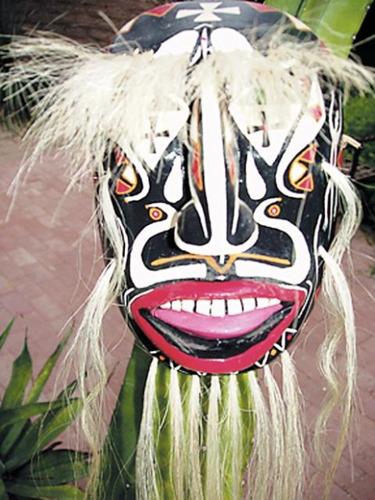
The Pahko'ola, or Pascola, dancer is the "Old Man of the Ceremony." The term comes from the words pahko, which means ceremony or fiesta, and o'ola, which is an affectionate term for an old man. The Pascola dancer has many roles. First, he is the historian of the Hiaki people who keeps the history alive through legends, myths, sermons and jokes. He is the host of the ceremony and entertains the people with his jokes and antics. The Pascola dancer usually wears a mask, often representing a goat.
The symbols on the Pascola mask represent the people's closeness to nature. Smaller, triangular designs around the edge of the mask represent the rays of the sun. The sun itself is represented by what is seen by some as a cross shape. Its four parts represent the four directions: north, south, east and west. Small animal designs — often snakes or lizards — represent nature, while longer, downward-pointing triangles under the eyes represent rain or tears.
Other dancers at the Easter celebration include: the Caballeros, or horsemen, who carry blue flags that symbolize all that is good; the Chapayekas ("long-nose" in Hiaki), who represent the Spanish; the Fariseos, dressed in black, who represent the forces of evil; and the Matachines, representing the forces for good, who wear brightly colored shirts and headdresses decorated with red flowers.
While the festivities are ongoing over the course of several weeks, it is the drama of the final confrontation of Sabado de Gloria, or Holy Saturday, that usually draws the biggest crowd. Visitors are welcome at Hiaki Easter celebrations at various sites around Tucson, but it is important to understand that this is a religious ceremony, not a play or a performance for tourists. The Hiaki people participating in the ceremony do so as a part of a manda, or promise, they made to God. No photography or recording is allowed, and visitors should watch respectfully, being careful not to intrude on the ceremonial areas or enter the church during the ceremony.
If you go
What: Hiaki Easter Celebration
Where: Celebrations will take place at sites around Tucson, including:
● Señor de los Milagros Chapel in Yoem Barrio Libre, South 16th Avenue and West 44th Street.
● San Martin Chapel near West 39th Street and South 10th Avenue.
● San Ignacio Chapel near West Grant Road and North Fairview Avenue.
● Cristo Rey Chapel near South Camino de Oeste and West Valencia Road.
When: The Sabado de Gloria, or Holy Saturday, festivities on April 15 are the most dramatic to witness. The timing is not precise, but events usually get under way around noon.
Admission: Free
Information: 883-5000
Discovery Detours
Flowers, both real and tissue paper, and confetti (a symbol of flowers) are the weapons that are used to overturn evil when the wicked Fariseos and Chapayekas attack the church during the ceremony.
The power of the flowers ultimately triumphs and enables the defenders of the church to prevail. A popular tradition at the Hiaki ceremony and elsewhere in both Mexican and Indian communities is the cascarón, a decorated, hollowed-out egg filled with confetti, on the end of a long cone.
You will find booths selling cascarónes at the Hiaki Easter celebration, but you can also make your own.
Visit www.crizmac.com and click on the Roads Scholar link for instructions. The Web site also includes a more detailed explanation of the characteristics associated with each dance and dancer.
Fuel for Thought
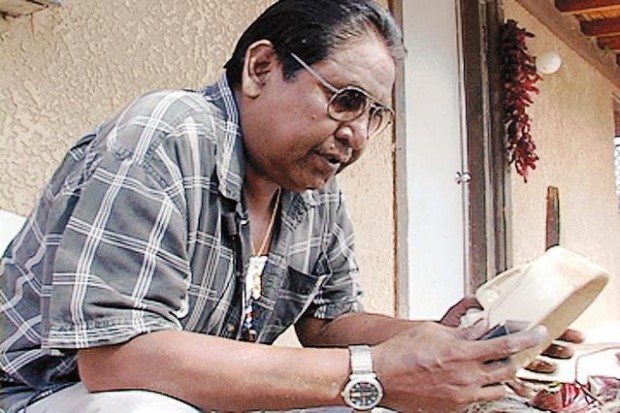
Frank Martinez is a well-known carver of Pascola masks. He uses driftwood from cottonwood trees that he finds on the banks of the Santa Cruz River. Taught by his uncle, Martinez has been carving since he was 12 years old. He carves his masks with simple hand tools and paints them with acrylic paints.
Martinez uses the traditional mask form, but he carves naturalistic lips, teeth and tongues, making his style unique. He has made masks depicting humans, animals and birds. Twenty years ago, there were about a dozen Pascola mask carvers. Today there are only Martinez and one other man. Despite chronic illness, Martinez continues to carve. It is important to him to keep the tradition and his culture alive.
Think Tank
Discussion questions for the whole family to consider:
For hundreds of years, the Hiaki have been an agricultural people. They knew how to follow the movements of the sun, moon and stars to do their planting and harvesting. The symbols on the traditional Hiaki Pascola masks have a direct connection to nature. How do you think this might be related to their tradition of farming? Think of some of the symbols in your own culture. In what ways do they represent the things that are important in your culture?