

ALBANY – A federal judge has rejected New York State’s bid to get dismissed a federal lawsuit by the Seneca Nation of Indians over the tribe’s longstanding claims that a 1954 land deal permitting the Thruway to cut through part of its Cattaraugus Reservation was illegal.
U.S. District Judge Lawrence J. Vilardo in Buffalo on Thursday gave the green light for the legal dispute to – maybe – continue on to the merits of the case.
“This case involves difficult and weighty issues," Vilardo wrote in his decision siding with the Seneca Nation.
The state sought to have the case dismissed on a series of legal grounds, which the judge rejected time after time in his 24-page decision. But the judge also gave the state permission to commence an “interlocutory appeal” on specific legal points of the case before the overall merits are considered. A state appeal within 10 days, which appears likely, would halt the broader case from proceeding.
People are also reading…
“We are happy with this decision and hope that we can finally bring a fair resolution to the Seneca people after more than six decades of seeing 300 acres of Seneca homeland illegally used to benefit New York State," said Seneca Nation President Rickey Armstrong Sr. “Just as important, I hope this decision offers an example for how state governments need to be held accountable in their dealings with Native nations.”
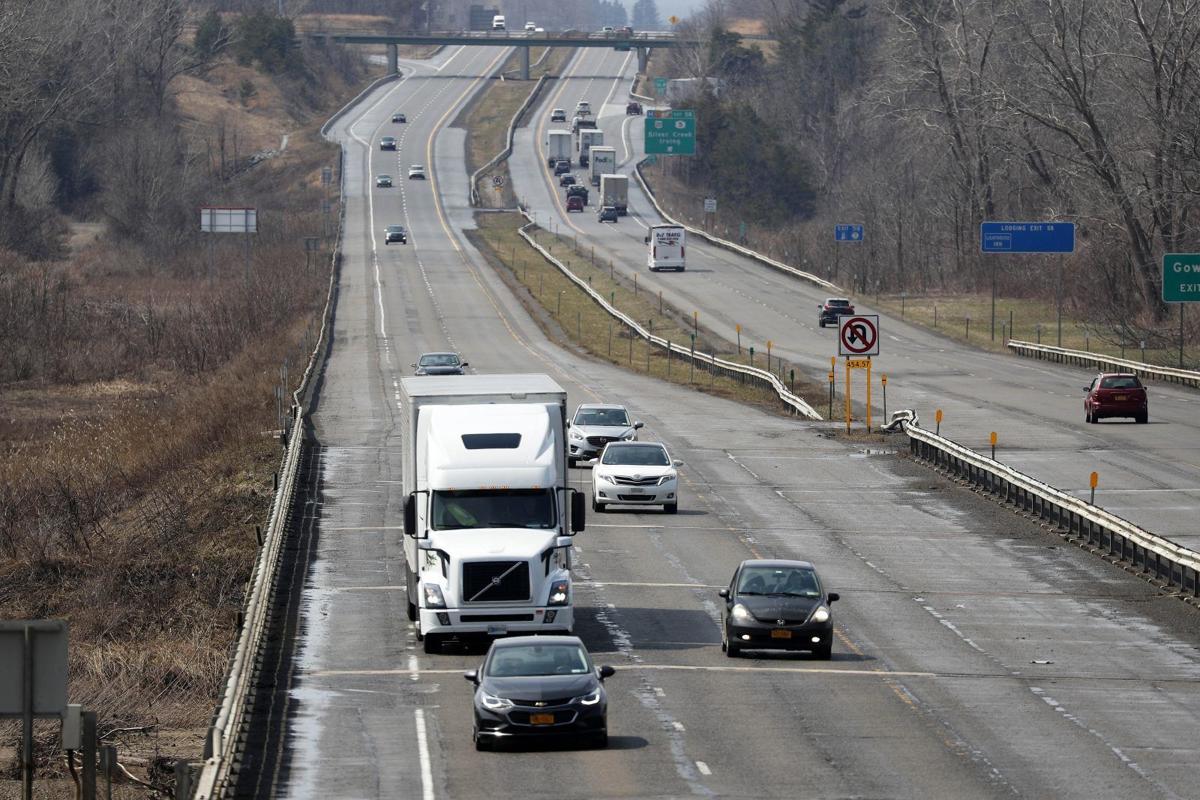
At issue is a 1954 land easement deal between the state and tribe allowing 2.7 miles of the state Thruway to be built on nearly 300 acres on the Seneca Nation’s Cattaraugus reservation.
The tribe received $75,500 for the land deal, which included displacement of some Senecas from their homes. Tribal leaders for years have said the state pressured Senecas to take the 1954 deal. Moreover, the Seneca Nation’s chief legal argument is that the deal was invalid from the start because the state never obtained needed federal approval.
The Senecas, in the case brought in April 2018, want the Thruway Authority to seek a valid easement deal or to compensate the tribe going forward for motorists who drive on the highway’s segment that runs through reservation land. They also want the state to stop collecting tolls at Irving on Seneca land.
The decision by Vilardo overturns a report and recommendation made in 2018 by U.S. Magistrate Judge Hugh B. Scott that supported the state’s move to dismiss the case.
The state raised a slew of legal arguments for why the case should be tossed, including that a similar case was already brought – and rejected – in 1993 and that the tribe waited too long to bring the case for a deal put together when Dwight D. Eisenhower was the U.S. president.
But Vilardo noted that the Senecas are not seeking back payments as compensation for what they maintain was an illegal deal.
“Taking the allegations of the complaint as true – as this court must – there is an ongoing violation of federal law: the State is using and earning income from an invalid easement. Although it is true that the alleged wrong occurred initially when the easement was formed, the Nation adequately alleges ongoing wrongs – that is, the unsanctioned use of its lands.”
The judge wrote that the Seneca Nation is alleging “real ongoing harm: every day cars are driving on the easement and paying tolls to the State without just compensation to the Nation.”
The judge, however, noted in his ruling this week that it is too early in the case for a decision on the merits of the case or the state’s claim that the tribe waited too many years to bring the legal challenge to the 1954 easement deal.
The magistrate in the current case concluded that the 1993 case over the Thruway land prevented the Seneca Nation from bringing a similar case now. But Vilardo disagreed, saying the earlier legal challenge never specifically decided on the validity of the 1954 deal. He wrote that even the state agrees on that point.
The judge this week characterized, in essence, that state’s defense in the case includes a belief that even if any wrong did occur with the 1954 deal that it occurred generations ago and that there is not ongoing wrong for the tribe to now get corrected.
The land dispute case between the state and Seneca Nation comes as the two governments are also still feuding over revenue sharing payments to the state from the tribe’s three Western New York casinos. The Seneca Nation several years ago halted payments – which had been made for years in return for a gambling exclusivity deal in the region – and the tab, according to the state, has run up to hundreds of millions of dollars.
The Seneca Nation first challenged the Thruway easement deal in a 1993 case when Gov. Mario M. Cuomo, the father of current Gov. Andrew M. Cuomo, was in charge of the Thruway. But that case did not include Mario Cuomo or other state officials, which became a legal problem for the Senecas when that case was dismissed because, in part, the state owns the actual land upon which the Thruway rests and it was not directly sued in that case. In its new case by the Seneca Nation, the first defendant mentioned in the legal papers is Andrew Cuomo.
The Cuomo administration on Friday suggested an appeal will happen.
“This is a situation that predated this administration and this ruling does nothing to detract from the merits of the state’s case. We will continue to move forward," said Richard Azzopardi, a senior adviser to Cuomo.
The Seneca Nation maintains the state failed to get required U.S. Department of Interior approval for the 1954 land deal.
"The unsanctioned presence and operation of the Thruway on our land not only violates our sovereignty, it has hindered our ability to realize the full economic development potential of the Cattaraugus Territory,” Armstrong said. “We are seeking, at long last and moving forward, to right an egregious wrong.”


