Although she’s moved from black bear management issues in the forests of northwest Montana to the Beartooth Front in the state’s south-central region to deal with grizzlies, Kylie Kembel said the work remains much the same.
“Everyone struggles with bears all across the state,” she said.
People are also reading…
Kembel was one of Montana Fish, Wildlife & Parks’ 2017 hires to beef up its bear program, now composed of 11 experts spread across the state. As a bear management technician, she mainly deals with educating the public about how to live and play safely as black bears and grizzlies become more common along the Beartooth Front. These teaching efforts stretch from civic and school groups to local landowners.

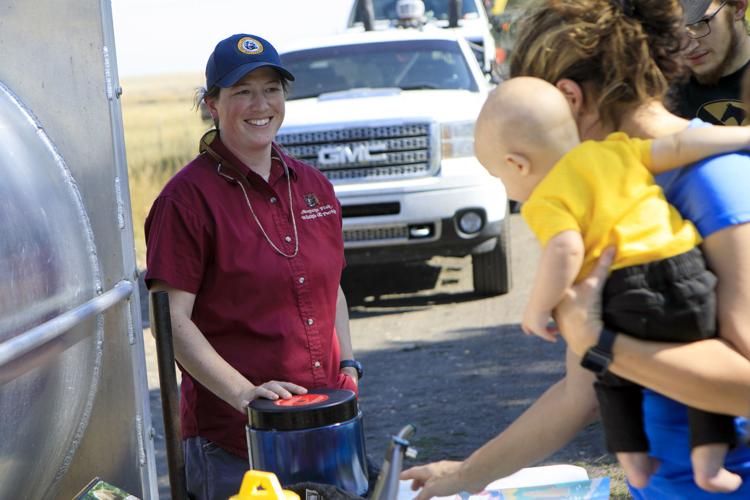
Kylie Kembel, a human-bear conflict specialist with FWP, speaks with passersby. A large portion of her job is to educate the public about bears in the Red Lodge area to keep humans and bears safe.
“My role is to work with the people in Region 5 who have questions, concerns, struggles with bears,” she said. “People who request me to come to a group event typically have some understanding, but some of the more detailed aspects they have questions about.”
Kembel attended the University of Montana majoring in wildlife biology. That led to her working in wild places across the West, including as a volunteer outside of Lander, Wyoming, and in the Flathead Valley next to Glacier National Park and the expansive Bob Marshall Wilderness Complex.
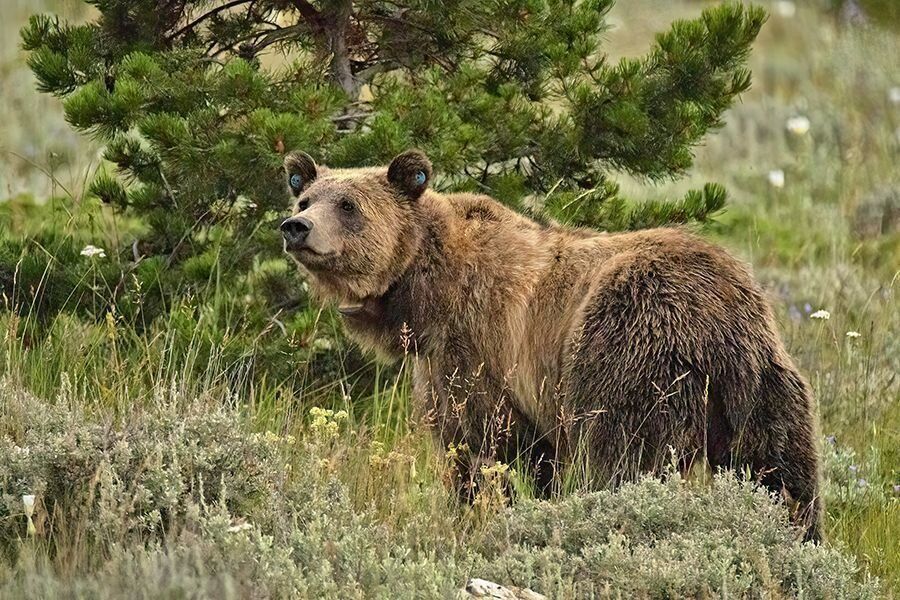
Red Lodge was picked by FWP as a location to place Kembel because of an increasing grizzly bear presence in an area that for decades only had to worry about black bears. Grizzlies began regularly showing up in about 2011, possibly following the mountains up from Wyoming. Two years later a pair of bears were captured after wandering into the Red Lodge region. They were relocated as reports of eight to 10 bears spread across the landscape trickled in to wildlife officials.
More grizzlies along the Beartooth Front is due to the success of their protection under the Endangered Species Act, as well as the animals’ population growth in the Greater Yellowstone Ecosystem, the core of which is Yellowstone National Park.
Along the Beartooth Front, grizzlies often use drainages as travel corridors, following creeks down from the mountains onto the foothills where they are more likely to run into homes, ranches, towns and farms.
“They’re just out searching for food everywhere,” Kembel said.
Her main focus is conflict prevention, helping people to understand what bear attractants are and how to stay safe in bear country. The themes have been widely circulated for years.
Property owners should pick up fruit from trees in their yards, keep barbecue grills inside garages and avoid putting pet food outdoors. Hikers should travel in groups, make noise on the trail, carry bear spray and know how to use it. Campers need to secure their food inside of a hard-sided vehicle when not around or at night.

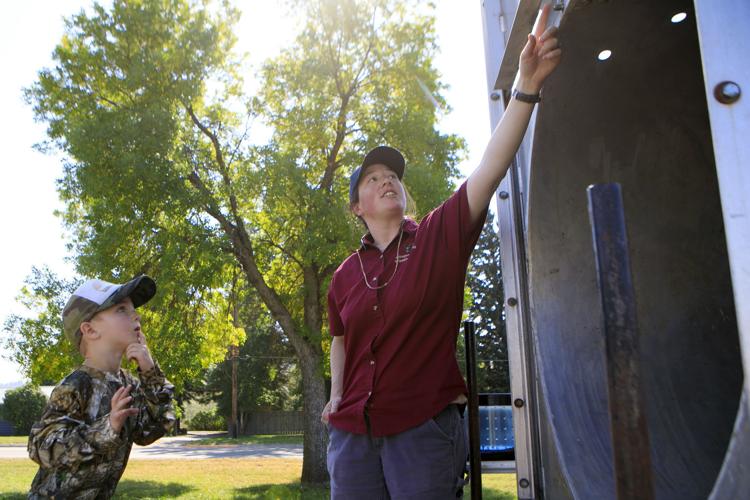
Kylie Kembel, a human-bear conflict specialist with Montana Fish, Wildlife & Parks based in Red Lodge, shows a bear trap to a young boy Saturday, Sept. 18, during an event in Joliet.
Backcountry hunters need to hang the carcass of a deer or elk they kill out of a bear’s reach. Backpackers are also advised to hang their food in bear country or keep it inside bear-proof containers.
Kembel also works with the larger Yellowstone Ecosystem Subcommittee on its information and education outreach for the entire region. She works in partnership with other officials from Yellowstone National Park and Wyoming Game and Fish, to name a few.
The goal is to prevent bears from associating humans with food. That’s safer for bears and humans. The old adage that a fed bear is a dead bear often holds true. When problems arise and a bear needs to be removed or killed, Wildlife Services – a branch of the U.S. Department of Agriculture – is called. Wildlife Services also partners with FWP to investigate livestock depredations, sometimes trapping problem bears for relocation or, when bears are repeat offenders, to euthanize the animal.
FWP releasing a 3-year-old, 211-pound male grizzly back into the North Fork of the Flathead drainage after being captured north of Columbia Falls for killing some chickens. Remember to secure attractants and to use electric fencing to protect your chickens if you live in bear country.
The increased education effort has been paying off, Kembel said, with more people in the community reaching out to her for advice on living safely in an area where homeowners had previously never seen grizzlies. Her work isn’t limited to just spring, when bears wake up from hibernation, and fall, when they eat heavily to pack on calories before their long winter nap. Instead, she said she’s busy the “entire time bears are awake.”
That’s OK because Kembel enjoys what she’s doing.
“There are a lot of fun aspects to my job,” she said. “Working with people who are just first-time experiencing bears and helping them understand there’s ways to be here and enjoy Montana with the bears, helping people understand that is very rewarding.”

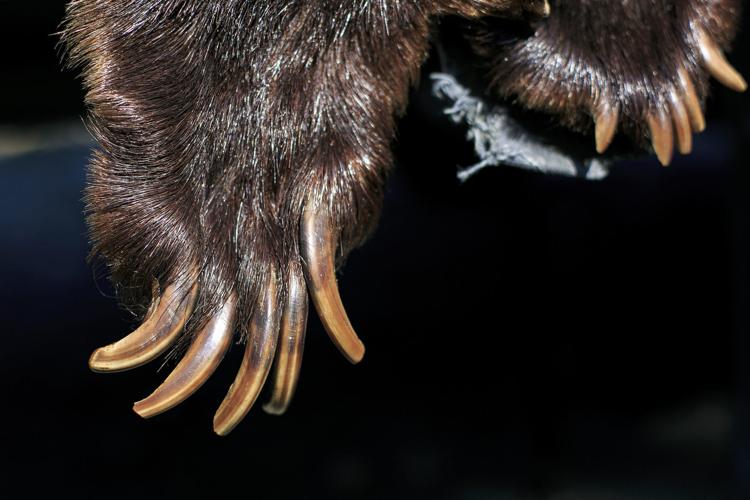
A grizzly bear hide with its claws attached is one of the education tools Kembel uses.
Bears are also a very charismatic species, she noted, as well as adaptable.
“We try to understand bears, but in the end they are wildlife.”
Her role, along with others in FWP, similar agencies and conservation groups to spread the word about living with bears will be key to the big animals surviving on a landscape that is seeing increasing development in what used to be largely rural areas. Also, bears are encountering more hikers and campers using forests since the COVID-19 pandemic, some of whom have no knowledge of how to recreate responsibly in bear country.
“There’s no place you can go in the Beartooths that you shouldn’t be thinking about grizzly bears,” said Shawn Stewart, FWP wildlife biologist in Red Lodge. “And with COVID, the people are everywhere."

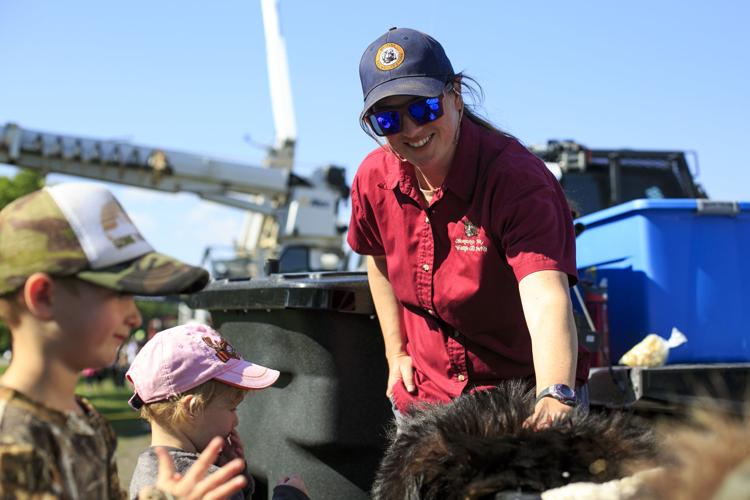
Kylie Kembel, a human-bear conflict specialist with FWP, shows children different bear hides she uses as part of her educational effort.
Kembel’s education efforts have the additional effect of informing the public in hopes of increasing understanding and acceptance of the species.
“I think we need people to support the bears if they are going to stay,” Kembel said.
If anyone is worried about bears, she encourages them to contact her for more information.
“People can reach out any time they have questions and concerns.”
Her phone number is 406-850-1131.
Bear Biologist Kylie Kembel discusses bear management strategies in this 2018 video produced by Montana Fish, Wildlife and Parks.



 Air adventure park to open in Tucson with ziplines and more