

School elections and budget votes scheduled and postponed.
Primary and special elections scheduled, postponed and then combined on one day.
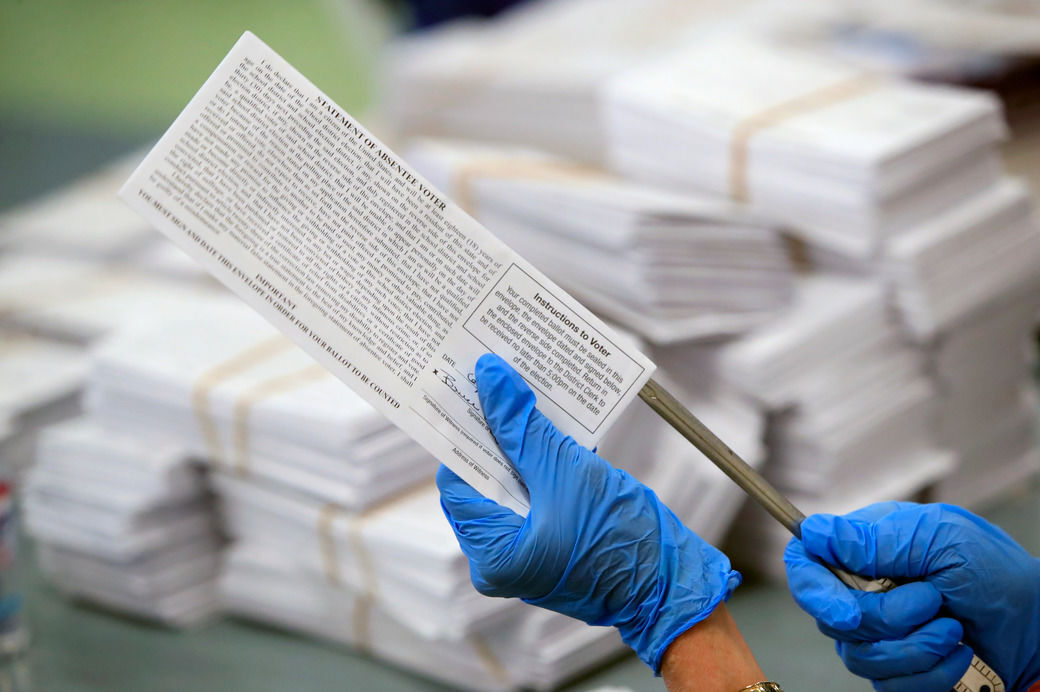
Thousands of absentee ballots and applications sent to homes.
It had the makings of a disaster, a different kind of Covid chaos. But it also was an impromptu experiment in removing some barriers to voting.
While there was some confusion, school elections saw record turnouts of voters, albeit by mail.
An analysis of school budget votes in Erie and Niagara counties the last five years showed the total number of votes cast in the two counties last month was more than three-and-a-half times the average number of votes.
- In the Frontier Central School District, the average number of votes on the budget the past five years was about 1,200. Last month, just over 7,000 votes were cast, nearly six times as many.
- Royalton-Hartland usually gets about 300 people voting on the budget, compared to more than 1,400 in June.
- In Williamsville, the largest suburban district in Erie and Niagara counties, nearly 12,000 people voted last month, more than three times the usual number.
People are also reading…
And the special election for New York's 27th Congressional District drew about 30% more votes than a similar special election in 2011.
"It reinforces what we’ve seen in other states, which is when you make voting more accessible, you see more people participate," said Susan Lerner, executive director of Common Cause New York.
New York's record for voting historically has been one of the worst in the nation. In the 2016 general election, 57.2% of eligible voters in the state turned out for the election, according to the United States Elections Project, which provides election statistics, electoral laws, research reports and other information regarding the U.S. electoral system. New York's turnout in 2016 was the seventh worst in the country.
Last year, state legislators adopted changes that included early voting, combining the federal and state primaries and Election Day registration. The legislature also approved an amendment to the state constitution that would allow "no excuse" absentee voting so that residents don’t have to attest in writing that they will be traveling out of the county or have a permanent or temporary illness. The amendment must be approved by next year's legislature and also by voters.
No excuse absentee voting is basically what happened for the June primary, Lerner noted.
"We have experience in other states. We know what helps to increase turnout. By eliminating barriers and making the ballot more accessible to eligible voters, we’re on that path in New York," Lerner said. "Our experience with the June primary shows that we need to complete the journey and put these voter friendly reforms into place."
Jacob Neiheisel, associate professor of political science at the University at Buffalo, said turnout is influenced by the legal and institutional barriers and by factors such as the competitiveness of the race.
"I think it is too early to say whether the pandemic is truly an inflection point with respect to voter turnout," Neiheisel said.
School board elections also have a tradition of low voter turnout, and districts have done everything from scheduling student concerts and art shows to holding chicken barbecues on election day to get parents and grandparents to the polls. Interest is usually low unless there is a compelling local issue that excites residents.
David Lowrey, executive director of the Erie County School Boards Association, said he believes so many people voted in school elections because the ballot was sent to them in the mail and they could fill it out and send it back. They didn't even need a stamp.
"If we were to open our doors and went back to the traditional style voting, I don't know whether we would have those same numbers," he said. "I think we would go back to the way things were."
Neiheisel said voting is somewhat habit-forming.
"Once an individual starts voting, he or she has a higher probability of turning out in future contests as well," he said. "To the extent that liberalized provisions for absentee voting brought new people into the fold, the chances are that they will continue voting, whatever the specific mode."
"We need to take the right lesson from this experiment and make it permanent," Lerner said.


