

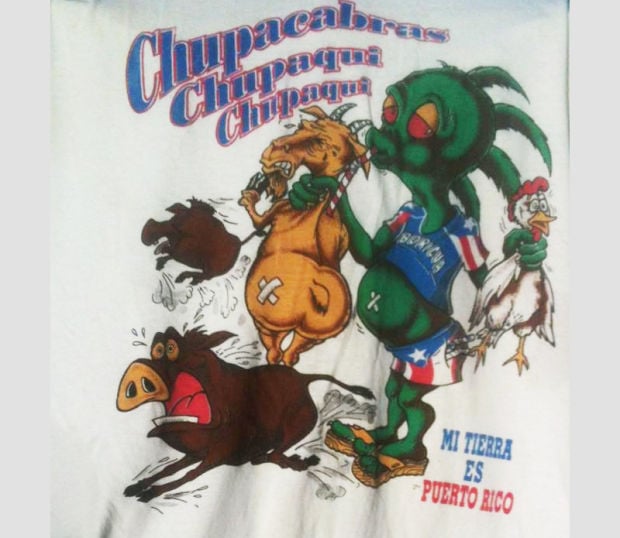
A glance at the illustration above might suggest two things: The chupacabras (“goat sucker”) is somehow connected to Puerto Rico, and this mysterious blood-sucking beast has moved from folklore to pop culture. Both guesses would be right.
The first sighting of a chupacabras took place in August, 1995, in Canovanas, Puerto Rico, just east of San Juan, the capitol of the territory. It was described as a short biped with claws on its hands and feet, large red eyes, and a row of spikes or feathers down its back. An unseen animal called the chupacabras had previously been blamed for series of mysterious livestock deaths; now the creature had a shape.
Fanned by the media, chupacabras stories spread though much of Latin America and into the United States. Many people took them seriously, and chupacabras were blamed for any sort of livestock deaths.
People are also reading…
Other folks had other uses for the chupacabras — uses that involved turning a profit. At one point it was possible to purchase chupacabras photographs, casts of chupacabras footprints, chupacabras T-shirts, and other memorabilia. One Mexico City restaurant advertised a chupacabras sandwich, which was said to contain a lot of ketchup. The Mexican humorists jumped in with the suggestion that the chupacabras was really ex-president Salinas de Gortarez, who had allegedly sucked Mexico dry during his stay in office. He, too, appeared on a T-shirt.
Meanwhile the blood-sucking beast had crossed the border into the United States, undergoing a change in the process. It turned into a dog-like animal, and chupacabras corpses and photos started turning up … and still do. Many have been identified as mangy or otherwise ill coyotes.
However, the anthropomorphic chupacabras lingered on in the Hispanic world. A norteño band in Los Angeles recorded a song in which they explained that the chupacabras was a Martian from the moon, who came to Earth to relieve his terrible hangover by sucking blood. However, he discovered love, and now only kisses … but he leaves horrible hickeys!
For a thorough treatment of the chupacabras, its history, and its probable explanations, read Tracking the Chupacabra: The Vampire Beast in Fact, Fiction, and Folklore by Benjamin Radford (Albuquerque: The University of New Mexico Press, 2011.)
NOTE: “Chupacabra” and “chupacabras” seem to be alternate forms, with the latter perhaps being older. I paid my money and took my choice.


