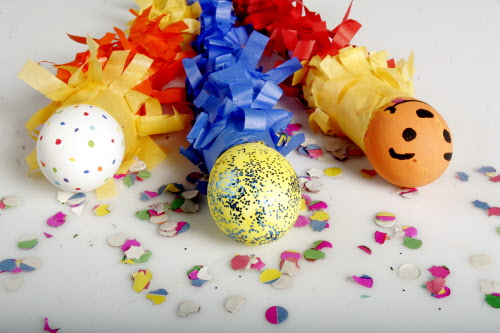
Cascarónes — egg shells filled with confetti — are a popular Easter tradition throughout Latin America and often find their way into Southwestern U.S. celebrations. (In Spanish, cáscara means eggshell.)
- The confetti-filled eggs have been around for centuries, according to several sources.
- They were possibly invented in China and brought to Europe by Marco Polo.
- They were used in Italy where they were first used as a courting ritual, filled with perfume or cologne and then capped with wax. Men would throw them at women they found attractive. (What better way to attract a love interest than flinging an egg at the person?)
- The eggs may have been brought to Mexico in the mid-1800s by Emperor Maximilian’s wife.
- Breaking a cascarón over one's head is supposed to bring good luck. Cascarónes also make an appearance at other festive celebrations, such as birthdays, Halloween, Cinco de Mayo and weddings.
People are also reading…
If you are feeling crafty — or need activities for the kiddos during Spring Break, save-on-crafts.com offers the following DIY instructions for cascarónes:
Materials needed:
- One dozen eggs
- Egg dying kit
- Confetti
- Tissue paper
- Glue
Instructions:
- Gently tap the top of an egg.
- Peel away just a small ½-inch hole.
- Empty contents of the egg out into a bowl.
- Thoroughly rinse the egg and shake out excess water. Let the egg dry.
- Dye the eggs using the egg-dying kit.
- When the eggs are dry fill with confetti.
- Glue the hole in the egg with tissue paper and finish decorating.