

When Nate Alexander arrived to work Wednesday morning, he expected it to be a slow day.
But as a 16-year veteran of law enforcement, he knows better.
Alexander, 38, was a police officer in Ohio for 11 years before joining the U.S. Marshals Service five years ago.
U.S. marshals serve as the enforcement arm of the federal court system and are responsible for providing federal court security, apprehending federal fugitives, managing seized assets, housing and transporting federal prisoners and operating the Witness Security Program.
Shortly after Alexander arrives at the clandestine location that is one of the marshals’ district offices, the service receives notice from the Department of Corrections regarding an inmate being processed at the Arizona State Prison Complex on South Wilmot Road who had clipped his ankle bracelet and climbed a fence.
People are also reading…
Alexander and the 35 employees at this office are part of the Arizona Wanted Violent Offender Task Force, a multiagency operation that investigates and arrests people with active federal or state arrest warrants, targeting violent crimes.
“We’re a Class 1 unit, meaning we handle federal warrants and child-predator apprehension within federal and local investigations,” Alexander said.
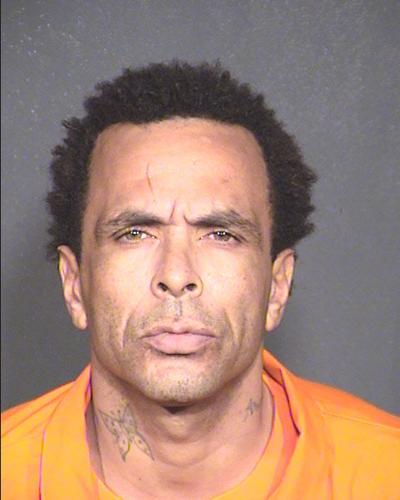
By 10 a.m., the marshals had learned the identity of the inmate, a sex offender named James Darren Scott, from Texas.
Because Scott is from out of state, he has no ties to Tucson, and it’s suspected he’ll try to leave town as soon as possible, Alexander said.
He and another marshal headed to the Greyhound bus station to see if anyone remembers seeing Scott. It’s a long shot, but if no one does, the marshals will leave a picture so the station employees can keep a look out.
One of the employees recognized Scott’s picture, saying he was asking about ticket prices the night before and was hanging around outside of the building when he arrived at work at 6:30 a.m.
Alexander and his partner talk to the rest of the team on their radios, all agreeing to spread out and survey the downtown area, believing that Scott may still be nearby.
“He’s probably in the area trying to drum up enough money for a ticket to leave town,” Alexander said.
The marshals crawl through the streets of downtown in their vehicles — discreet, older models that people don’t associate with government agents.
Within 20 minutes, the radio chatter starts as various sightings of Scott are reported. A plan is put in place in a matter of minutes, with agents assigned positions such as traffic control and prisoner search.
As Scott and another man walk out from under the bridge on North Stone Avenue approaching Sixth Street, a handful of nondescript vehicles pull into the empty lot, dashboard lights flashing, and surround the two men. Within seconds, Scott and his companion are on the ground and in custody without incident.
Traffic slows on Stone as curious onlookers try to discover what’s going on.
“Our cases involve a lot of surveillance and a clandestine approach,” Alexander noted. “Most of the time, the fugitives don’t run. We plan it out so that there really isn’t that option in place.”
Representatives from the Department of Corrections arrive to take Scott back into custody and speak with the man who was with him at the time of the arrest. The second man, it turns out, is on parole and not supposed to be associating with felons. He’s also taken into custody, and the marshals disperse from the scene to attend to the other cases they’re working on.
In addition to their day-to-day duties as U.S. marshals and task force members, the marshals in Tucson are currently involved in a classified operation, which occupies a significant amount of time.
Alexander travels to an apartment complex in central Tucson to assist in surveillance with another task force member.
“In exchange for local law-enforcement agencies’ providing manpower to the task force, we adopt fugitive apprehensions on their behalf, so it’s a reciprocal effect,” he said. “We’re actually responsible for catching a good percentage of homicide suspects that aren’t apprehended right away.”
Radio chatter picks up again as another marshal has confirmed his suspect is on site and is ready to make contact. All available units, including Alexander’s, assemble at a convenience store for a briefing before making the move to arrest.
Team members strap on their tactical vests, which include rifle plates to stop gunfire and weigh about 35 pounds. Positions are assigned and a plan is formed.
The fugitive, on federal probation, stopped checking in with his parole officer several months ago and was confirmed to be hiding out at the residence of a family member.
“Most of the fugitives we recover in Tucson don’t attempt to leave,” Alexander said. “They have friends or family and tend to stay in the area.”
Right before school lets out, a small convoy rolls into a quiet cul-de-sac. Team members stream out of the vehicles, guns drawn, battering ram in place, and take their positions.
“Police with an arrest warrant,” one yells out.
The front door opens, and marshals order the suspect out of the house.
After a few seconds, a young man shuffles out, shirtless in his boxer shorts and bare feet.
He’s handcuffed as marshals speak to his family and get a shirt and shoes for him to wear.
One of the team members speaks quietly to the man, who said he knew he’d get caught.
“Why didn’t you just come in then?” the marshal asks gently.
The suspect is put into one of the vans, and the marshals agree to return to the same convenience store for debriefing.
As the vehicles file out of the cul-de-sac, a family of four standing on its lawn waves enthusiastically with smiles on the members’ faces.
“The public responds well to us; they know we’re just here to do our business,” one of the marshals said as he waves back. “We’re not here to conduct an investigation; we’re just here to get the guy and then our job is essentially done.”