Long sought after by mining companies, four ore bodies are buried below 600 feet of overburden 13 miles northeast of Safford.
They include the Lone Star, San Juan, Sanchez and Dos Pobres on 20,000 acres of patented land that’s 12 miles long and 3 miles wide. The land compromises the Lone Star Mining District along the southern flanks of the Gila Mountains.
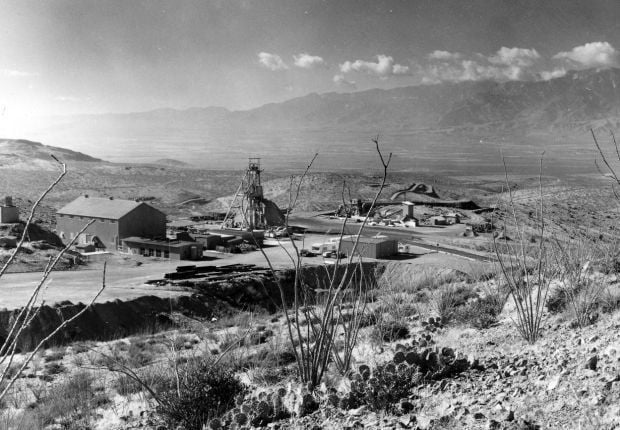
In 1914, the Lone Star Consolidated Copper Co. contributed favorable reports involving the Lone Star Mine, consisting of a 900 foot shaft hosting a 5-foot vein of sulfide ore with stringers of ore assaying up to 20 percent copper.
The San Juan Mine produced 110,000 pounds of copper prior to 1907.
Because most of the district contained low-grade copper ore averaging 0.36, or the equivalent of 1 ton of ore producing 3 pounds of copper, development progressed slowly until 1961 when an 804-foot shaft was sunk with more than 3,000 feet of crosscutting and drifts.
People are also reading…
In the mid-1960s, Bear Creek Mining Co., a subsidiary of Kennecott Copper Corp., acquired a permit from the Department of Defense to detonate an underground nuclear blast 1,200 feet below the surface to mine copper. Bear Creek gained the permit after collaborating with the Atomic Energy Commission and the U.S. Bureau of Mines.
The projected effect of the blast’s force, an equivalent of 20,000 tons of TNT, would pulverize the 8 million-pound copper deposit, which then would be leached.
Although the blast never occurred, Project SLOOP, as it was called, showed one copper company’s dedication toward innovative practices as nuclear fracturing and in-place leaching of copper from a buried oxide ore body.
In 1957, Phelps Dodge optioned a group of claims north of Safford. After exploratory drilling, it purchased the claims in 1960. It sank a 1,875-foot shaft in the sulfide ore body by the end of the decade. Subsequent block-caving efforts at the Dos Pobres deposit from blasting proved ineffective.
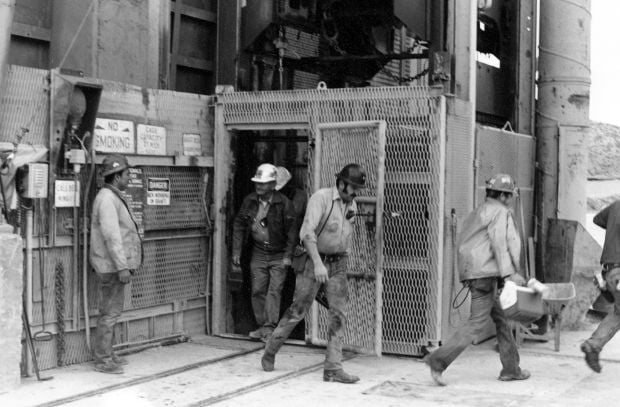
By the early 1980s, Phelps Dodge added two shaft sites, separated 10,000 feet apart, which it planned to connect below the surface. The underground works were flooded after Phelps Dodge suspended operations several years later due to corporate restructuring.
During this time, it acquired the Lone Star deposit from Kennecott.
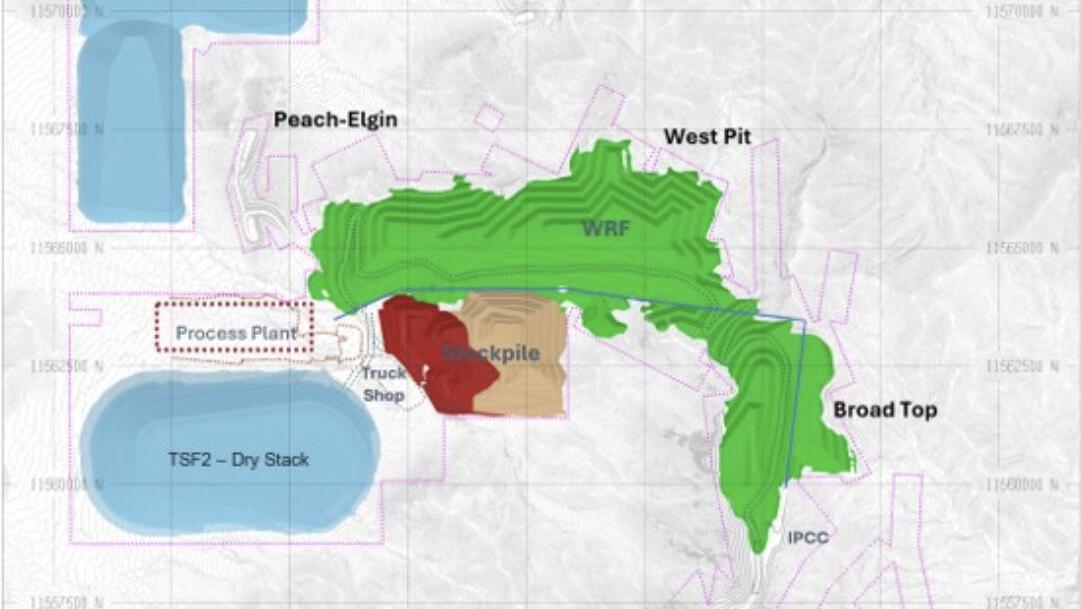
In the mid 1990s, Phelps Dodge worked toward securing authorization from the Bureau of Land Management and the Corps of Engineers to implement open-pit mining operations at Safford. It was predicted to contain 1.5 billion tons of copper reserves.
After multiple Environmental Impact statements and a land exchange involving 3,867 acres of environmentally sensitive land in exchange for 15,297 acres of BLM land surrounding the mine, the Safford mine opened in December 2007.
The former Phelps Dodge Co. property, now owned by Freeport McMoRan Copper & Gold Inc., currently functions as an open-pit copper mining complex consisting of the Dos Pobres Pit and the San Juan Pit. The mine, about 8 miles north of Safford, employs 705 people as of 2014.
Mineral recovery through a mine-for-leach operation on the 36,050 acres managed and owned by Freeport McMoRan Copper & Gold Inc. involves a three-stage crushing system capacity of 103,000 metric tons of ore per day.
Annual copper production averages 250 million pounds.
William Ascarza is an archivist, historian and author. His latest book, “The Chiricahua Mountains: History and Nature,” is available at Barnes and Noble online. Email him at mining@tucson.com