The war vet bellowed for five minutes when Jess DeVaney telephoned from Tucson to tell him his long-lost dog tag had been found in Vietnam.
"Why do you care? What's in it for you?" DeVaney remembers him shouting. "He was very angry. Sometimes there's a lot of anger around what we do."
DeVaney, head of a nationwide effort to reunite Vietnam vets with personal items recovered overseas, mailed the dog tag anyway with a note thanking the soldier for his service. Soon, he received another call.
"He said, 'I'm sorry for the way I treated you. I lost both my legs, that's how I lost the dog tag. The day you called, I was going to kill myself,' " he recalls the veteran saying.
DeVaney, a former Marine Corps rifleman in Vietnam, never knows what he'll face during such calls. He has learned to expect anything.
People are also reading…
Thirty-five years after the war's end, those small pieces of metal can still stir up a cauldron of emotions, says DeVaney, the president of Tours of Peace Vietnam Veterans.
The Tucson-based nonprofit arranges visits to Vietnam for veterans seeking to heal psychological wounds. On the trips, DeVaney and others stumble upon dog tags and other military relics, sometimes sold as tourist trinkets overseas.
Since 1999, they've been buying the tags and trying to return them to veterans or their survivors. The effort costs up to $10,000 a year and involves hundreds of volunteer hours.
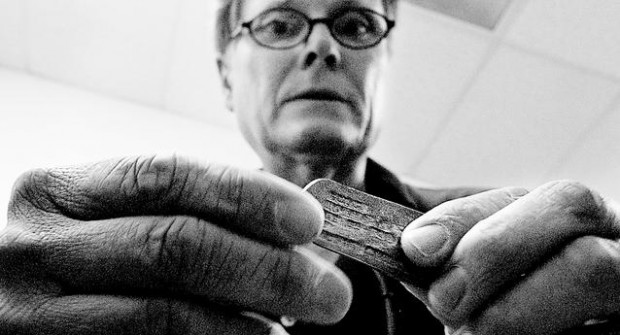
R. Steve Sneed Sr. of Tucson, a Marine who served in Vietnam and once made dog tags, donates his time to check each tag's authenticity, cleaning them just enough to read the name, rank and other data.
As he works, his mind swims with his own war memories.
"When I'm cleaning the tags, a certain amount of dust will come off and I can smell the dirt of Vietnam," said Sneed, 60. "There's a sadness to it. It makes me think of the friends who didn't come back."
A trail of volunteer sleuths, stretching from Tucson to Washington, D.C., then tries to match the tags with their rightful recipients.
They get help from the National Personnel Records Center, the keeper of military service records, and from Ancestry.com, a genealogy Web site that provides the group's researchers with free access to its database, DeVaney says. Tours of Peace also has a list on its Web site of hundreds of names on unclaimed tags.
Still, the detective effort is painstakingly slow, complicated by the passage of time as veterans die or move.
Hundreds of letters a year are sent out to potential leads; most are never heard from. In the age of identity theft, DeVaney says, some veterans wrongly assume the letters are an attempt to scam them.
Of 1,754 dog tags recovered so far by Tours of Peace, 270 have been returned to veterans or their next of kin. The rest are indexed in neat rows in DeVaney's office.
Behind every dog tag is a story, often wrenching, about the veteran it belonged to. Through the years, DeVaney says, he's given tags back to vets with debilitating injuries, to war widows and to children forever changed by the deaths of their fathers.
Many tags were lost by service members whose legs were severed in war, he says. Troops often affixed one dog tag to a leg and the other around their necks, believing it increased their chance of being identified if they were blown apart.
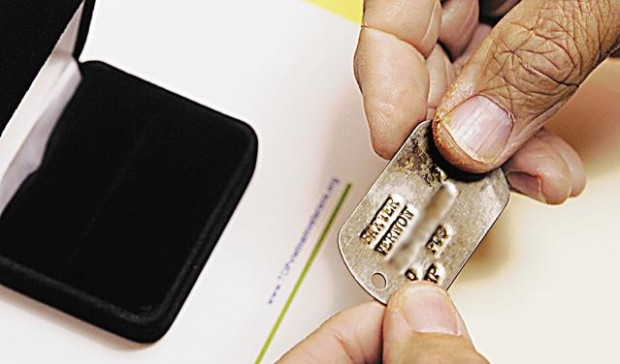
Once a rightful owner is found, the tag is tucked into a velvet jewelry box. Presentations are done in person when a veteran is agreeable and by mail otherwise.
DeVaney says some veterans avoid opening the packages for days, afraid of the feelings that might surface when they do.
Retired Army nurse Ardis Wait, 62, who lives in Three Points, southwest of Tucson, didn't expect to get emotional when she received her lost dog tag by mail on Tuesday. She'd tucked it inside some belongings before leaving Vietnam 37 years ago, thinking the box it was in would be shipped home to her.
"I shed some tears when I saw it," she said.
DeVaney said the tag surfaced last year in a suburb of Da Nang, not far from the 95th Evacuation Hospital where Wait treated casualties in 1970.
Like other Army nurses of the day, Wait volunteered for duty in Vietnam. She later spent decades working as a civilian trauma nurse, putting her wartime experience to use helping others.
Getting her dog tag back felt like a sign of respect, she said.
"It came with a letter that said, 'Welcome Home,' and that felt good because we never got a welcome when we came home."
For more information
To learn more about the Tours of Peace Vietnam Veterans personal effects program, or to make a donation, call 326-0901 or go to topvietnamveterans.org. The site includes a list of names on about 1,500 unclaimed dog tags recovered in Vietnam.


 Tucson's newest Shake Shack gets neighbors